3D Rendering for Property Marketing: Sell Homes Before They Are Built
Quick answer
Property marketing renders sell homes before they are built. Costs, views, animations and briefing tips for off-plan sales in 2026.
An off-plan buyer cannot walk through a home that does not exist yet. They cannot see the light in the living room, the view from the balcony, or the size of the kitchen. A property marketing render is the only viewing they get, and it decides whether they book a call or scroll past. For developers and agents, renders are not decoration: they are the sales tool that turns a floor plan into a reservation.
This guide covers 3D rendering for property marketing: the views that sell, what a launch package costs in 2026, how animations and virtual tours fit in, and how to brief a studio so the images match the homes you are actually selling.
Why Renders Sell Off-Plan Homes
Off-plan sales depend on imagination, and most buyers cannot imagine a finished home from a 2D floor plan. A render shows the finished product: the light, the materials, the furniture, the view. Listings with high-quality visuals get far more enquiries than listings with plans alone, and for off-plan homes the effect is stronger, because there is no photograph to fall back on. Renders also let you sell before construction starts, which brings cash forward and reduces the developer's borrowing. A launch package of renders can be ready months before the first brick is laid, so the sales office opens with images, not promises.
The images also set expectations: a buyer who has seen a realistic render knows what they are buying, which reduces complaints at handover. The key word is realistic: a render that flatters the home beyond recognition creates disputes later, so good marketing renders are honest about space, light, and finishes. That honesty is also what makes the images trustworthy, and trust is what turns an enquiry into a reservation. Our guide to rendering for developers explains how pre-sales visuals fit the whole launch plan.
The Views That Sell a Development
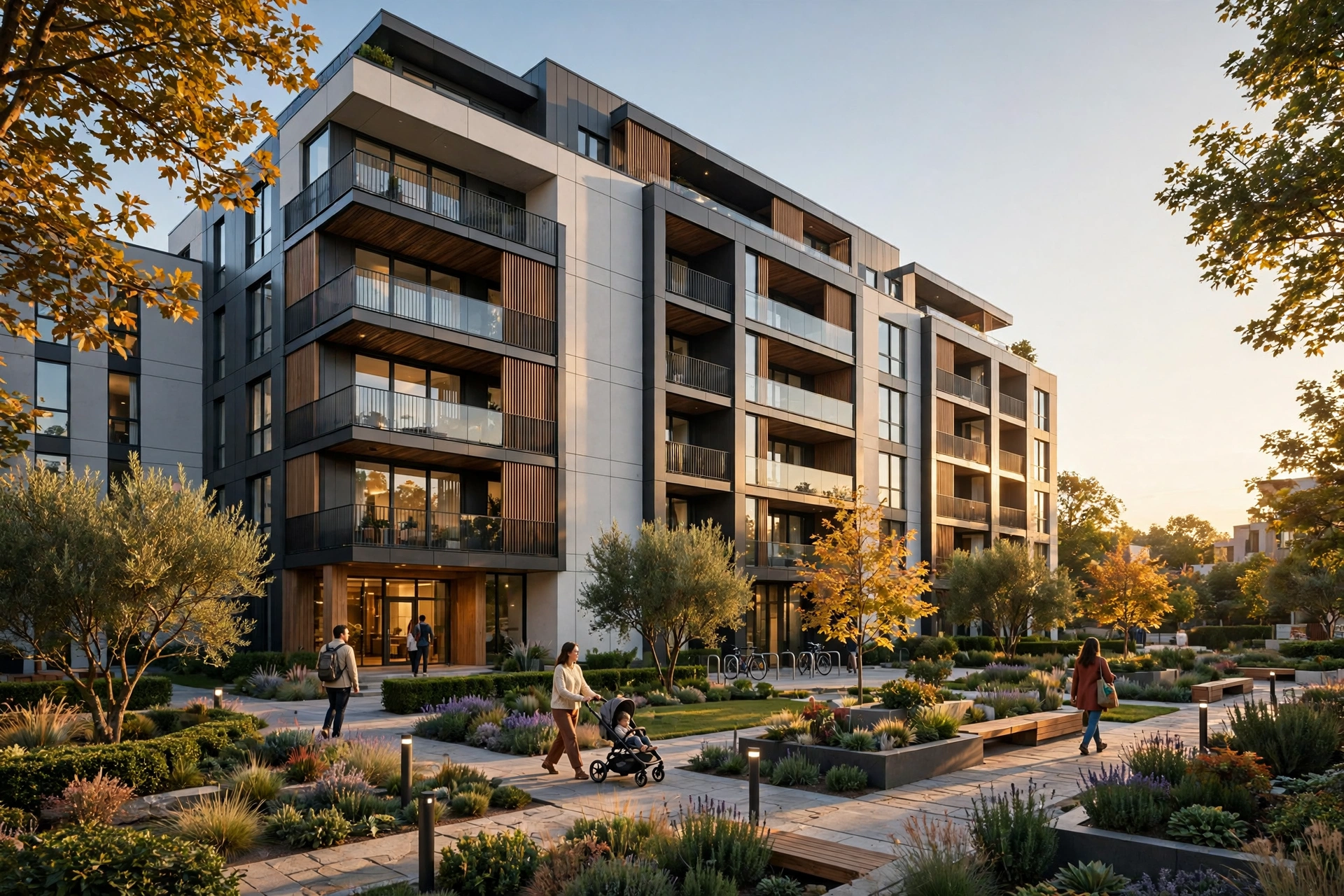
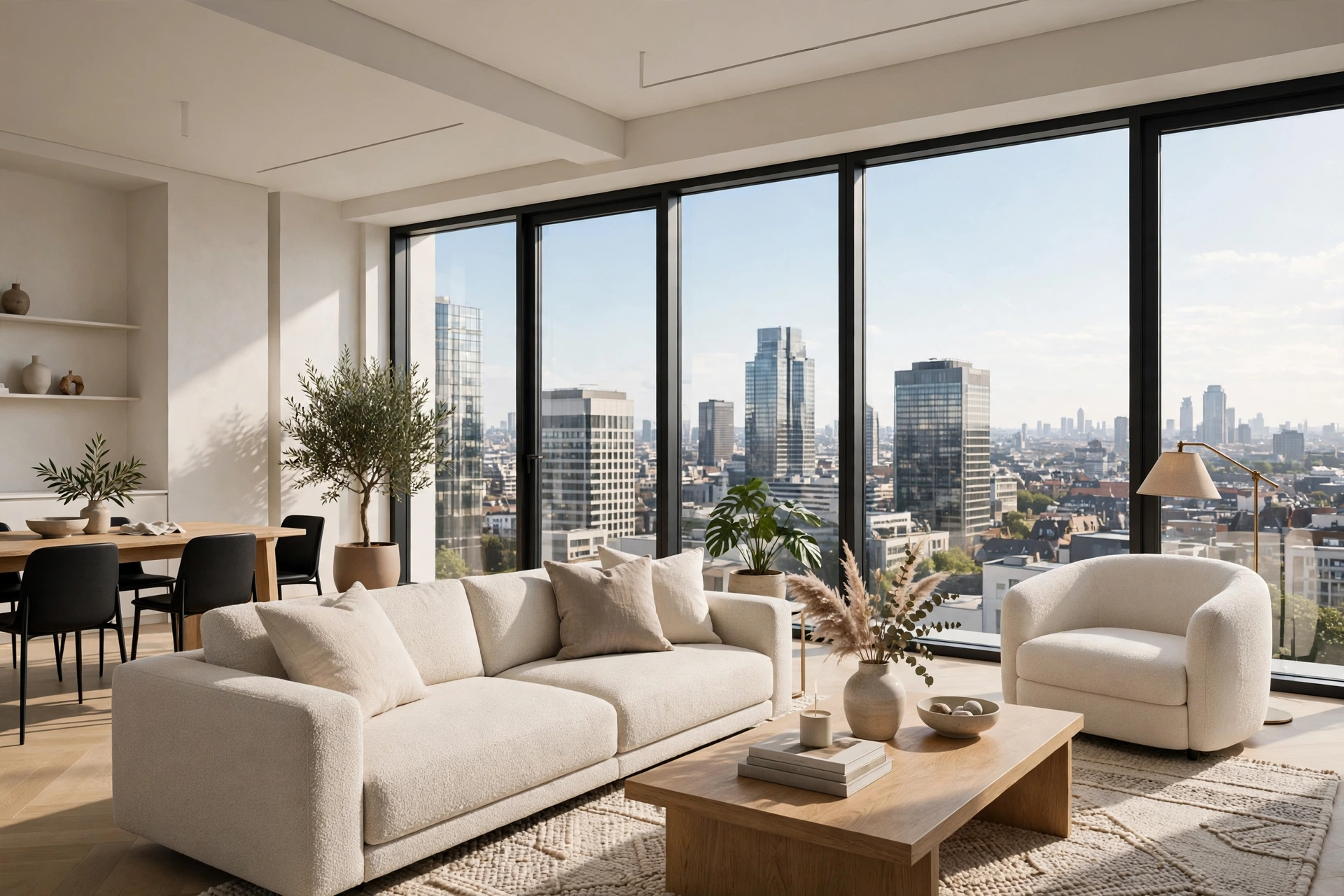
A property marketing package is a set of views, not a single image. The hero exterior is the first view every buyer sees, so it should show the building at its best angle, usually a three-quarter view at eye level or slightly above, with landscaping and sky that match the real site. Interiors sell the lifestyle: the living room and the master bedroom first, then the kitchen, because those are the rooms buyers judge hardest. Kitchens and bathrooms deserve their own views, because the finishes there justify the price.
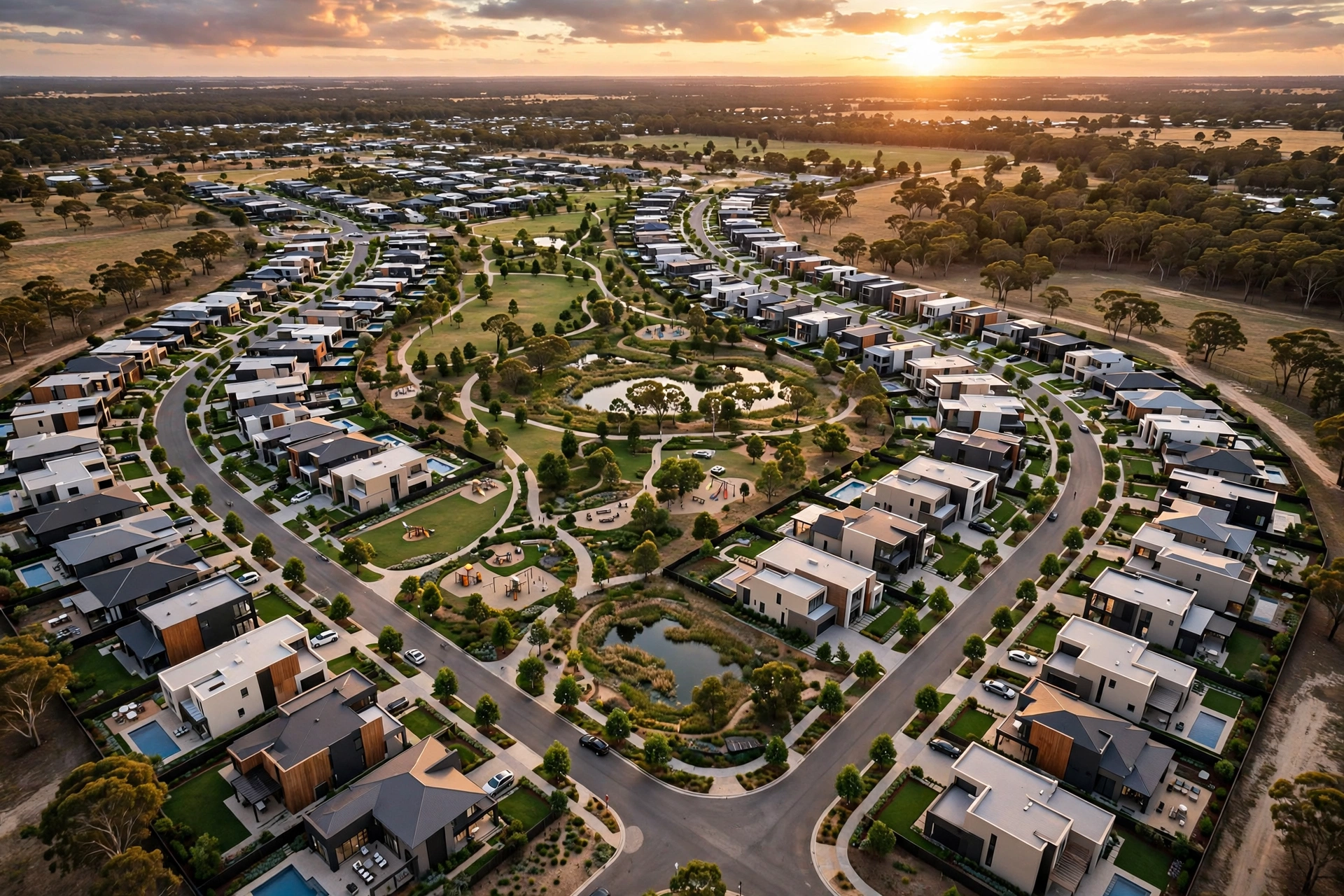
Amenities matter too: a pool, a gym, a lobby, or a rooftop terrace can be the reason a buyer chooses your building over the one next door, so render the shared spaces, not just the units. Aerial views place the development in its neighbourhood, showing the street, the park, and the distance to the shops, which is the context a floor plan cannot give. Finally, a simple location view helps buyers understand the layout at a glance. A typical launch package has 6 to 12 views: 2 exteriors, 4 to 6 interiors, 1 or 2 amenity views, and 1 aerial. Our guides to kitchen rendering and aerial renders cover the two views buyers study most closely.
What a Property Marketing Package Costs in 2026
Prices depend on the number of views and the quality tier. In 2026, a single photoreal exterior costs $300 to $900, and a single interior costs $200 to $600. A launch package of 8 to 10 views typically costs $2,500 to $6,000, and most studios discount a package against buying the views one by one. An animation adds $1,500 to $5,000 per minute of film, depending on length and complexity, and a 360 virtual tour costs $300 to $1,000 per viewpoint.
Prices also depend on the inputs: a studio that receives clean CAD drawings and a materials schedule works faster than one that must guess the finishes. Revisions are usually 2 to 3 rounds per view in the base price, and extra rounds cost $50 to $150 each. When you compare quotes, check that each studio is quoting the same number of views, the same resolution, and the same licence, or the cheapest quote may simply be the smallest package. Our full price breakdown by render type and our animation cost guide give the 2026 tables to check any quote against.
Animations and Virtual Tours: When They Pay Off
A still image shows one view. An animation walks the buyer through the home, from the front door to the living room to the balcony, and that movement sells the flow of the space in a way no still can. A 60 to 90 second walkthrough is the right length for a property launch: long enough to show the home, short enough to hold attention on a listing page or in a sales office. A 360 virtual tour lets the buyer look around a room at their own pace, which works well for agents showing homes to remote buyers.
Virtual tours are cheaper than animations and faster to produce, so they suit listings where the budget is tight. The rule is simple: stills sell the home, animations sell the feeling, and tours let the buyer explore. Use stills for every listing, add an animation for a launch or a flagship unit, and add a tour when buyers cannot visit in person. Our virtual tour cost guide explains per-viewpoint pricing and the use cases in detail, and our guide for real estate agents shows how listing visuals fit an agent's daily workflow.
How to Brief a Studio for Marketing Renders
A good brief is the difference between images that sell and images that need three rounds of fixes. Start with the goal: which homes are you selling, to whom, and where will the images appear? A first-time buyer and an investor look for different things, and a billboard needs a different view than a listing page. Send clean inputs: CAD plans and elevations, a materials schedule with real product names, the landscaping plan, and photos of the site and the surrounding streets.
Name the views you want and the mood for each: bright and airy for a family home, warm and dramatic for a penthouse. Agree the resolution up front: 4K for print and hoardings, Full HD for web. Set the deadline and the revision rounds in writing, and name one decision-maker on your side, because conflicting feedback from three people is the most common cause of delay. Our briefing checklist covers every item a studio needs before it starts, and our guide for home builders shows how spec home marketing packages are put together.
Mistakes That Cost Sales
The most expensive mistake is over-promising: a render that shows a larger room, a better view, or finishes you will not deliver creates complaints and refunds at handover. Keep the images honest about space and materials. The second mistake is using too few views: one exterior and one living room cannot sell a three-bedroom home, because buyers want to see the kitchen, the bedrooms, and the bathroom.
The third mistake is inconsistent styling: if the living room looks like a luxury hotel and the bedroom looks like a budget flat, buyers notice, and they trust the images less. The fourth is launching with unfinished images: a draft with placeholder furniture or a grey sky tells buyers the project is not ready. The fifth is ignoring the licence: marketing images are used widely, on portals, in print, on hoardings, so check that the licence covers every medium you plan to use, or a cheap package can become an expensive dispute. Our guide to rendering contracts explains the clauses to check before you sign.
Frequently Asked Questions
How much does property marketing rendering cost?
A single exterior costs $300 to $900, a single interior $200 to $600, and a launch package of 8 to 10 views typically costs $2,500 to $6,000 in 2026.
How many renders do I need to sell an off-plan home?
A launch package of 6 to 12 views: 2 exteriors, 4 to 6 interiors, 1 or 2 amenity views, and 1 aerial. Fewer views leave buyers guessing about rooms they cannot see.
How long does a property marketing package take?
A package of 8 to 10 views usually takes 2 to 4 weeks, including revisions. A single view takes 3 to 5 working days. Rush delivery is possible at an express fee.
Should I use renders or photographs for a completed home?
Photographs, because buyers trust a real photo of a real room. Renders are for off-plan homes, renovations, and spaces that do not exist yet.
Can I use the same renders on property portals and in print?
Yes, if the licence covers both. Check the licence scope before you publish, because a web-only licence may not include print or hoardings.
What should I send the studio to start?
CAD plans and elevations, a materials schedule, the landscaping plan, site photos, and a list of the views you want. Clean inputs mean faster delivery and fewer revisions.
Property marketing renders are the first viewing for a home that does not exist yet, and they decide whether a buyer calls or scrolls past. Invest in the views that sell, keep them honest, and brief the studio properly, and the images will pay for themselves in faster sales.
If you would like a launch package for your next development, talk to our team. Send us your drawings and your sales timeline, and we will quote the views, the animation, and the licence in one transparent price.