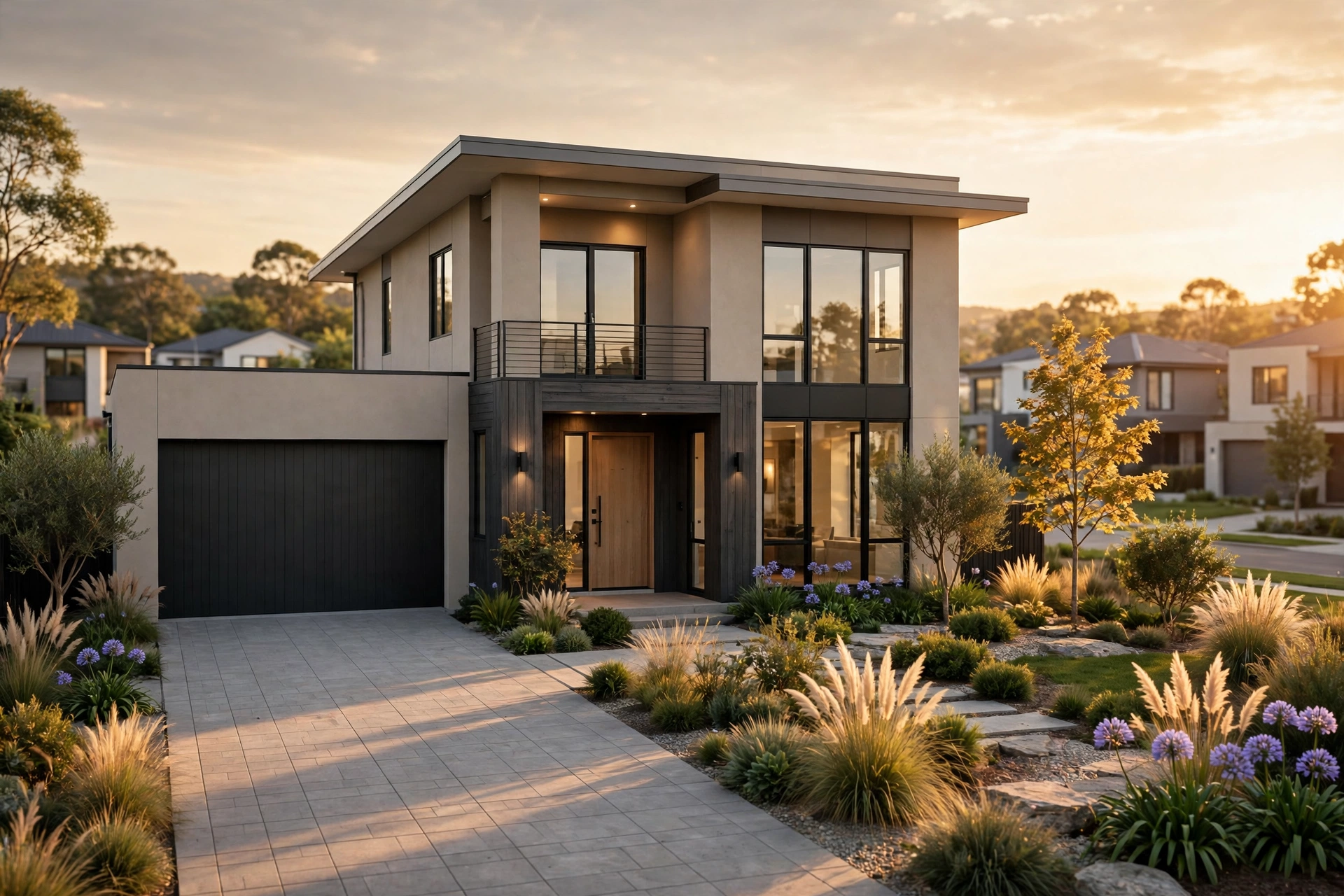
Rendering for Home Builders: Sell Spec Homes Faster in 2026
A home builder with an empty lot has a hard problem. The house does not exist yet, but the sale has to start now. Buyers will not wait for the roof to go on, and a lender will not fund a project that has no buyers. A photorealistic render solves that problem. It shows the finished home, the street, and the light in the living room, months before the first brick is laid. For a builder, renders are not decoration. They are the sales tool that turns a plot of land into a reservation list.
Why Home Builders Need Renders Before the First Brick
Most home buyers cannot read a floor plan. They look at lines on paper and cannot picture the ceiling height, the size of the kitchen, or the way afternoon light falls across the living room. That uncertainty kills sales, because a buyer who cannot picture the home will not put down a deposit. A render removes the guesswork. It shows the exact home, with real materials, real furniture, and real light, so the buyer can say yes with confidence. For a spec home, that matters twice as much, because the buyer is choosing between your home and a finished home down the road that they can walk through today. The render is how you level that playing field. Builders who launch with a full render set regularly see most of their homes reserved before construction finishes, and the reservations come in weeks earlier than with plans alone. A render also protects the builder. When the buyer has seen the finished home in a photorealistic image, there are fewer surprises at handover and fewer arguments about what was promised.
What a Spec Home Render Package Includes
A spec home needs a small, focused set of views, not a hundred images. The standard package is six to eight views, and every view has a job. Start with the hero exterior, the front of the house at a slight angle in good light, because that is the image on the listing, the brochure, and the site hoarding. Add a second exterior from the garden or the street, so buyers see the home in its setting. Inside, you need the living room, the kitchen, and the main bedroom, because those three rooms decide most purchases. A bathroom view helps when the bathroom is a selling point, and a floor plan render helps buyers understand the layout at a glance. That is the full set. More views rarely add sales, and they add cost and time. The views should match the buyer. A family home needs a warm living room and a practical kitchen. A luxury spec home needs a twilight exterior and a spa-like bathroom. Our per-image cost guide breaks down what each view costs. Agree the view list before the artist starts, because adding a view later costs more than including it from the start.
What Home Builders Pay for Renders in 2026
A full six-view package for one spec home usually lands between 1,500 and 3,500 dollars. A builder with ten house types on one development pays less per home, because the artist reuses materials, furniture, and lighting setups across the range, and a ten-home package often lands between 8,000 and 20,000 dollars. That sounds like a lot until you compare it with the cost of a single unsold home. A spec home that sits empty for three months costs far more in interest, insurance, and holding costs than the whole render package. Renders also cut the cost of the model home. A physical show home costs tens of thousands to furnish, while a render set shows every room for a fraction of that. Add a 360 virtual tour at 300 to 800 dollars per viewpoint and buyers can walk the home online, which is the next best thing to a visit. Our turnaround guide lists real delivery times for 2026. Ask for a fixed quote for the whole package, with the number of revision rounds written in, so the price does not creep up as the project goes on.
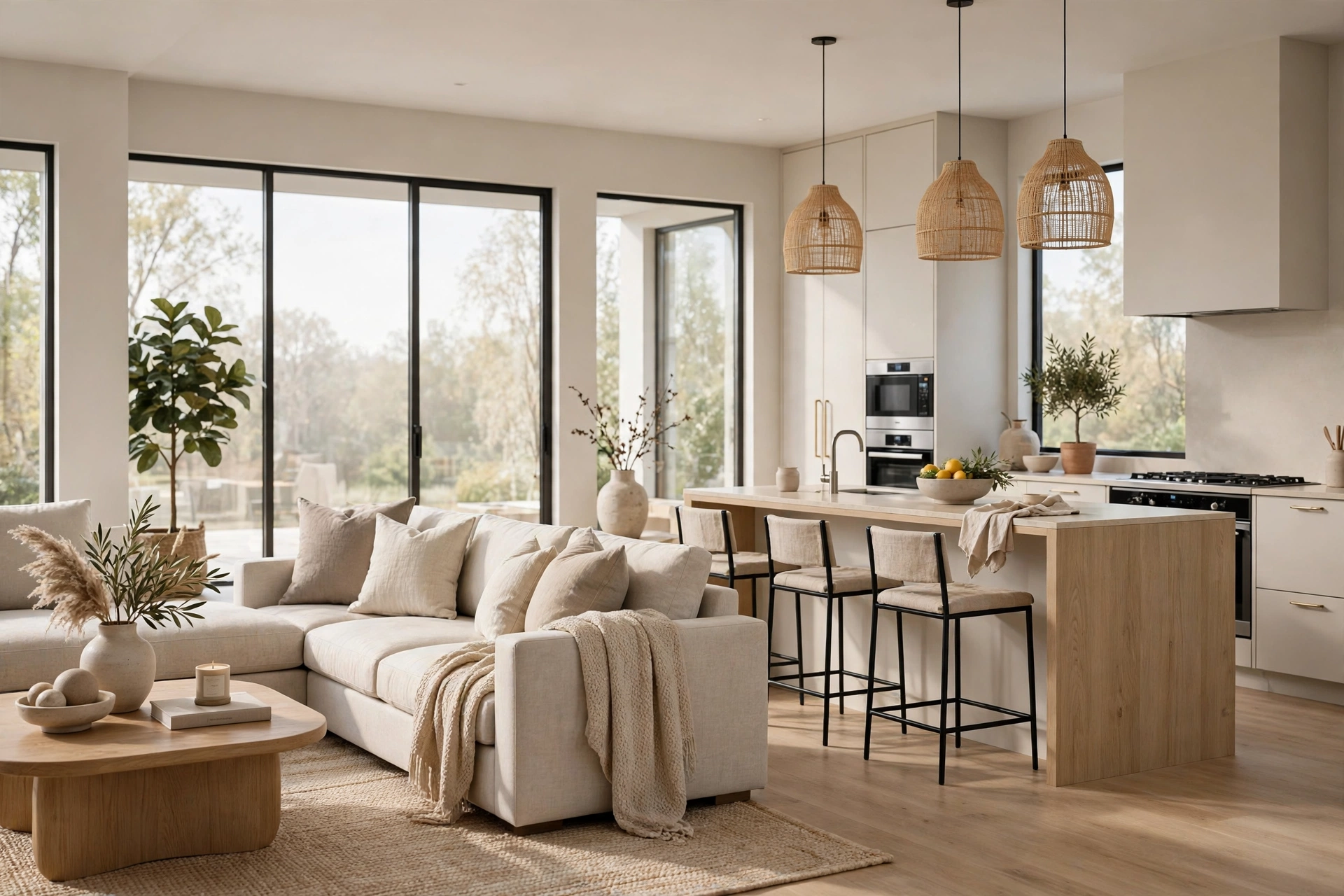
Model Home Marketing: Renders That Fill the Sales Office
A model home is the builder's best salesperson, but it only works when buyers visit. Renders bring the model home to the buyers who never make the trip. The listing photos, the website, the social media ads, and the brochure all use the same render set, so a buyer sees the home ten times before they ever visit, and by the time they arrive they already want it. The trick is consistency. The render set, the floor plan, and the physical model home must show the same home, with the same kitchen, the same flooring, and the same layout. If the render shows a marble worktop and the model home has laminate, the buyer feels misled, and trust is hard to win back. Renders also let a builder test options before committing. Show two kitchen finishes in two renders, run both in ads for a week, and build the one buyers click on. That is cheap market research, and it beats guessing. Use the hero exterior on the site hoarding, the living room on the brochure cover, and the kitchen in the social ads, because each image has a different job. Our portfolio guide shows how to present a render set so it wins work. A model home with no renders is a home that only sells to the people who drive past it.
How to Order Renders for a Whole Development
Ordering renders for a development is a project in itself, and the order matters. Start with the house types, not the images. Send the studio the plans, elevations, and material schedule for every house type, and agree the view list for each one before any modelling starts. Then agree the style: the same light, the same furniture style, and the same camera height across the whole development, so the range looks like one place, not ten different studios. Next, agree the timeline. A single spec home takes one to two weeks. A ten-home development takes four to eight weeks, and the studio will deliver in batches, so the sales team can launch the first house types while the rest are still rendering. Keep one person on your side as the single point of contact, because ten people sending ten different comments is how a project doubles in cost. Finally, agree the file formats up front: high-resolution images for print, web versions for the listing, and the floor plans in a format your sales team can actually use. Our briefing checklist covers every detail a studio needs. A well-briefed development finishes on time, and a poorly briefed one does not.
Selling Off Plan: Renders, Trust, and the Deposit
Off-plan sales are the hardest sale in home building, because the buyer is paying for a home that does not exist. The render is the only thing standing between the buyer and their doubt. That is why the render must be honest. Show the real plot, the real neighbours, and the real street, not a fantasy version with a lake that does not exist. Show the real kitchen size, not a wide-angle trick that makes a small room look like a ballroom. Buyers who feel tricked do not just walk away, they tell other buyers. The best builders pair renders with facts: the plot plan, the specification list, and the completion date, all on the same page. They also show the render next to the floor plan, so the buyer can match the image to the layout. And when the home is finished, the render becomes the after photo. Put the render and the finished photograph side by side in your marketing, and the next buyer trusts you before you say a word. That trust is the real return on the render package, and it compounds with every home you sell.
Frequently Asked Questions
How much does 3D rendering cost for a home builder?
A single exterior render costs 250 to 600 dollars and a single interior render costs 200 to 500 dollars in 2026. A full six-view package for one spec home usually costs 1,500 to 3,500 dollars, and a ten-home development package often costs 8,000 to 20,000 dollars.
How many renders does a spec home need?
Six to eight views is the standard: a hero exterior, a second exterior, the living room, the kitchen, the main bedroom, and a floor plan render. Add a bathroom view only when the bathroom is a real selling point.
How long do renders take for a whole development?
A single spec home takes one to two weeks. A ten-home development takes four to eight weeks, delivered in batches, so the sales team can launch the first house types while the rest are still rendering.
Can renders sell homes before construction starts?
Yes. Builders who launch with a full render set regularly reserve most of their homes before construction finishes. The render lets the buyer see the finished home, which is what turns interest into a deposit.
Should the render match the model home exactly?
Yes. The render set, the floor plan, and the physical model home must show the same home, with the same kitchen, flooring, and layout. If they differ, the buyer feels misled and trust is lost.
Do I need a 360 virtual tour as well as renders?
A virtual tour helps when buyers cannot visit, and it costs 300 to 800 dollars per viewpoint. It is a useful add-on for the hero rooms, but it does not replace the still renders, which are what appear in listings, brochures, and ads.
Renders are the cheapest salesperson a home builder can hire. They work every day, they never take a day off, and they sell the home before it exists. Order a focused set of views, keep them honest, and use them everywhere a buyer might look. If you have a spec home or a whole development to launch, send us your plans and we will build the render set that fills your reservation list.
Written by
Architecture Designing Team
3D Visualization Studio