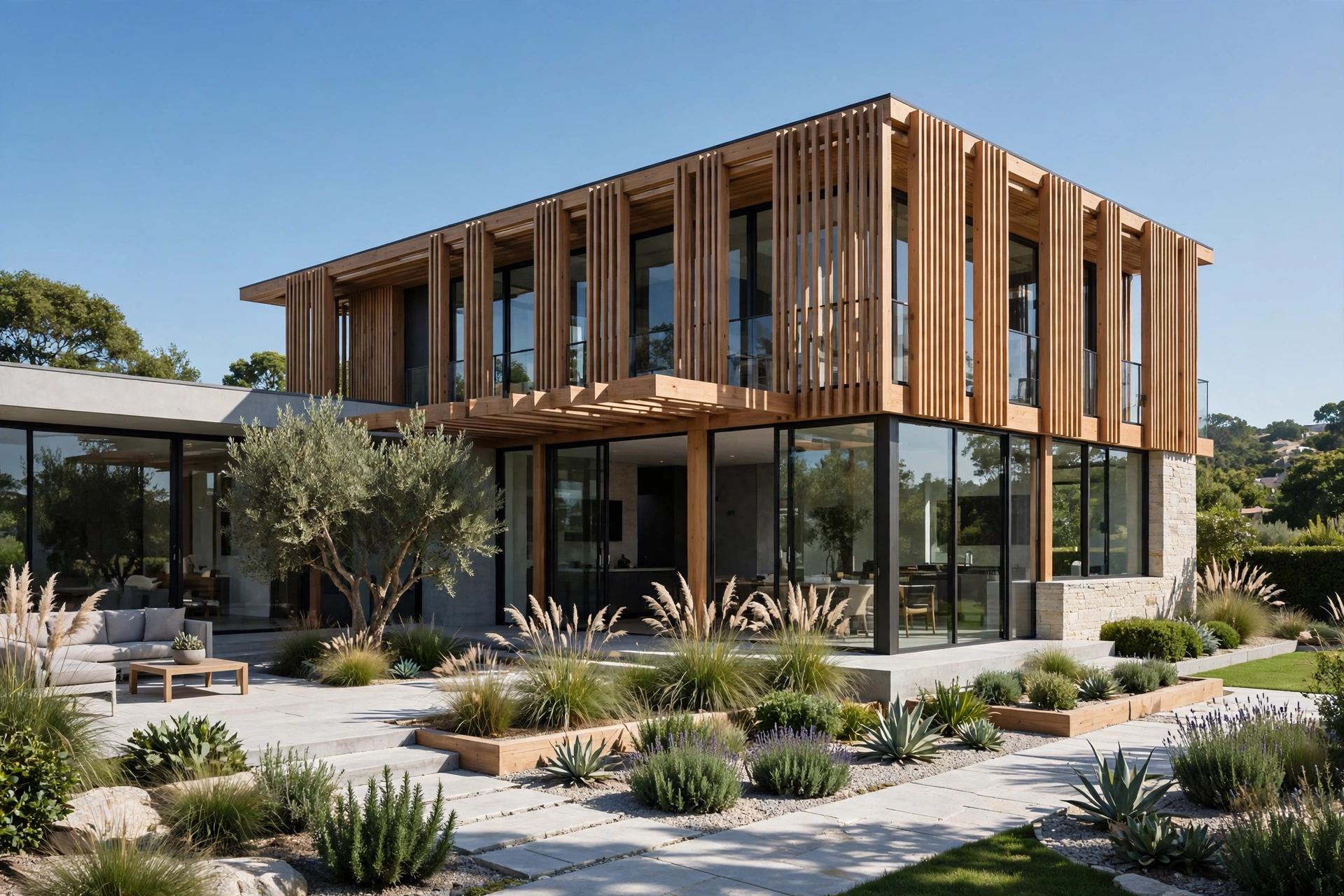
Day vs Night Exterior Renders: Which Lighting Sells a Home?
Every exterior render is a lighting decision before it is anything else. The same house, the same camera, the same materials, but one image is shot at noon and the other at midnight, and they sell two different feelings. The day render says bright, practical, and honest. The night render says warm, private, and luxurious. Pick the wrong one and the listing works against you, because the buyer sees the wrong home.
What a Day Render Shows a Buyer
A day render is the honest image. Bright sunlight shows the real colours of the materials, the real shape of the building, and the real size of the garden. A buyer can see the brick, the timber, the glass, and the roofline exactly as they will look on a sunny afternoon, which is when most buyers visit. Day renders also show the setting: the street, the neighbours, the trees, and the sky, so the buyer can judge the location, not just the house. That honesty is why a day render is the default hero image for most listings. It is also the most forgiving image to produce. Daylight is even, shadows are predictable, and the artist can show detail without hiding anything. The weakness of a day render is that it is flat. Every house looks good at noon in June, so a day render rarely makes a buyer stop scrolling. It informs, but it does not seduce. Use a day render when the architecture is the selling point, when the materials need to be seen clearly, or when the listing needs one image the buyer can trust.
What a Night Render Shows a Buyer
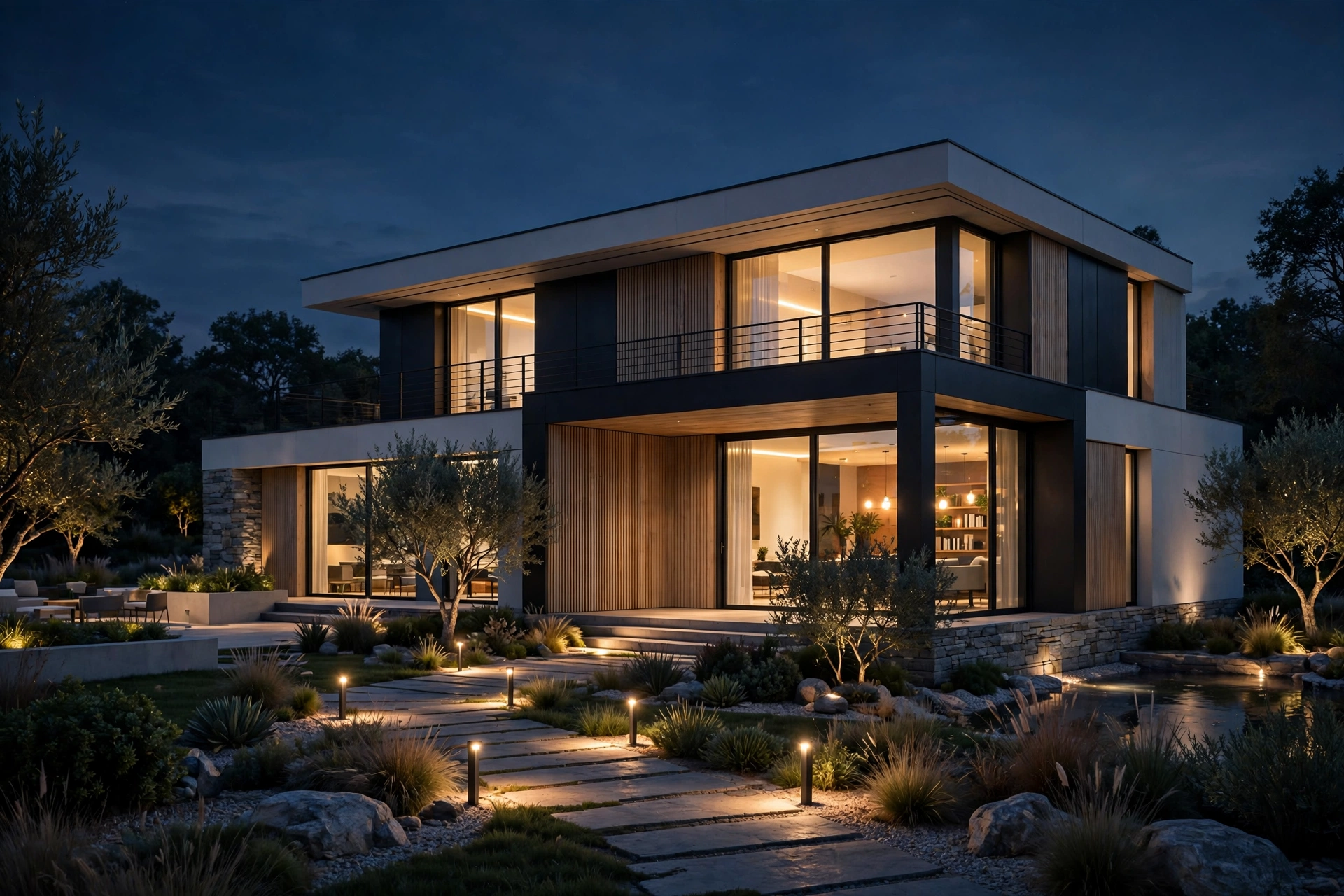
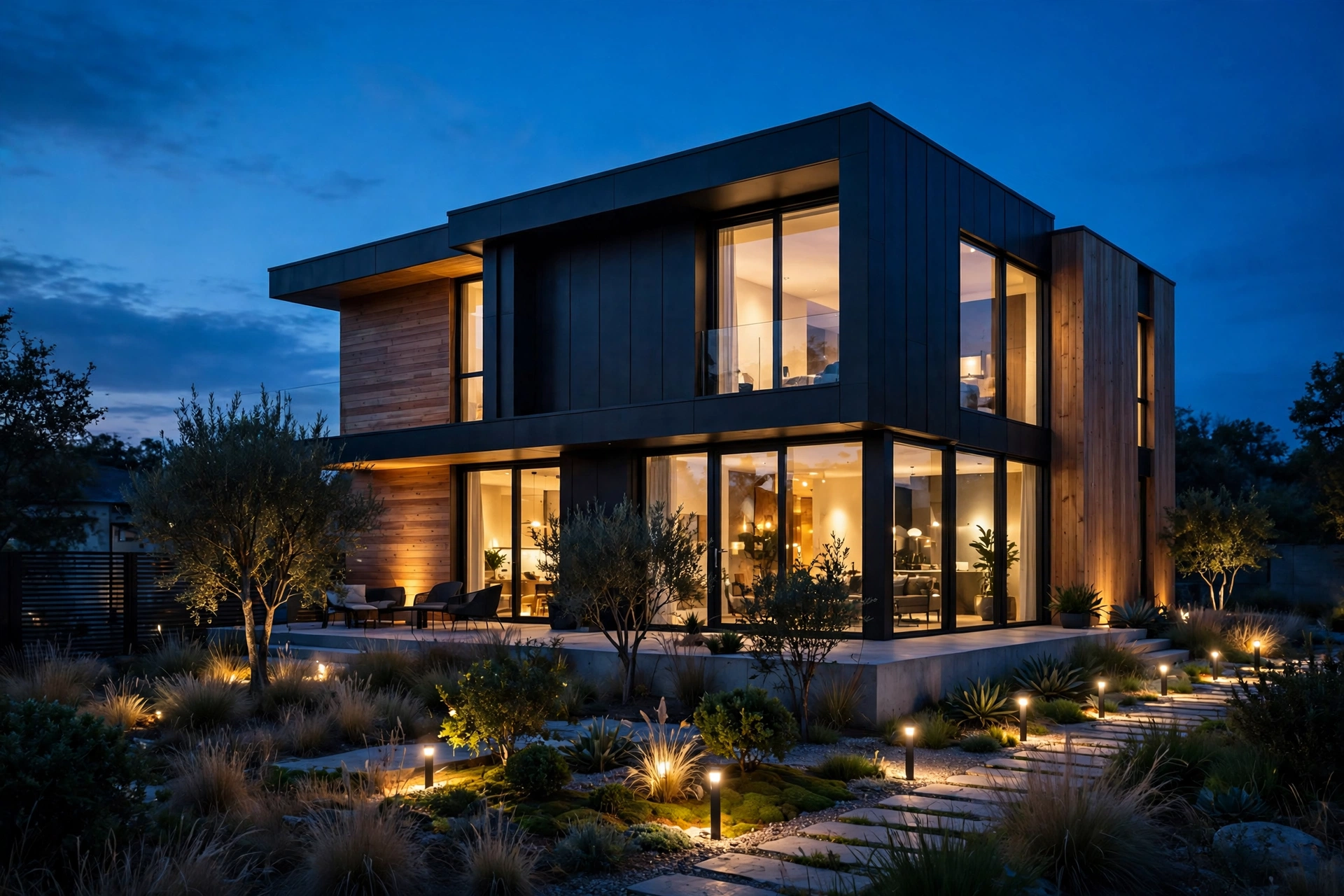
A night render is the emotional image. The sky goes dark blue, the windows glow warm, the garden lights come on, and the house looks like a home, not a building. That glow is the whole point. A buyer does not buy a house at night, they buy the feeling of coming home to a lit window, and a night render sells that feeling in one image. Night renders also hide weak spots. A plain facade, a small garden, or a dull street all look better in the dark, because the light draws the eye to the house and away from everything else. The weakness is honesty. A night render hides as much as it shows, and a buyer who only sees the night image cannot judge the materials, the colours, or the setting. It is also harder to produce well. The artist has to balance the interior lights, the landscape lights, and the sky, and a small mistake makes the house look like a stage set. Use a night render when the home is premium, when the listing needs a scroll-stopping hero, or when the architecture has strong lighting features like a glass wall or a pool.
Cost and Turnaround: Day vs Night
A day render and a night render of the same house cost roughly the same when they are built from the same model. In 2026, a single exterior render costs 250 to 600 dollars, and the lighting version adds little to the price, because the model, the materials, and the camera are already built. The real cost is the second image. Two lighting versions of one view cost about 1.5 times a single view, not twice, because the artist reuses the model and only rebuilds the lighting. Turnaround is similar: three to seven days per view, and the second lighting version usually adds one to two days. The smart way to buy is to order the day version first, approve the model and the materials in daylight, and then order the night version from the approved model. That way the night render inherits every correction, and you do not pay to fix the same mistake twice. If the budget only allows one image, the day render is the safer spend, because it shows the house honestly. If the budget allows two, the pair is worth more than the sum, because the buyer sees the home in two moods. Our exterior rendering cost guide gives the full 2026 price breakdown by view type and quality tier.
When to Use Day, Night, or Both
The right choice depends on the project, the buyer, and the channel. Use a day render alone for a family home, a budget listing, or a planning application, where honesty and clarity matter most. The planning officer and the family buyer both need to see the real house. Use a night render alone for a luxury launch, a hotel, or a villa, where the feeling is the product and the price is high enough that the buyer will visit before deciding. Use both for a premium spec home or a development launch, where the day image goes on the listing and the floor plan page, and the night image goes on the brochure cover and the social ads. The pair also works across the day: the day render runs in the morning ads, the night render runs in the evening ads, and the same project reaches the buyer twice with two different feelings. Never use a night render as the only image for a modest home, because the buyer will suspect you are hiding something, and never use a day render as the only image for a luxury home, because the buyer will think the home is ordinary. Our luxury villa rendering guide shows how high-end projects use lighting to justify premium prices.
How to Brief the Lighting in Your Render
A lighting brief is short, but it decides the result. Start with the time of day: noon, golden hour, blue hour, or full night, and say why. Then name the mood: bright and airy, warm and welcoming, or dramatic and luxurious. Then list the lights that must be on: the living room, the kitchen, the porch, the garden, and the pool, because a night render with dark windows looks abandoned. Then describe the sky: clear blue, soft clouds, or deep dusk, because the sky sets the whole tone. Finally, say what must stay visible: the entrance, the garden, and the material of the facade, because a night render that hides the entrance fails as a sales image. Send reference images with the brief, one day render and one night render you like, so the artist can see the mood instead of guessing it. Ask for a lighting test before the final render, a small preview of the sky and the window glow, so you can correct the mood early. Our camera angles guide covers the eye-level and three-quarter views that work best with both lighting versions. A clear lighting brief is the difference between a render that glows and a render that glares.
The Mistakes That Ruin a Lighting Render
Lighting renders fail in predictable ways, and most of them are easy to avoid. The first mistake is windows that are too bright. When every window glows like a lightbox, the house looks like a showroom, not a home, and the buyer cannot see the interior at all. The fix is to vary the brightness, some rooms lit, some dim, so the house feels lived in. The second mistake is a sky that fights the house. A sunset sky with a noon-lit garden looks wrong in a way the buyer cannot name but can feel. The sky, the shadows, and the window light must all agree on the time of day. The third mistake is forgetting the landscape. A night render with a black garden looks like the house floats in space, so the garden lights, the path, and the trees need their own light. The fourth mistake is overdoing the drama. A render that looks like a film poster might win a like on social media, but it will not win a deposit, because the buyer cannot see the house.
Frequently Asked Questions
Which is better, a day render or a night render?
Neither is better on its own. A day render shows the house honestly and is the safer hero image for most listings. A night render sells emotion and works best for premium homes and launches. For a premium project, use both.
How much does a night exterior render cost?
A night render costs about the same as a day render, 250 to 600 dollars per view in 2026, because the model is already built. Ordering both lighting versions of one view costs about 1.5 times a single view, not twice.
Does a night render hide problems with the design?
It can hide weak facades, small gardens, and dull streets, because the light draws the eye to the house. That is useful for marketing, but a buyer who only sees the night image cannot judge the materials or the setting, so always pair it with a day view.
What is the best time of day for an exterior render?
Golden hour and blue hour, the hour before sunset and the hour after, give the most attractive light. Midday is the most honest light for materials, and full night is the most dramatic. The best choice depends on the buyer and the price point.
Can I get a day and a night version of the same render?
Yes. Order the day version first, approve the model and materials in daylight, then order the night version from the same approved model. The second version is cheaper and faster because the model already exists.
Do night renders work for planning applications?
No, not as the main image. Planning officers need to see the real building, the materials, and the setting in daylight. Use a day render for the application, and keep the night render for marketing.
Day and night are not rivals. They are two photographs of the same home, and each one tells the buyer something the other cannot. The day render proves the house. The night render sells the home. Brief both with the same care, match the lighting to the buyer, and use the pair where the project deserves it. If you have a home that needs to stand out, send us your plans and we will build the day and night views that sell it.
Written by
Architecture Designing Team
3D Visualization Studio