How Long Does 3D Rendering Take? 2026 Turnaround Guide
When you are planning a project that needs 3D visuals, the first practical question is rarely about software or artistic style. It is about time. How long does rendering take from the day you share your drawings to the day you can actually use the finished images? A single interior view can be ready in a few days, while a full architectural animation can take a month or more.
This guide gives realistic 2026 turnaround times for each common deliverable, from still interior renders to 360 virtual tours, plus what stretches timelines and how to keep your project moving fast.
Typical 3D Rendering Turnaround Times by Deliverable
Every 3D visualization studio quotes timelines a little differently, but professional turnarounds cluster around consistent ranges. The figures below assume an experienced studio and reasonably clean source files. Rush delivery is usually available for a surcharge, but these ranges reflect standard, quality-first scheduling.
Still Interior Render: 3 to 7 Business Days
Expect 3 to 7 business days for the first full-quality interior view: importing your floor plans, building the 3D geometry, applying materials, setting up lighting, and running the final high-resolution render. The raw machine render of one interior image takes one hour to overnight on professional hardware; the rest of the time is human work.
Most quotes include one or two revision rounds, each adding 1 to 3 business days. Approve the first draft with only small tweaks and the whole job can finish inside a single work week. To plan the budget side too, read our breakdown of interior rendering cost alongside these timelines.
Still Exterior Render: 5 to 10 Business Days
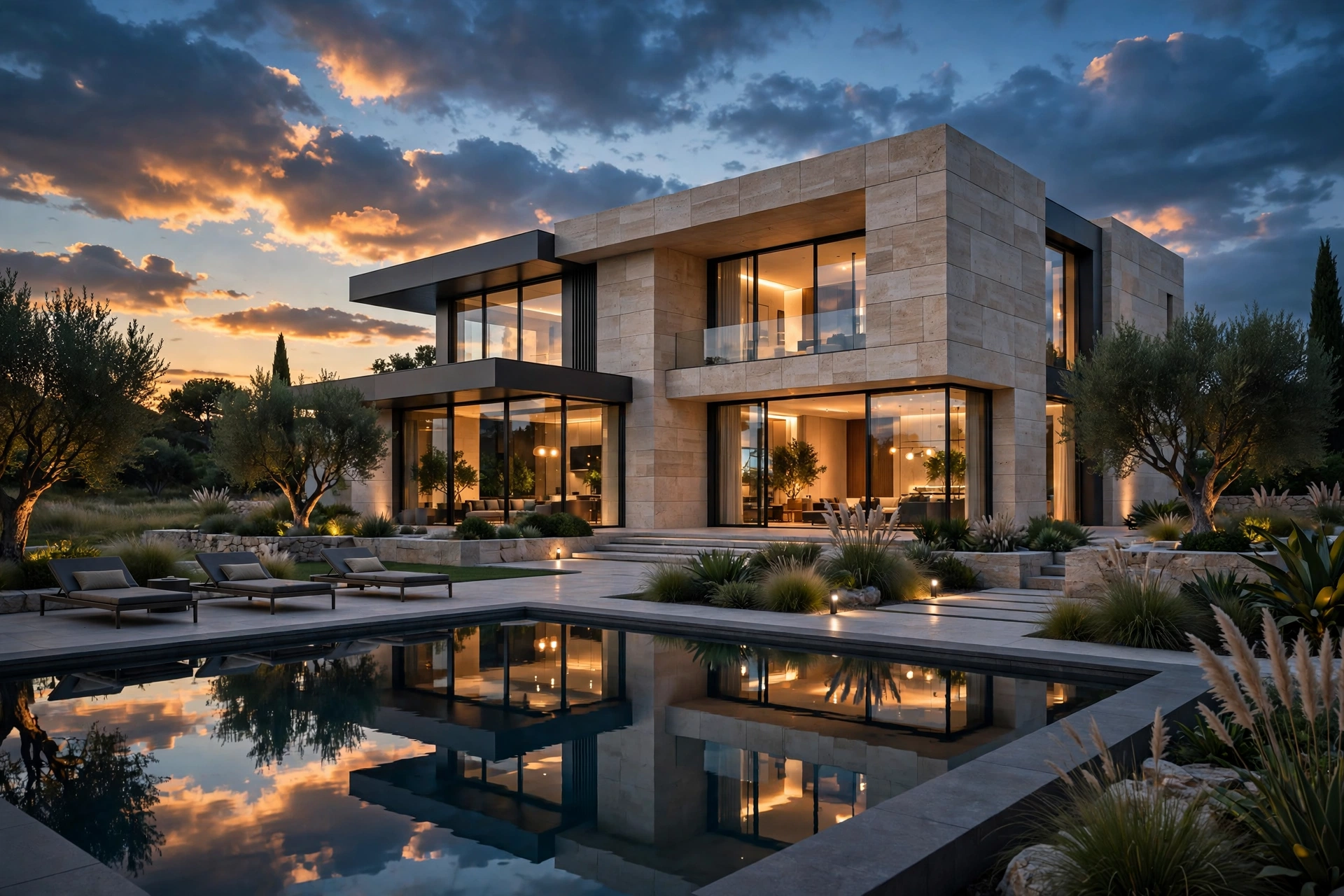
Exteriors take longer because there is more world to build: the building modeled from elevations and sections, plus the environment around it, such as neighboring structures, landscaping, trees, vehicles, and sky. A daytime exterior with simple context sits near 5 business days for the first view. A dusk or night scene, popular for marketing because of its drama, takes longer to light convincingly and lands closer to 8 to 10 days.
Exteriors also attract more revisions, since clients fine-tune facade materials, planting, and sky mood. Budget a full two weeks end to end for a polished exterior marketing image.
3D Floor Plan: 2 to 5 Business Days
Colored 3D floor plans, the axonometric style used in real estate brochures and apartment listings, are among the quickest deliverables. With clean 2D CAD plans, the first view is often ready in 2 to 5 business days, and revisions are usually simple furniture or color swaps that turn around within a day. They are a smart choice when you need something visual fast while bigger renders are still in production.
Architectural Animation: 3 to 6 Weeks
A 30 to 60 second animation is a bigger production than a still image. The studio models the full project, animates a camera path, renders thousands of frames, then edits, color-grades, and scores the film. Each second of video at 30 frames per second means 30 rendered images, so a 60 second film is roughly 1,800 frames. Even on a render farm, that is days of pure machine time.
Realistic scheduling for a one-minute animation is 3 to 6 weeks, including storyboard approval, a draft animatic, and one to two revision rounds. Longer films or heavy effects like animated water push toward the upper end. Because timeline and budget interact here, our guide to architectural animation cost is worth reading next.
360 Virtual Tour: 1 to 2 Weeks
A 360 tour usually means rendering panoramic images, one per key space, and stitching them into an interactive walkthrough. A typical tour of 5 to 8 spaces takes 1 to 2 weeks for the first complete version, plus a few days for revisions. Tours show every angle of a room, so good studios spend extra time on geometry quality for panoramas. For the budget picture, see our virtual tour 360 cost guide.
What Actually Determines How Long Rendering Takes
The ranges above are averages. Six factors move any project toward the fast end or the slow end.
1. Quality of your source files. This is the biggest lever, and it is in your control. Clean CAD drawings with organized layers, correct dimensions, and matching plans and elevations let a modeler start within hours. Messy files with duplicate lines or missing elevations can add a day or two of cleanup before modeling begins.
2. Number of views and revisions. Revisions are the real schedule killer. One focused round of consolidated feedback takes a day or two. Five scattered rounds of piecemeal comments can double a project timeline, because the artist must reopen, adjust, and re-render each time.
3. Level of realism. A conceptual massing view is quick. A fully photorealistic image with accurate materials, soft shadows, and post-production polish takes substantially longer at every stage.
4. Software and hardware. Real-time engines like Lumion and D5 Render produce draft previews in minutes, which speeds up the feedback loop. Offline renderers like V-Ray and Corona, typically used inside 3ds Max, give the highest fidelity but take hours per final image. Most studios use a mix: fast engines for drafts, V-Ray or Corona for final delivery.
5. Scene complexity. A minimalist apartment interior renders far faster than a restaurant with hundreds of modeled chairs and pendant lights. Exteriors with detailed landscaping or surrounding city context are heavier still, raising both artist time and machine render time.
6. Studio workload and your feedback speed. A studio's production queue is a real constraint in busy seasons, but the most common delay is slow client feedback. A project that waits a week for comments between rounds will take a month however fast the studio works. Picking the right partner matters too, so read our guide on how to choose a 3D visualization studio for your timeline and budget.
How to Speed Up Your Rendering Project
You cannot change how long a render farm takes, but you can remove most of the delays between you and delivery. These five practices consistently produce the fastest turnarounds.
Send clean, complete CAD files on day one. Purge unused blocks, organize layers by category, and make sure plans, elevations, and sections match. Include a PDF set as reference alongside the DWG files, and send any existing model in SketchUp, Revit, or Rhino, since a usable model can cut days off the schedule.
Share reference images and a mood board. Words are slow. Ten reference images showing the materials, furniture style, lighting mood, and camera angles you want will produce a better first draft than pages of description. Good references slash revision rounds, and revision rounds are where timelines go to die.
Lock finishes and materials before production starts. The most expensive sentence in a rendering project is "actually, let's change the facade material." Decide on flooring, wall finishes, and exterior materials during the briefing, not after the first draft. Mid-production redesigns force rebuilding and re-rendering, which can add a full week.
Consolidate feedback into one round at a time. Collect comments from every stakeholder, resolve contradictions internally, and send a single numbered list. One consolidated round turns around in 1 to 3 days. The same comments arriving as scattered emails over two weeks will cost you those two weeks.
Name a single decision maker. Projects with one person authorized to approve drafts move visibly faster than projects run by committee. If a committee is unavoidable, hold one internal review per round and send only the agreed outcome to the studio.
Frequently Asked Questions
How long does it take to render a single image?
Pure machine time for one high-resolution interior image is typically 1 to 8 hours on professional hardware. The full studio timeline, including modeling, lighting, drafts, and your revisions, is 3 to 7 business days for an interior and 5 to 10 for an exterior.
Can I get a 3D render in 24 to 48 hours?
Sometimes, with conditions. Many studios offer express delivery for simple views, usually one interior with clean source files and minimal revisions, at a rush surcharge of 25 to 50 percent. What cannot be rushed is decision making: three revision rounds still take a day each. For genuine 24-hour turnarounds, send perfect files and limit yourself to one revision round.
Why do architectural animations take so much longer than stills?
An animation is thousands of still images. A 60 second film at 30 frames per second needs about 1,800 rendered frames, each taking 10 minutes to over an hour of machine time. Add storyboarding, camera animation, music, and editing, and 3 to 6 weeks is a realistic schedule. For how stills and animation pricing relate, see our 3D rendering cost per image guide.
What delays a rendering project the most?
The top three delays are incomplete or inconsistent source drawings, late or contradictory client feedback, and mid-production design changes like swapping materials or layouts. Hardware and render times rarely cause delays at professional studios. Almost every delay traces back to information or decisions, which means almost every delay is preventable.
Does my own computer affect how long rendering takes?
No. The studio renders on its own workstations and render farm, so your hardware is irrelevant to the timeline. Your computer only matters when reviewing large draft files or 360 panoramas, where a modern machine makes feedback smoother. What matters from your side is responsiveness, not processing power.
How many revision rounds should I expect in a standard quote?
Most quotes include two rounds of revisions, which is enough for a well-briefed project. Budget packages sometimes include one, premium packages three. Confirm the number before the project starts, because extra rounds are billed separately and add 1 to 3 business days each.
If you have a deadline that matters, a launch date, a planning submission, or a client presentation, tell the studio the date in your very first message. A good studio will work backward from your deadline, suggest the right deliverable for the time available, and flag honestly if the schedule is unrealistic. And if you are ready to start, contact our studio with your drawings and reference images, and we will give you a firm timeline with your quote.
Written by
Architecture Designing Team
3D Visualization Studio