Architectural Animation Cost: 2026 Per-Second Pricing Guide
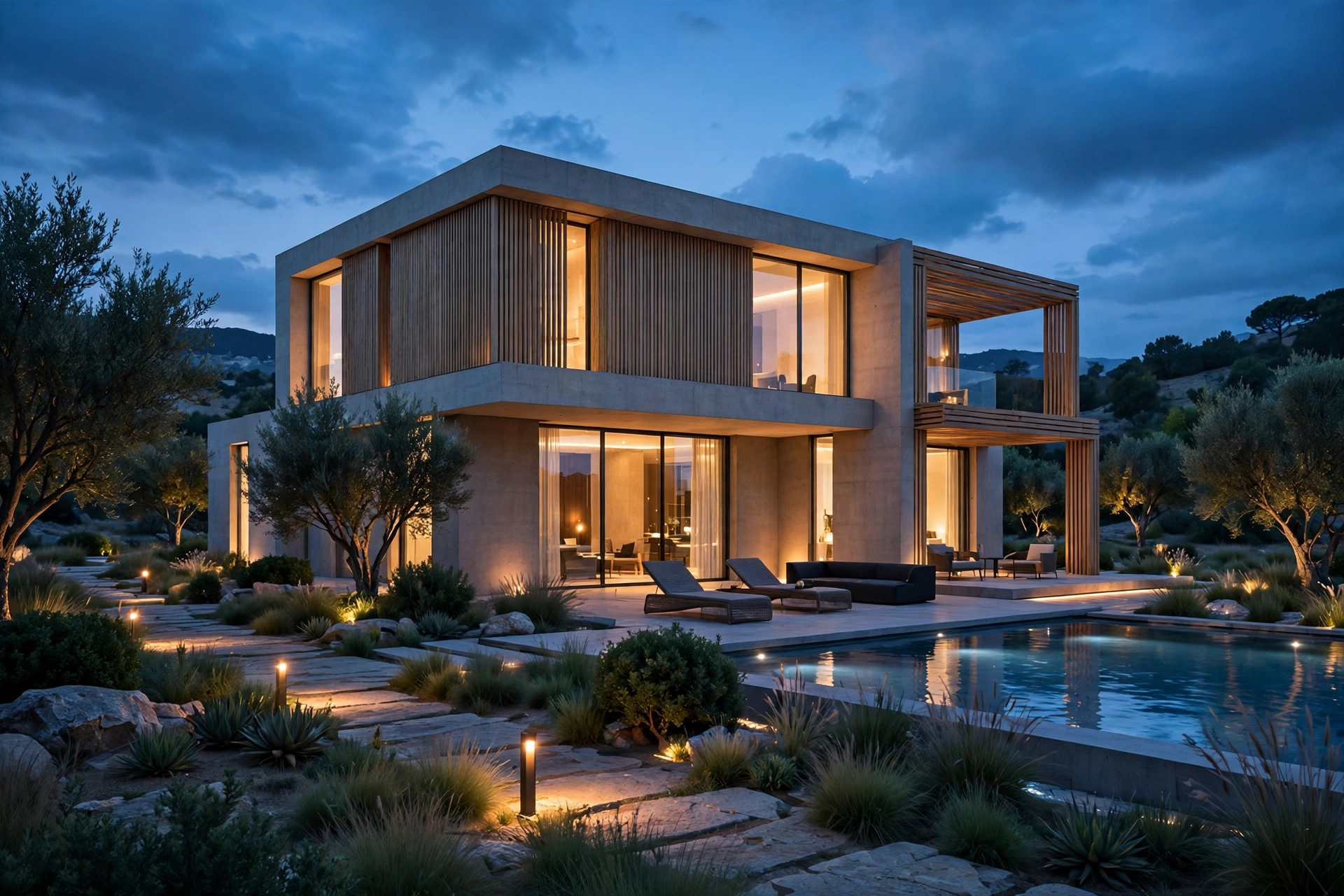
A still render shows a building. An animation lets someone experience it. The camera glides through the lobby at dawn, rises along the facade as the city wakes up, and settles on a terrace view while the soundtrack builds. For developers launching off-plan and architects presenting to juries, architectural animation is the most persuasive medium in the visualization toolkit. It is also the one clients ask about with the most uncertainty, because pricing is opaque and quotes vary wildly.
This guide breaks down architectural animation cost in 2026 : how studios actually price animation, real per-second and per-minute price ranges, the factors that push quotes up or down, typical timelines, and exactly what to send a studio so you get an accurate fixed price instead of a guess.
How architectural animation is priced
Almost every professional studio prices animation per second of finished video . This is the standard unit because the real cost driver is render time: every second of video at 30 frames per second means 30 individually rendered images. A 60-second film therefore requires rendering around 1,800 frames, each one a full-quality 3D render.
In 2026, the typical per-second rate for professional architectural animation sits between $80 and $250 per second . That means a 60-second film costs roughly $4,800 to $15,000, and a two-minute cinematic production lands between $15,000 and $30,000. Simple daytime flythroughs sit at the lower end, while cinematic films with interiors, dusk sequences, and full post-production sit at the top.
Some studios quote per minute instead, but the math is identical. Be wary of lump-sum quotes with no breakdown: without a per-second rate you cannot compare studios fairly or understand what happens to the price if you add 15 seconds to the film. Our guide to architectural rendering services explains the full deliverable range studios offer, from stills to films.
2026 price ranges by animation type
Not all animations are the same product. Here is what each type typically costs in 2026:
Simple exterior flythrough (30-60 seconds)
A daylight camera path around the building and site, no interiors, minimal post-production. Typical range: $3,000 to $7,000 . This is the workhorse format for planning submissions and early investor decks, where the goal is showing massing, context, and arrival sequence.
Interior walkthrough (60-90 seconds)
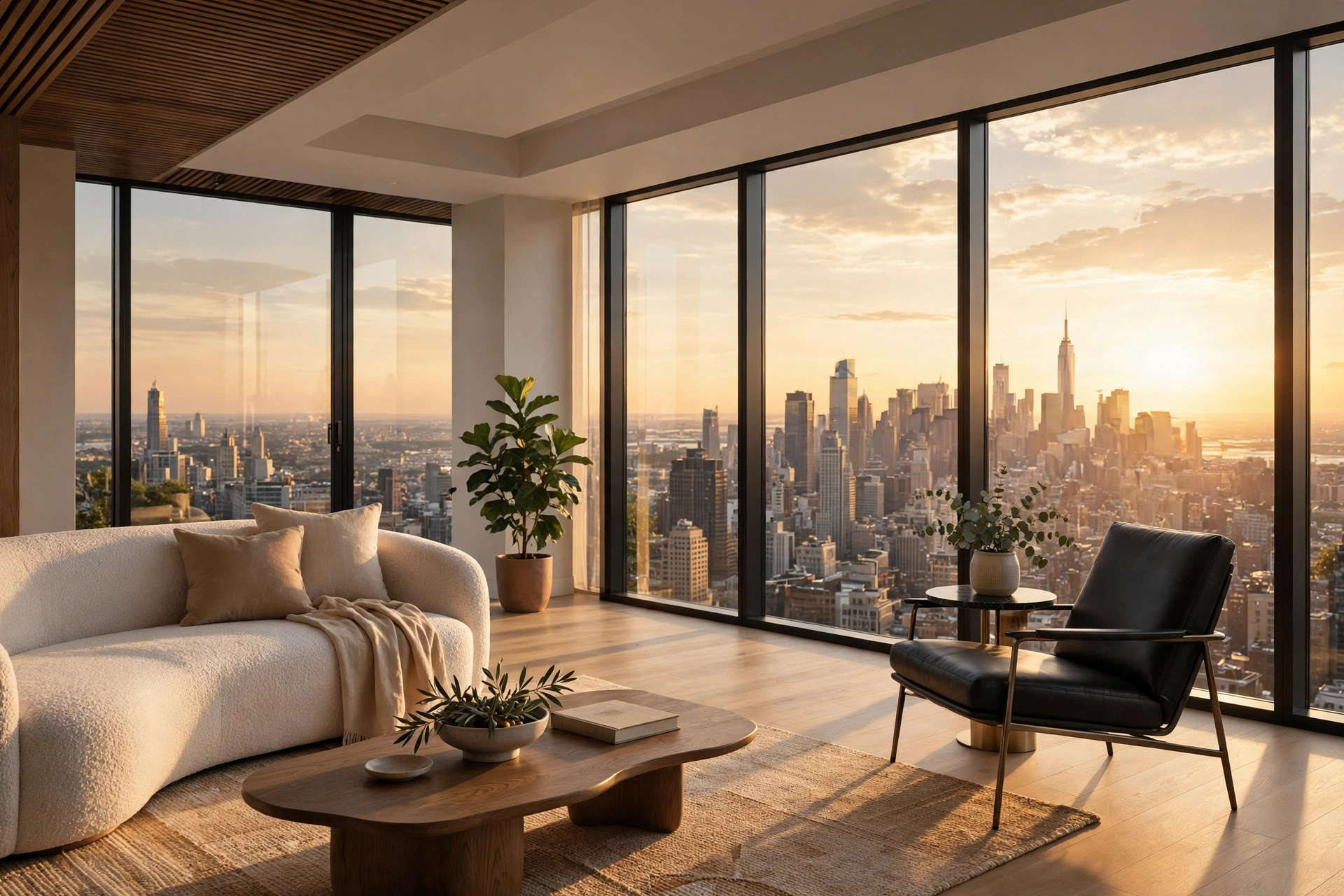
Eye-level camera movement through lobbies, apartments, or offices. Interiors cost more than exteriors because every visible surface needs detailed materials, lighting, and furnishing, and the camera sees close-up detail. Typical range: $6,000 to $14,000. Hotel and hospitality interiors sit at the higher end.
Cinematic marketing film (60-120 seconds)
The premium format: scripted sequences mixing interiors, exteriors, and aerials, with dusk or twilight scenes, professional color grading, music, and sometimes voiceover. Typical range: $12,000 to $30,000. This is what launches luxury developments, as our walkthrough animation guide describes in detail.
Technical and phasing animation (30-90 seconds)
Exploded views, construction sequencing, and phased-development flyovers for investors and contractors. Stylized rather than photoreal, which keeps costs lower. Typical range: $4,000 to $10,000.
Social media cuts (15-30 seconds each)
Short vertical or square recuts of a longer film for Instagram, TikTok, and LinkedIn. When produced alongside the main film: $500 to $2,000 per cut. As a standalone commission, expect to pay more per second because setup costs are fixed.
What drives animation costs up (and down)
Six factors decide where your project lands inside those ranges:
- Interior vs exterior: Interiors cost 30 to 60 percent more than exteriors of the same length, because of furnishing, material detail, and complex artificial lighting.
Model starting point: If the studio can build on a 3D model from a previous still-image project, you save 15 to 30 percent on modeling. Starting from 2D drawings adds modeling cost and days to the schedule.
Environment complexity: Animated people, traffic, vegetation moving in wind, and water all add simulation and render cost. A calm, controlled scene renders far cheaper than a lively streetscape.
Lighting scenarios: Each extra time of day (daylight plus dusk plus night) multiplies lighting setup and render cost. One strong lighting scenario per film is the budget-friendly choice.
Post-production: Color grading, motion graphics, titles, and sound design typically add 10 to 20 percent on top of the animation itself. Professional voiceover adds $300 to $1,500 depending on usage rights.
Deadline: A standard 60-second animation takes 3 to 4 weeks. Rush delivery (under 2 weeks) typically adds a 25 to 50 percent premium because the studio must reserve dedicated render capacity.
The single biggest budget killer is a late design change. Altering the building's massing or materials after animation has started can force re-rendering entire sequences, effectively doubling the cost of affected shots. Freeze the design before the studio begins camera work.
Animation vs stills: how the budgets compare
A common question is why animation costs so much more than still images. The answer is frames. A single still is one rendered frame; a 60-second animation at 30 frames per second is 1,800 frames. Even though the 3D model is built once, every frame must be rendered, and render farms charge by compute time.
As a rule of thumb, budget 8 to 15 times the cost of a single hero still for a one-minute animation of the same scene. If a hero exterior still costs $800, the 60-second animated version of that view will typically run $6,500 to $12,000.
The smartest budget move is to commission stills and animation together. The 3D model, materials, and lighting are built once and reused across both, which cuts 20 to 30 percent off the combined price versus commissioning them separately. Ask your studio for a bundled quote; most offer one.
Typical animation timelines in 2026
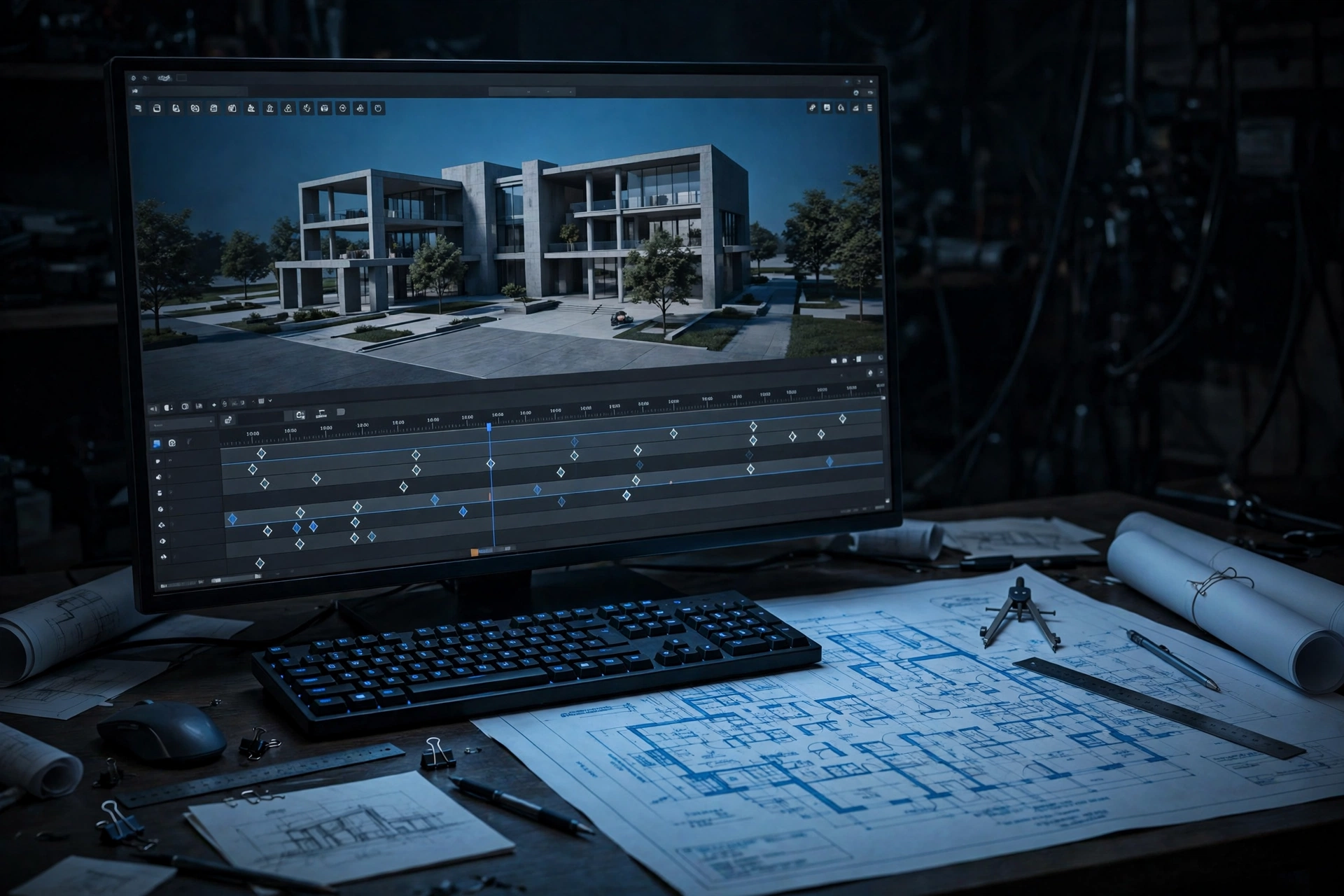
For a 60-second animation, expect 3 to 4 weeks from signed brief to final delivery. That breaks down roughly as: 3 to 5 days for 3D modeling, 5 to 7 days for texturing, lighting, and camera setup, 7 to 10 days for rendering, and 3 to 5 days for post-production and revisions.
Two-minute cinematic films run 6 to 8 weeks. The biggest schedule risk is client feedback rounds; each revision cycle after rendering has started adds 3 to 5 days. Agree on two fixed review points (after previz and after first full render) to keep the timeline intact.
How to get an accurate fixed quote
Studios can only give fixed quotes when the brief is fixed. Send these six items and you will get comparable, like-for-like quotes back:
1. Finished length: State the target duration in seconds. 'About a minute' is not a brief; '60 seconds' is.
Animation type: Flythrough, interior walkthrough, cinematic film, or technical animation.
Reference films: Two or three links to animations whose quality and mood you want to match.
Must-see spaces: List the rooms and exterior views the camera must visit, in priority order.
Model status: Do you have a 3D model (which software?), or only 2D drawings?
6. Deadline and delivery formats: Final date, plus required formats (4K master, social cuts, stills).
With those six items, most studios return a fixed quote within 2 to 3 business days. Without them, you will get wide estimate ranges that are impossible to compare.
Frequently asked questions
How much does architectural animation cost per minute?
In 2026, professional architectural animation typically costs $4,800 to $15,000 per finished minute, based on per-second rates of $80 to $250. Simple exterior flythroughs sit at the lower end; cinematic films with interiors at the higher end.
Why is animation more expensive than still renders?
A still is one rendered frame. A 60-second animation at 30fps is 1,800 frames, each requiring render compute time. Expect to budget 8 to 15 times the cost of a hero still for a one-minute animation.
Can you animate from our existing 3D model?
Yes, and it saves money. Building on an existing SketchUp, Revit, or 3ds Max model cuts 15 to 30 percent off modeling costs. Share the model (and its organization quality) when requesting a quote.
How long does a 60-second animation take?
Three to four weeks from signed brief to delivery: 3 to 5 days modeling, 5 to 7 days texturing/lighting/camera, 7 to 10 days rendering, 3 to 5 days post-production and revisions.
Do you provide voiceover and music?
Yes. Licensed music is typically included in post-production; professional voiceover adds $300 to $1,500 depending on usage rights and talent.
Can we get still images from the animation?
Absolutely. Any frame can be exported as a high-resolution still, and studios usually include a set of stills when you commission animation and images together at a bundled price.
Architectural animation is a significant investment, but priced per second and scoped tightly, it is also the highest-converting asset in a development launch. If you are planning a project, send us your drawings and a target duration, and we will return a fixed quote within 2 to 3 business days.
Written by
Architecture Designing Team
3D Visualization Studio