Rendering for Real Estate Developers: Pre-Sales Guide
For a real estate developer, the hardest sale is the one that does not exist yet. Buyers cannot walk through an unfinished apartment, stand on a balcony that is still a drawing, or judge the light in a living room that is only a floor plan. They must decide with their imagination, and imagination is a poor sales tool on its own. That is why professional rendering has become a core part of development marketing, not a luxury extra. A strong set of renders turns drawings into a place a buyer can picture living in, and that picture is what converts a brochure view into a booking, a site visit, and a signed reservation.
Why Developers Render Before They Build
Developers use renders at three moments that matter commercially. The first is pre-sales, when off-plan units must be sold to fund construction or prove demand to lenders. The second is planning and stakeholder approval, when investors, partners, and local authorities need to see massing, materials, and street presence clearly. The third is ongoing marketing, when a project website, brochure, and sales gallery must keep selling units month after month. In each case, the render does work that plans and elevations cannot do: it shows scale, light, material quality, and lifestyle in one glance.
The commercial logic is simple. A buyer who can see a finished home feels less risk than a buyer who must trust a plan. That lower perceived risk shortens the sales cycle, supports the asking price, and reduces discounting. When marketing images match the finished building closely, buyers arrive with accurate expectations and there are fewer complaints at handover.
The Launch Package: What to Commission
A single hero exterior is not a launch package. Buyers research online first, compare several projects, and expect to understand a home from every angle before they book a visit. A complete developer package usually includes the following assets, each with a distinct job to do.
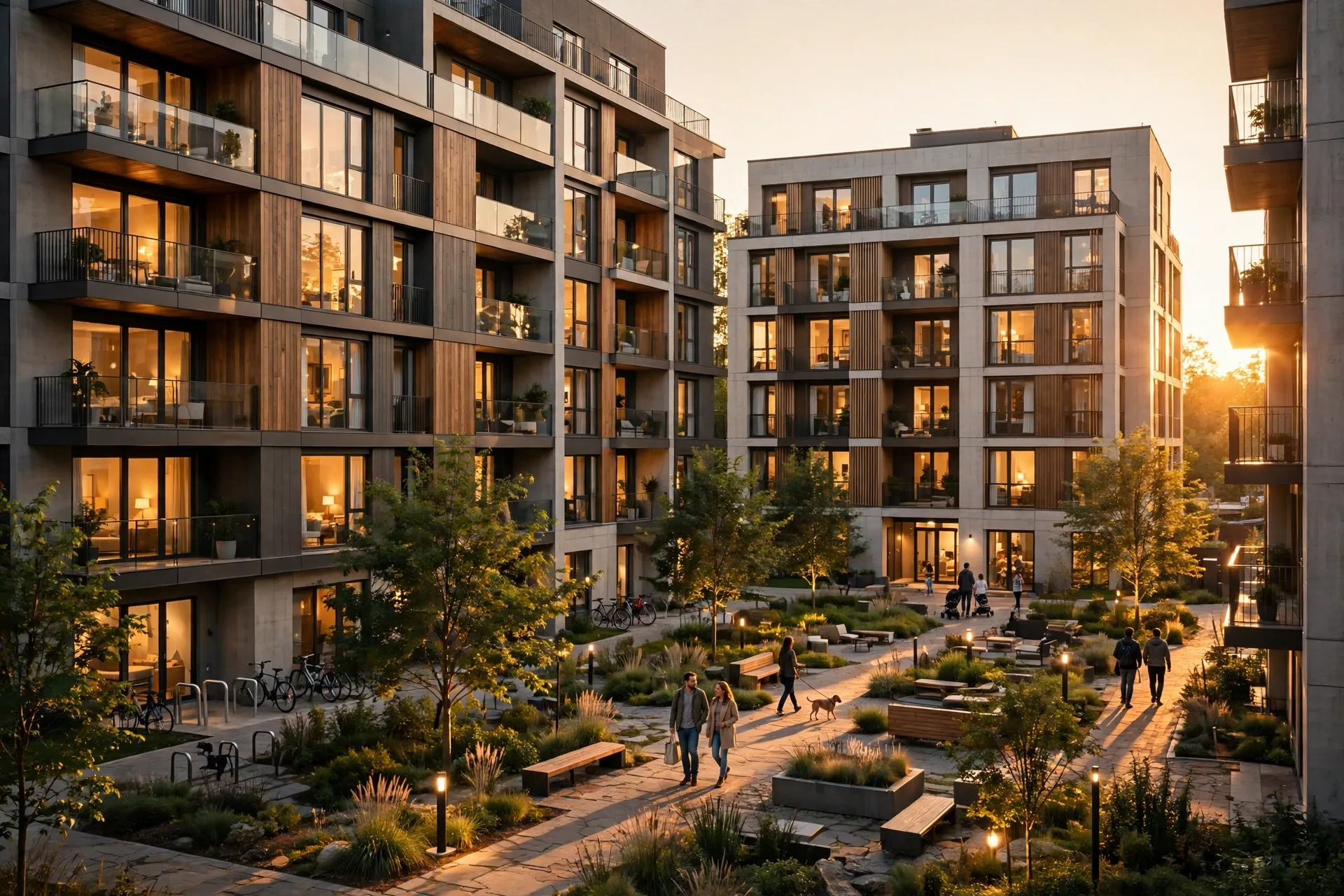
- Hero exterior views: two or three angles of the building, including a street view and a dusk shot, that anchor the brochure and the website homepage.
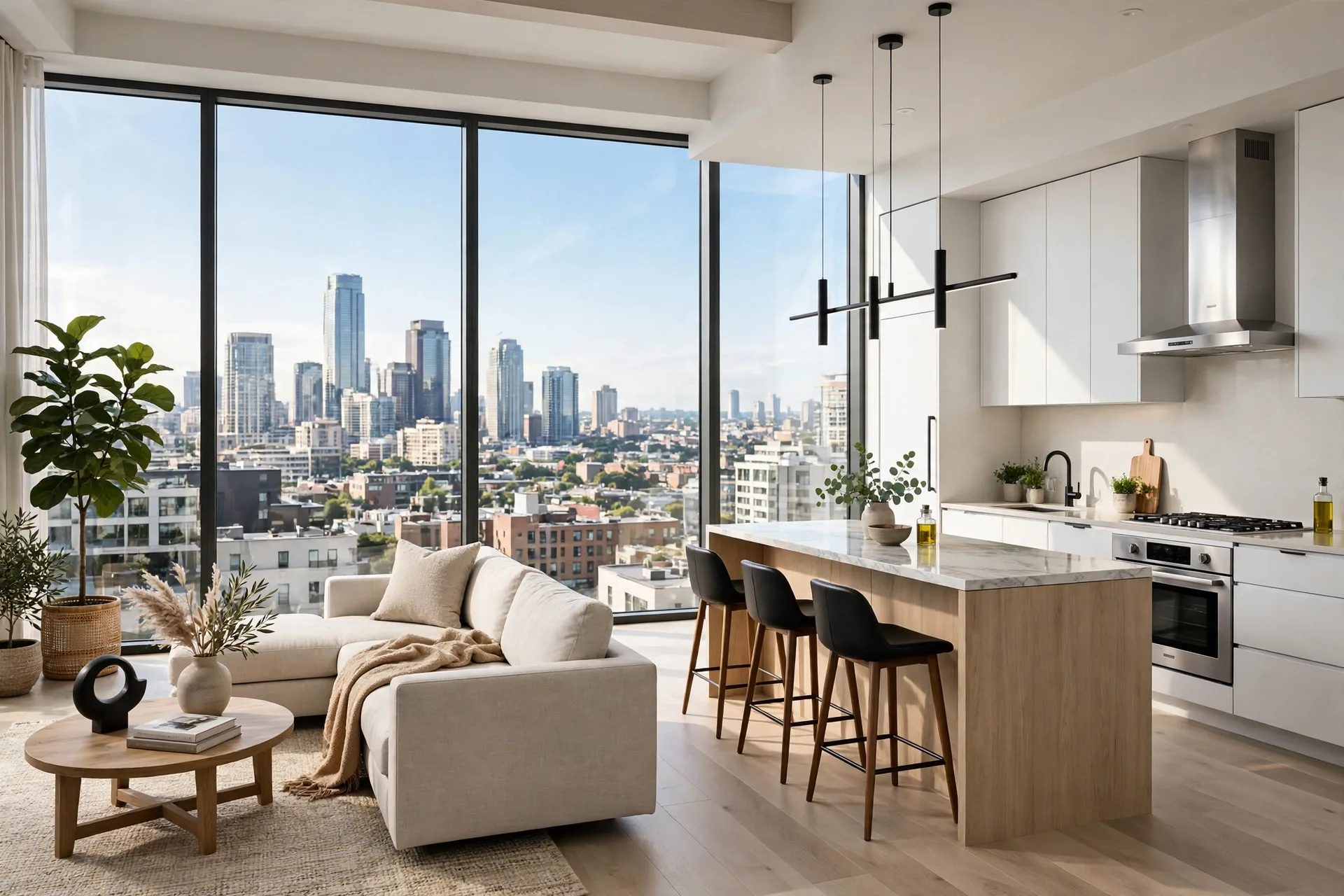
- Key interiors: a living room, a kitchen, and a primary bedroom, styled for the target buyer rather than generically furnished.
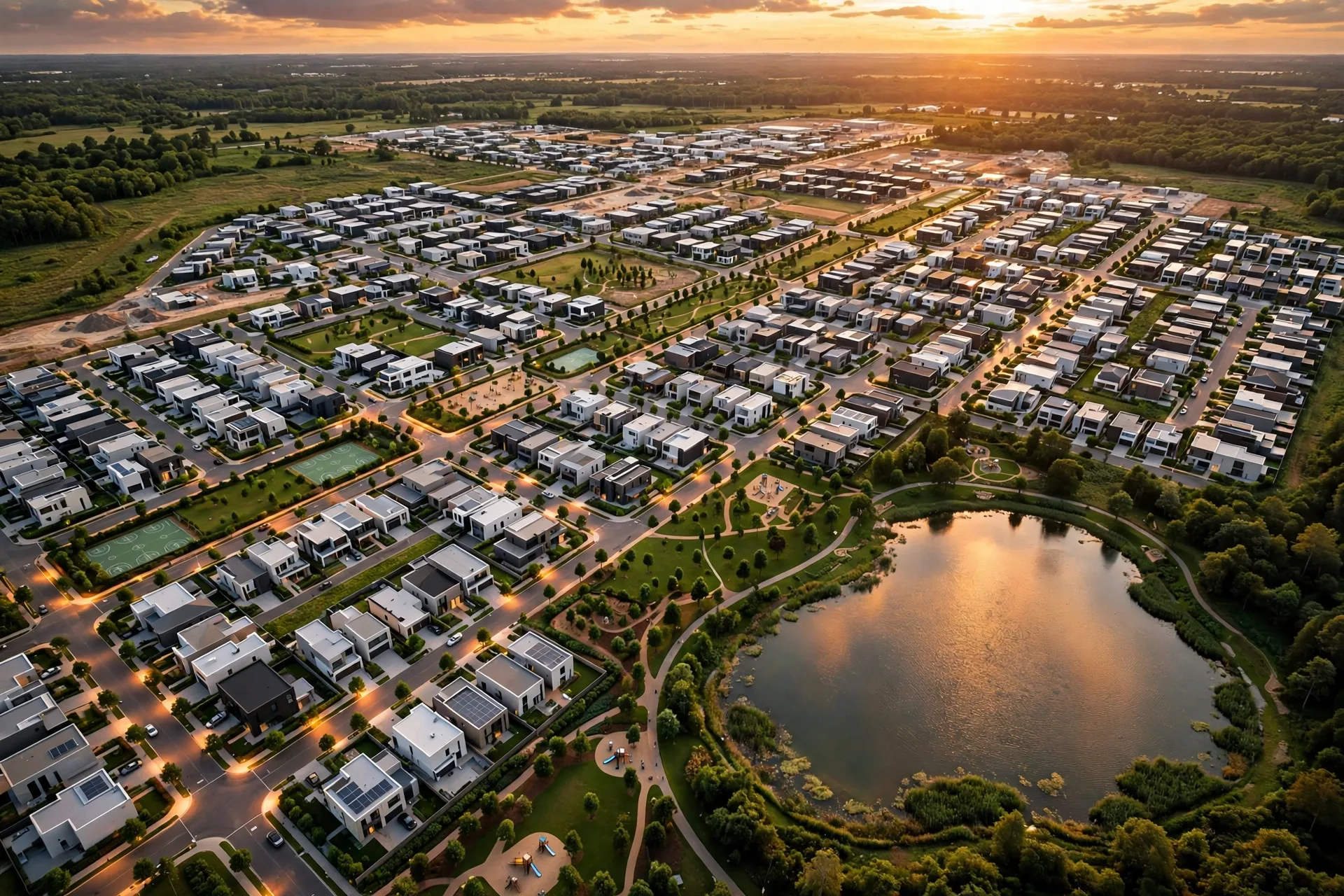
- Aerial or context view: a bird's eye image showing the site, surroundings, amenities, and access routes. Our aerial renders guide explains the four view types that work best for developments.
- 3D floor plans: furnished plans that help buyers understand layout and room sizes far better than flat 2D drawings. See our 3D floor plan cost guide for pricing.
- Animation or virtual tour: a short film or a 360 tour for the sales gallery and website, used when stills alone cannot convey flow between rooms.
The exact mix depends on project size. A ten-unit townhouse scheme may launch well on six to eight stills and one animation, while a 200-unit tower needs several unit types, amenity spaces, and a full context view. What matters is coverage: every unit type on sale should have at least one interior and one plan view. Gaps in that coverage are where sales enquiries stall.
2026 Costs and Budgets for Developers
Rendering costs in 2026 are best planned per view, with volume discounts for larger packages. As a guide, exterior views typically cost 300 to 1,500 dollars each, depending on building complexity, landscaping, and whether the view is daytime or dusk. Interior views typically cost 200 to 800 dollars each, with kitchens and large open plan spaces at the higher end because of the modelling and styling work involved. Aerial views typically cost 400 to 1,200 dollars each, and furnished 3D floor plans typically cost 100 to 300 dollars per floor. Short animations are priced per finished second, often 150 to 400 dollars per second, so a 60 second film is a major budget line and should be commissioned only when it will be used across the website, sales gallery, and social channels.
A realistic launch budget for a small to mid-size scheme is 3,000 to 10,000 dollars for a stills package, while a large tower launch can run to 15,000 to 30,000 dollars including animation and a virtual tour. These ranges match our house rendering cost guide and our rendering services guide. The biggest cost drivers are view count, landscaping, revision rounds, and deadline, so ask for a fixed quote in writing before production starts.
How Renders Lift Pre-Sales in Practice
Pre-sales success depends on three things: traffic, trust, and conversion. Renders support all three. On property portals and social media, listings with strong hero images earn far more clicks than listings with plans alone, so the same advertising spend reaches more buyers. On the project website, interiors and floor plans keep visitors browsing longer and answer the questions that would otherwise require a sales call. In the sales gallery, large printed renders and a screen-based tour let agents sell the lifestyle of the project even when the site is a construction zone outside.
Off-plan buyers consistently rank interior images and floor plans as the most useful marketing material, ahead of written specifications and location maps, because a render answers the personal question every buyer asks: can I see myself living here? Developers who invest in buyer-specific styling get a better return than those who reuse generic interiors across projects. Styling is not decoration; it is targeting.
Timeline: When to Start, and How Long It Takes
Start rendering as soon as the design is stable enough that major changes are unlikely, usually at planning submission or shortly after. Starting early gives the studio time to model properly and gives the developer marketing material for the launch, rather than a rushed set produced days before the brochure print deadline. As a guide, a single still view takes three to seven working days from a complete brief, while a full launch package takes two to four weeks depending on view count and revision rounds. Animations add two to four weeks on top of the stills, because camera paths, motion, and sound need separate production time.
Our rendering turnaround guide explains what speeds a project up and what slows it down. The most common delay is an incomplete brief: missing materials, unresolved facade details, or undecided landscaping. Each gap forces a guess, and each guess risks a revision round. Developers who supply CAD files, material schedules, and a styling note per unit type routinely hit their launch dates.
Mistakes Developers Should Avoid
The most expensive mistake is rendering too late, when the launch date forces shortcuts and the first draft becomes the final image. The second is under-scoping: commissioning only exteriors, then discovering at launch that buyers cannot judge interiors or layouts. The third is over-promising in the image, such as showing furniture, finishes, or landscaping that will not be delivered. That may win a reservation, but it creates disputes at handover and damages the developer's reputation for the next project. The fourth is inconsistent quality across the package, where a beautiful hero exterior sits beside weak interiors that undermine trust. A package should be judged as a set, not as individual images.
Finally, protect the usage rights. Confirm in writing where the renders may be used, for how long, and whether the studio's credit is required. Most studios grant broad marketing use for the project, but the terms should be explicit before the images go to portals, agents, and third party advertisers. A short clause in the original agreement avoids an awkward renegotiation later.
Frequently Asked Questions
How many renders does a development launch need?
A small scheme typically needs six to ten stills plus furnished floor plans. A large apartment tower needs 15 to 30 stills covering exteriors, several unit types, amenities, and aerial context. The rule is coverage: every unit type on sale needs an interior and a plan, and the project needs strong exterior and aerial views.
When should a developer commission renders?
As soon as the design is stable, usually at or just after planning submission. Early commissioning gives time for proper modelling, revisions, and brochure production. Commissioning after the launch date is set but before the design is fixed usually causes rework and delay.
Do renders really help sell off-plan units?
Yes. Buyers cannot inspect an unfinished home, so renders reduce perceived risk and answer the key question of what the finished home will feel like. Strong interiors and floor plans consistently rank among the most useful marketing material for off-plan buyers, and they support asking prices by showing quality clearly.
Should renders show furniture and styling?
Yes, styled interiors sell better than empty rooms, provided the styling matches the target buyer and the specification. Furniture in a render should be achievable in the real unit. Showing luxury items that will not be supplied, without labelling them as indicative, risks misleading buyers.
What is the difference between a render and a virtual tour?
A render is a single still image of one view. A virtual tour links multiple 360 views so a buyer can move through a space interactively. Tours are ideal for sales galleries and websites, while stills are ideal for brochures, portals, and advertising. Most launches use both.
How many revision rounds should a developer expect?
Most studios include two to three revision rounds per view in a fixed quote. Material changes and camera changes are quick revisions; design changes, such as moving walls or changing the facade, may require re-modelling and should be agreed as a separate scope before production starts.
Rendering is one of the highest return investments a developer can make before launch, because it is the only marketing asset that shows the finished product. Done early, scoped completely, and styled for the real buyer, a render package shortens the sales cycle, supports the price, and protects the developer at handover. If you are planning a launch and want a fixed quote for a complete package, our rendering services guide explains what to send us, or contact our studio with your plans and target launch date.
Written by
Architecture Designing Team
3D Visualization Studio