Hotel and Hospitality Rendering: Complete 2026 Guide
A hotel sells a night's sleep before the guest ever arrives, and the sale is made with pictures. Long before the building opens, a traveller scrolls through booking sites, an investor reads a pitch deck, and a franchise brand reviews a design proposal, and each of them judges the hotel by its images. A strong hotel render shows the lobby light, the bed, the bathroom, the pool, and the view from the room, and it makes the viewer feel the stay before it exists. A weak render makes a luxury hotel look ordinary. This guide explains how hotel and hospitality rendering works, which views every project needs, what it costs in 2026, and how operators use renders to fill rooms, win investors, and protect their brand.
Why Hotels Need Renders Before Opening
A hotel is one of the few buildings that must be sold before it is built. Rooms are pre-sold on booking platforms months before opening, investors commit capital on the strength of a pitch, and franchise brands approve or reject a design based on images alone. Without renders, none of those conversations can happen properly. A developer who waits for photography has nothing to sell until construction is finished, and the first season of bookings is lost. Renders move the sales timeline forward by a year or more, and that early revenue is often what makes the project viable.
Renders also solve a coordination problem that is unique to hotels. A single project involves the owner, the operator, the interior designer, the brand, and often a franchise standards team, and each group has different priorities. The owner cares about cost per key, the operator cares about durability and housekeeping, the designer cares about the look, and the brand cares about consistency with its standards. A set of photorealistic renders gives all of them the same picture to discuss, so decisions about materials, furniture, and lighting are made on a shared image instead of in separate meetings. Our developer rendering guide makes the same point for residential pre-sales: buyers and investors believe what they can see, and a hotel is no different. A render also sets a promise: if the finished room is smaller or plainer than the image, the first guests will say so in reviews that stay online for years.
The Views Every Hotel Project Needs
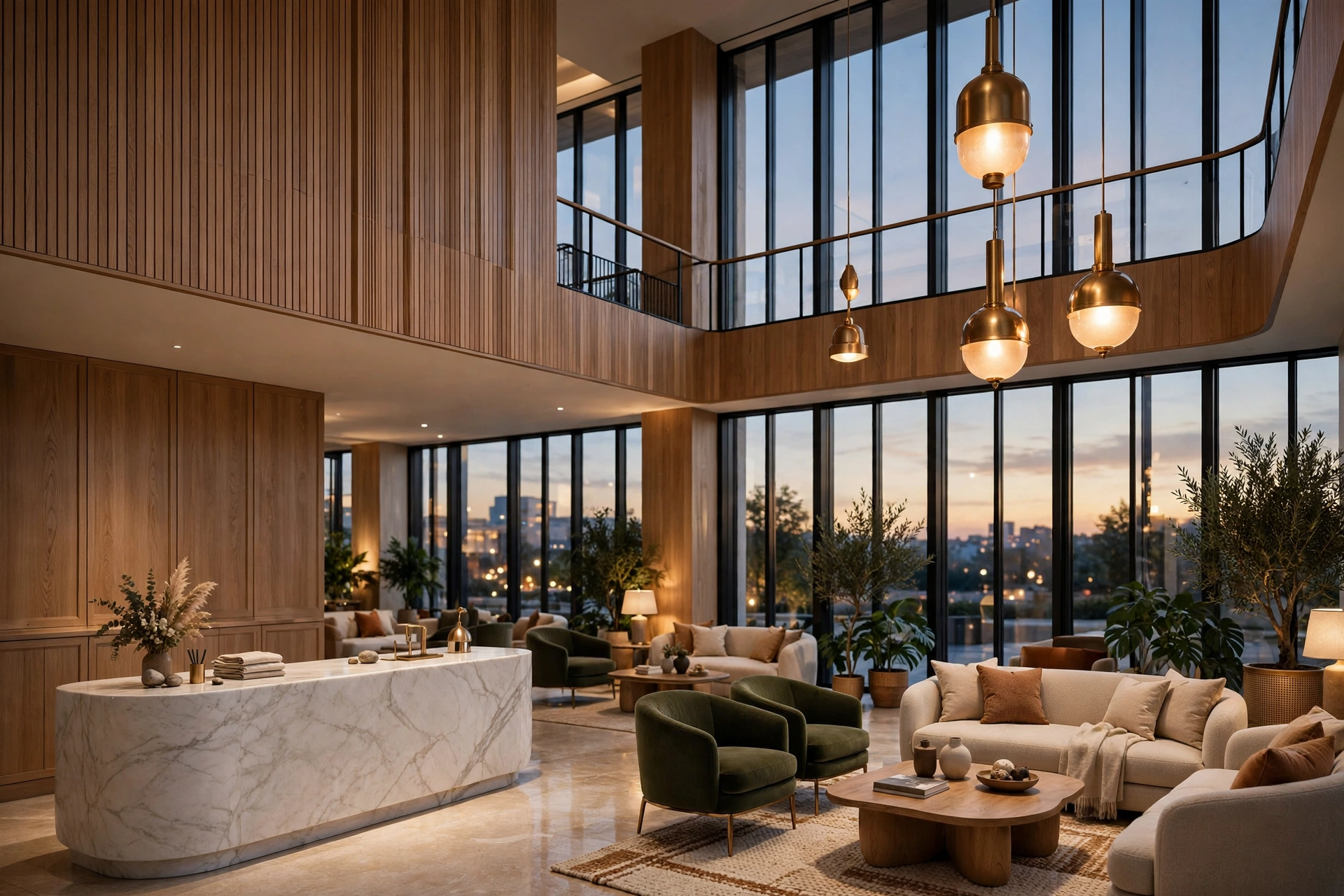
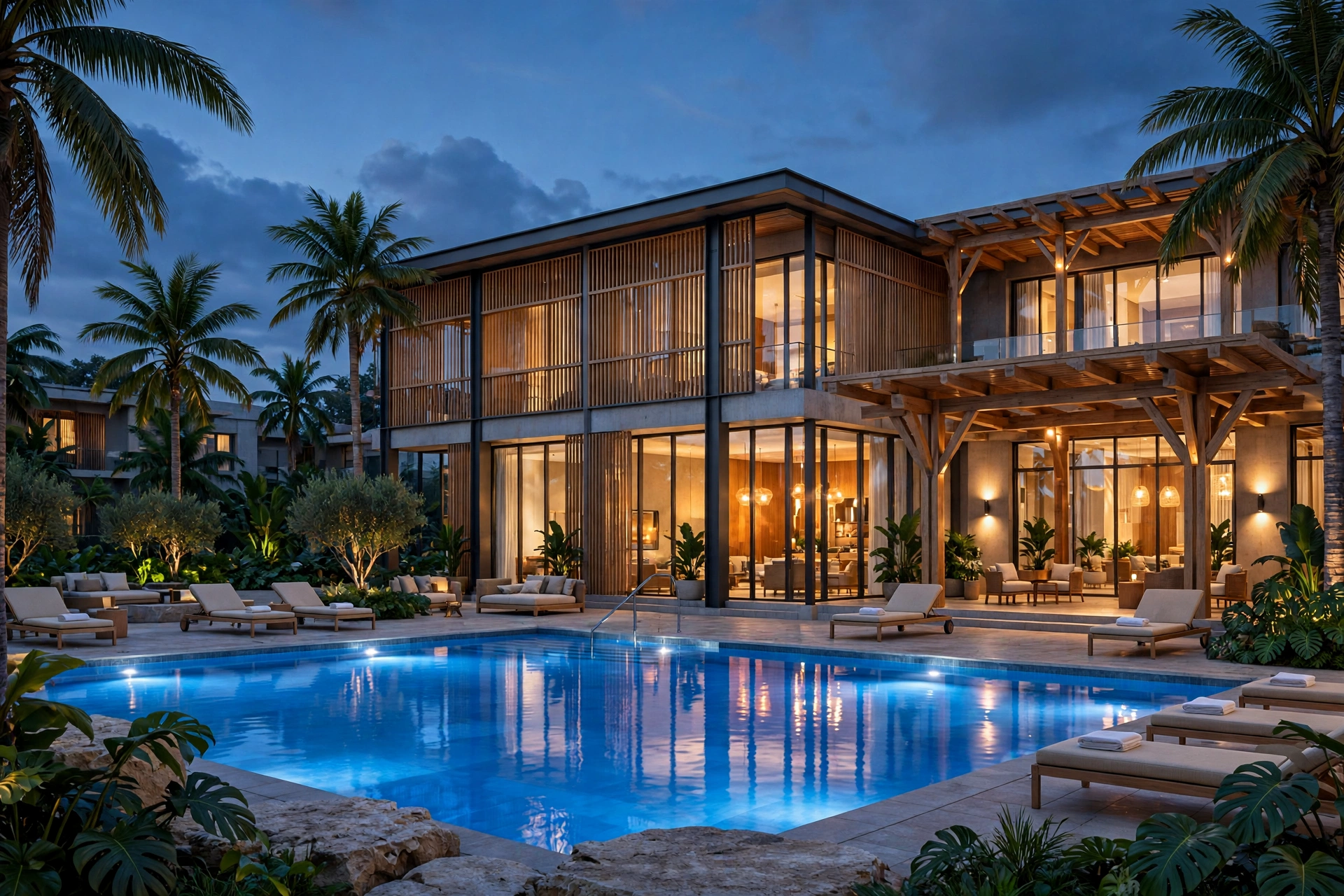
A hotel render package is built around the guest journey, from arrival to the room. The exterior is the first image a traveller sees, so it needs a hero view at dusk, when the building glows and the pool and landscaping read at their best. The lobby is the second image: a double-height space with a clear reception desk and warm lighting. Then come the rooms. A standard room, a suite, and the bathroom each need their own view, because those are the images a guest compares on a booking site before choosing a hotel.
Beyond the rooms, the package depends on the hotel type. A resort needs pool, restaurant, bar, and spa views, because guests choose a resort for its facilities as much as its rooms. A business hotel needs a meeting room, a co-working lounge, and a restaurant that works for a working dinner. A boutique hotel needs detail views, because its character lives in small moments. Our twilight renders guide explains why dusk views sell so well.
- Exterior at dusk: the hero image for booking sites, investors, and the hotel website.
- Lobby and reception: the arrival moment, showing scale, warmth, and clear wayfinding.
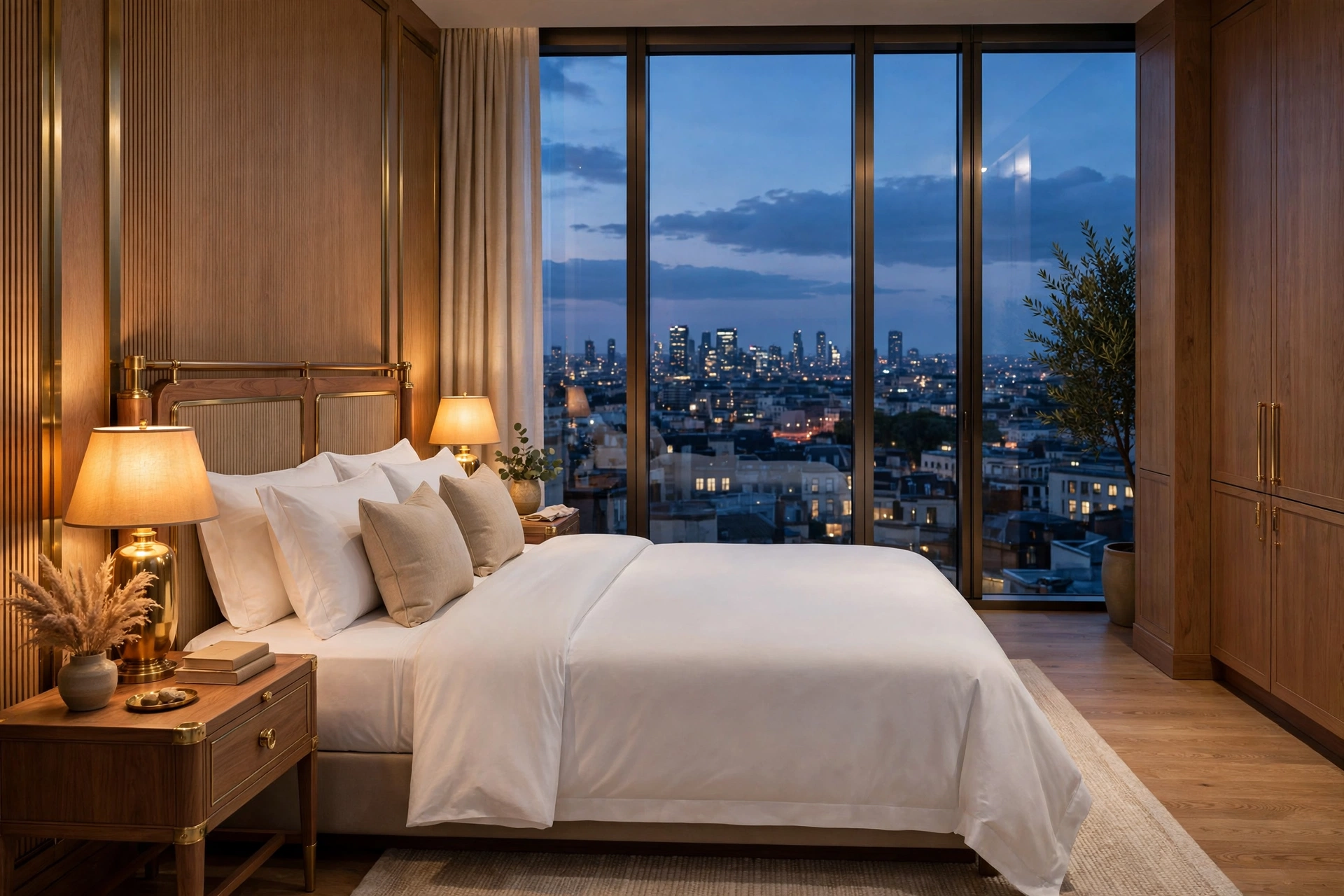
- Standard room: the room most guests will actually book, shown honestly at true size.
- Suite: the premium product, with its view, seating area, and bathroom.
- Restaurant and bar: the social heart of the hotel, lit for evening service.
- Pool, spa, and outdoor areas: the facilities that justify the rate at a resort.
What Hotel Renders Cost in 2026
Hotel rendering is priced per view, like other architectural visualization, with the total driven by how many views the package needs. In 2026 a single interior hotel view costs 200 to 800 dollars, and a detailed lobby or suite view usually sits at the upper end of that range because of the furniture, lighting, and styling involved. An exterior hotel view costs 300 to 1,500 dollars, with dusk and aerial views at the higher end. A full hotel package with ten to fifteen views, covering exterior, lobby, rooms, restaurant, and pool, usually costs 4,000 to 12,000 dollars. Large resorts and flagship hotels with twenty or more views, animations, and a virtual tour can reach 20,000 dollars or more. Our interior rendering cost guide and per-image cost guide give the full breakdown.
Several factors move a hotel quote. The number of unique rooms matters most: a hotel with five room types needs five room renders, while a hotel with one standard room repeated across floors needs only one. Furniture and styling add cost when the interior designer has not yet specified every piece, because the artist must source or model the furniture. Branding also adds time: a franchise hotel must match brand standards for colours, signage, and room layout, and the studio must check each image against those standards. A 60-second hotel film costs 3,000 to 10,000 dollars. The practical way to control cost is to agree the view list with the operator and the brand before work starts, and to reuse the same room render across booking platforms rather than commissioning a new image for every channel.
Designing Renders That Make Guests Book
Guests do not book a hotel for its architecture. They book for a feeling: rest, celebration, escape, or a productive work trip. The renders must sell that feeling, and the details that create it are small. A bed that looks slept in rather than showroom perfect, with a turned-down corner and a book on the side table, feels more inviting than a stiff, symmetrical bed. A bathroom with folded towels, a lit mirror, and a plant feels like a spa, while an empty bathroom feels like a showroom. These small styling choices are what make a render convert.
Light is the other deciding factor. Hotel rooms are judged on their windows and their evening mood, so a good package shows both: a bright daylight view that proves the room is light, and a warm evening view that shows how the room feels at the hour a guest actually uses it. The camera matters too. A slightly wide lens, around 24 to 28 millimetres, shows the whole room in one image, which is what a booking site needs, but the lens must not be so wide that the room looks twice its real size. Guests notice when the real room is smaller than the picture. Honest scale, warm light, and lived-in styling together make a hotel render that books rooms and keeps the guests who arrive.
Hotel Renders for Investors, Brands, and Operators
Different audiences need different images from the same project. Investors need to see the asset: the exterior, the lobby, the room count, and the facilities that generate revenue, presented cleanly in a pitch deck with costs and timelines. They care most about whether the hotel looks like a credible, marketable product. Franchise brands need the opposite: close checks against their standards, with exact colours, furniture types, signage placement, and room layouts. A brand review will reject an image for a wrong headboard or a non-standard light fitting, so the studio must work from the brand book, not from taste alone.
Operators need renders that help them run the hotel. Housekeeping needs to see whether a room can be cleaned quickly, with furniture that moves and surfaces that wipe down. Food and beverage teams need to see the restaurant flow, the bar position, and the kitchen pass. Front-of-house teams need to see the arrival sequence, from the drop-off to the desk to the lift, because a confusing lobby creates queues on the first night. A good studio asks who will use each image and what decision it supports.
Frequently Asked Questions
What is hotel rendering?
Hotel rendering is photorealistic 3D visualization of a hotel before it is built or renovated. It covers exteriors, lobbies, rooms, suites, restaurants, pools, and event spaces, for bookings, pitches, and marketing.
How much does hotel rendering cost in 2026?
A single interior hotel view costs 200 to 800 dollars and an exterior view costs 300 to 1,500 dollars. A full package of ten to fifteen views usually costs 4,000 to 12,000 dollars, and large resorts with animations can reach 20,000 dollars or more.
How many renders does a hotel need?
Most hotels need ten to fifteen views: an exterior, a lobby, each room type, a suite, a bathroom, a restaurant, and the pool or spa. Small boutique hotels can launch with eight to ten views.
How long do hotel renders take?
A single hotel view takes 3 to 5 working days. A full package of ten to fifteen views usually takes 3 to 6 weeks, including revisions, because the furniture, styling, and brand checks add time. Animations and virtual tours add another 2 to 4 weeks.
Can hotel renders be used on booking sites before opening?
Yes, that is one of their main uses. Booking platforms accept renders for pre-opening listings, provided the images are labelled as renders where required and show the rooms at true size. Honest renders prevent bad reviews.
Do hotel renders need to match franchise brand standards?
Yes, for branded hotels the renders must follow the brand book exactly, including colours, furniture, signage, and room layouts. The brand reviews the images before approving the design, and a studio should work from the brand standards from the first draft.
A hotel is a promise made in pictures, and the guests who arrive will compare the real building with the images they booked from. Renders that are beautiful, honest, and built around the guest journey fill rooms, win investors, and protect the reviews that decide the next booking. If you are developing or renovating a hotel, contact our studio with your drawings, room schedule, and brand standards for a fixed quote and a clear timeline.
Written by
Architecture Designing Team
3D Visualization Studio