Twilight Renders: Golden Hour and Blue Hour Guide
A twilight render stops people mid-scroll. A house that looks ordinary at noon becomes a home at dusk: windows glowing warm, the sky deepening to blue, garden lights tracing the path to the front door. Developers know this, which is why the hero image on almost every property launch is a dusk shot. This guide explains how twilight renders are made, what golden hour and blue hour each do best, and how to brief a studio so your dusk images sell.
Twilight is not one look. It is a short window of changing light, and the best studios treat it as two distinct shots. Golden hour is the last hour before sunset, when low sun paints facades warm and shadows stretch long. Blue hour is the 20 to 40 minutes after sunset, when the sky turns deep blue and interior lights become the brightest thing in the frame. Each suits different projects, and choosing wrong is the most common reason a dusk render disappoints.
Golden Hour vs Blue Hour: Which One Your Project Needs
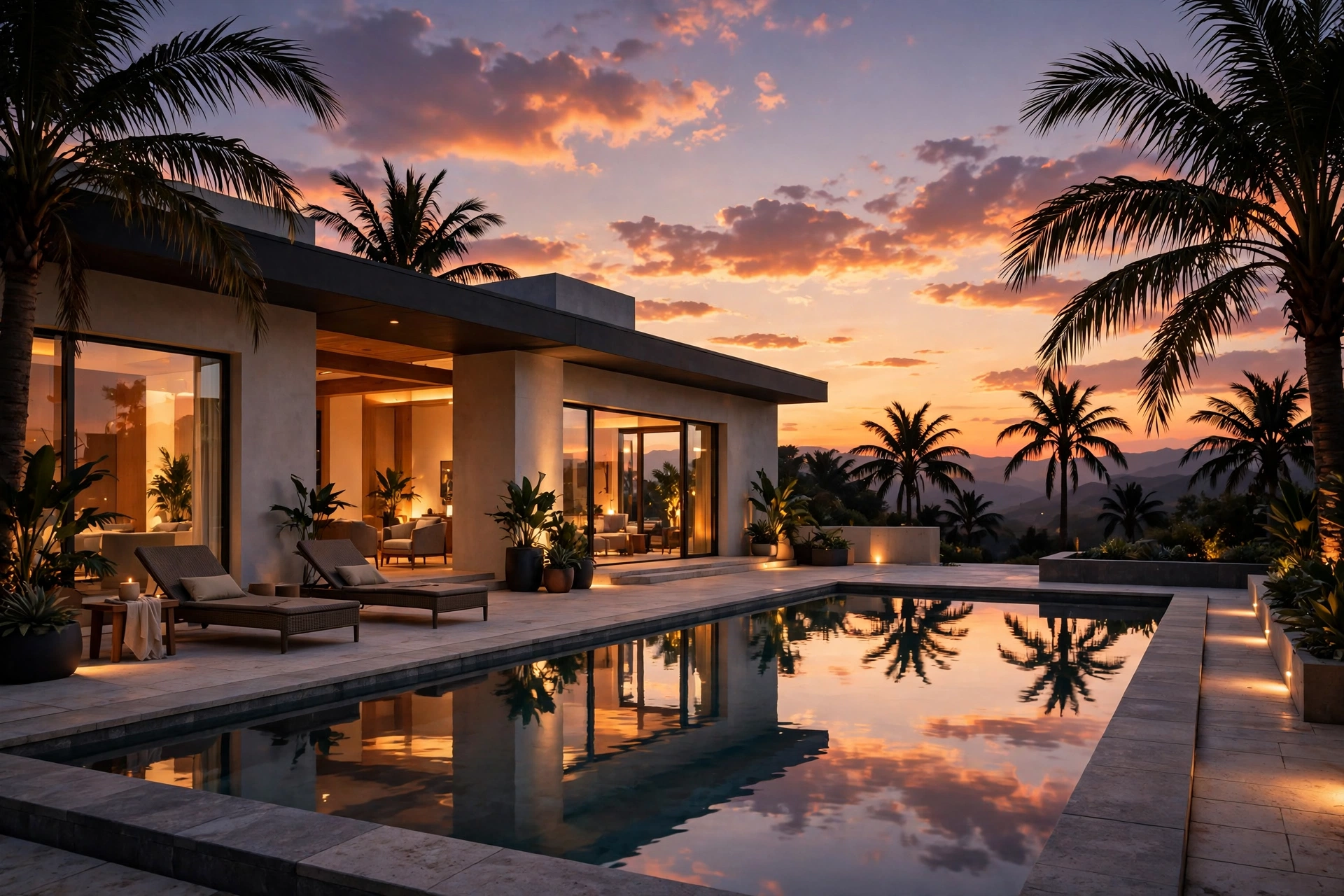
Golden hour flatters architecture. Warm sunlight rakes across brick, stone, timber cladding and render, revealing texture that flat midday light hides. It suits traditional materials, pitched roofs, and houses with strong facade detail. Shadows add depth and make a building feel solid and grounded. If your project has beautiful masonry, a crafted entrance, or a garden you want to show off, golden hour is usually the right call.
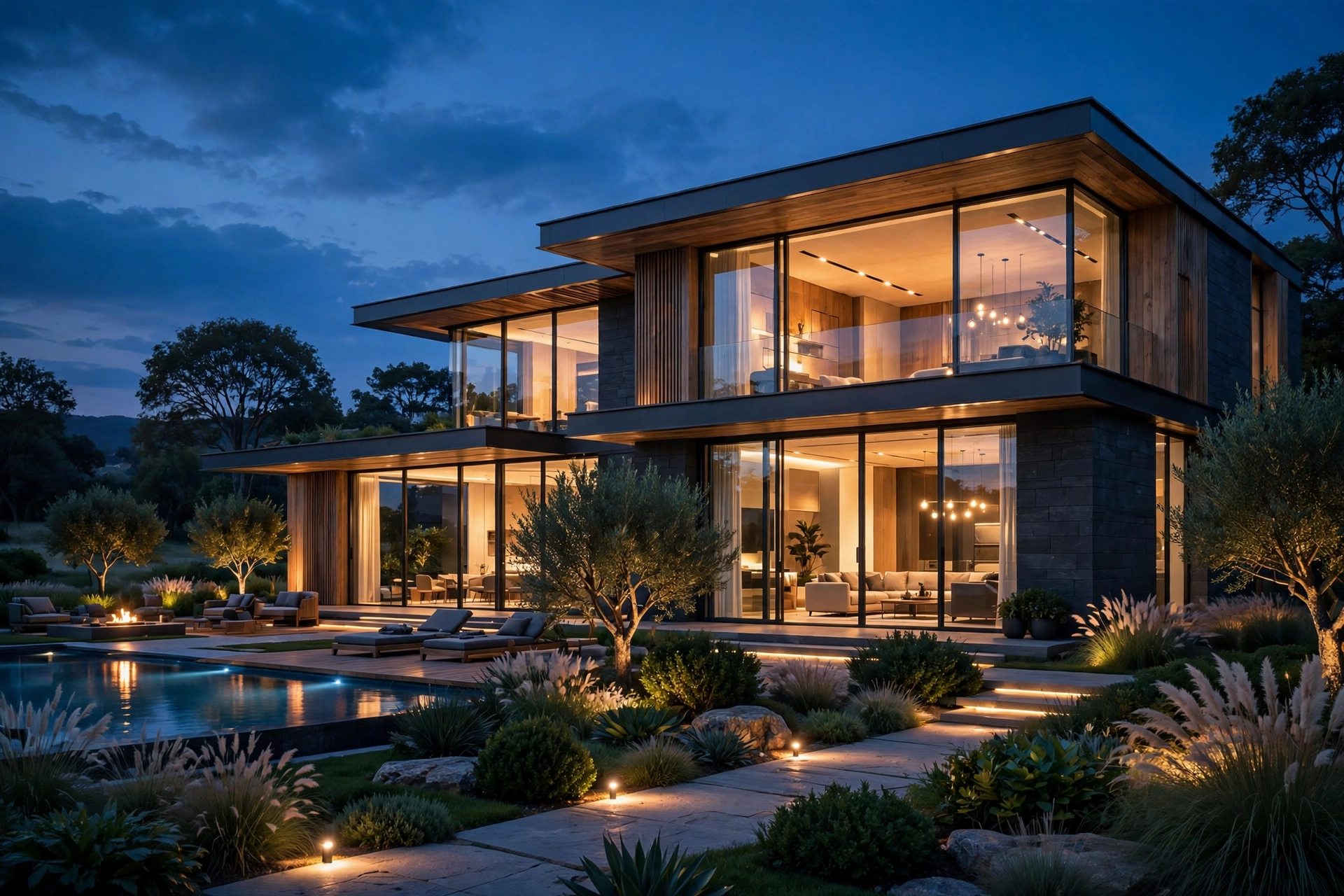
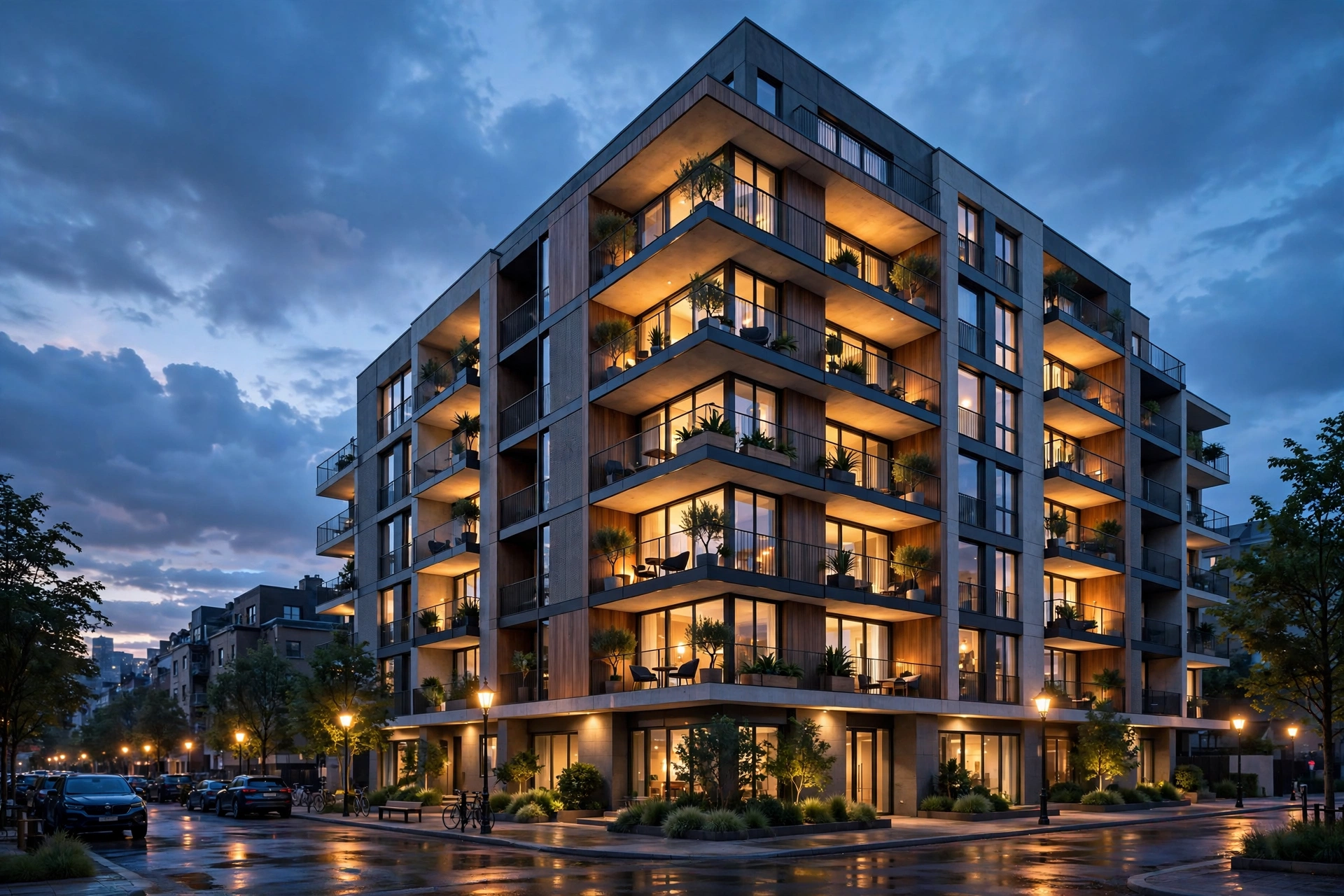
Blue hour sells lifestyle. Once the sun drops, the sky goes cobalt and every lit window becomes a promise of the life inside. It suits modern homes with large glass areas, apartments with lit balconies, and any project where the interior matters as much as the exterior. Blue hour also hides unfinished surroundings better than daylight, because landscaping, roads and neighbouring buildings fall into shadow while your building glows. Many launches order both as a pair, since both come from the same 3D scene and cost far less than two separate commissions.
How a Twilight Render Is Built
A convincing dusk render is built in layers, and every layer has to be right or the image feels fake. The process starts with the 3D model, exactly as for a daylight render. Then the lighting is rebuilt from scratch: a low sun angle for golden hour, or a dim ambient sky plus artificial lights for blue hour.
For golden hour, the sun sits between 5 and 15 degrees above the horizon. In V-Ray, Corona, Lumion or D5 Render, this means a warm sun colour around 3000 to 3500 Kelvin and long shadows that need clean geometry to read well. Trees, fences and pergolas cast the long shadows that make golden hour images feel real.
For blue hour, the sky is the light source. Studios use a dusk HDRI sky or a physical sky set to just after sunset, then add interior lights room by room. Each lit room needs its own light sources with warm colour temperatures around 2700 to 3000 Kelvin, plus visible ceiling lights or lamps so windows do not glow as flat yellow rectangles. Exterior lights come next: wall sconces, path lights, pool lights and landscape uplights.
Camera, Exposure and Colour Settings That Matter
Twilight renders punish sloppy camera work. Exposure must balance a dark sky against bright windows, which is why studios render in 32-bit or use tone mapping controls rather than a single flat exposure. In V-Ray and Corona, camera exposure is set so the sky holds colour instead of going black, and interior lights are allowed to bloom slightly.
White balance is the second trap. Leave it on auto and the warm interior lights turn orange while the sky goes muddy. Professionals lock white balance to daylight or a fixed Kelvin value, then warm the interior lights separately. The result is a blue sky that stays blue and warm windows that stay warm, with a natural contrast between them.
Composition changes at dusk too. The camera should sit slightly lower so lit windows and landscape lights fill more of the frame. Reflections matter more: wet driveways, pool water and glass all mirror the sky and lights, doubling the glow.
Materials and Landscaping at Dusk
Materials behave differently in low light. Glossy surfaces such as glass, polished stone and water become mirrors for the sky and lights, while rough materials such as brick and timber go dark unless a light source touches them. This is why a facade lit only by the sky looks flat at dusk: it needs at least one warm light source, a porch light, an uplight, or spill from a window, to give it shape.
Glass deserves special attention. At blue hour it should show a faint reflection of the sky and the warm interior at the same time. Pure black glass looks dead, and fully transparent glass with no reflection looks like an opening rather than a window.
Landscaping is what separates a good twilight render from a great one. Uplights on trees, path lights along walkways, and a lit water feature give the image depth in layers: foreground glow, mid-ground building, background sky. Without landscape lighting, the bottom third of the image goes black and the building floats in darkness.
What Twilight Renders Cost in 2026
A twilight exterior render typically costs 10 to 25 percent more than the same view in daylight, because the lighting setup and post-production take longer. As a guide for 2026, a single residential twilight view from an established studio runs $400 to $900, while a commercial or multi-building dusk view runs $800 to $1,500. Ordering a golden hour and a blue hour version of the same view usually adds 40 to 60 percent to the daylight price, not double, because the model and camera work are shared.
Turnaround is similar to daylight work: 3 to 5 working days for a first draft of a single view, with one or two revision rounds included. Twilight revisions take slightly longer because every lighting change needs a fresh render, so approve the camera angle and materials in daylight first if your studio offers a preview. That avoids paying for dusk re-renders over a composition problem.
For a property launch, budget for at least one twilight hero image. Developers consistently report that dusk shots earn the most clicks on listing pages and the most saves on social media, and one strong hero image is worth more than three average daylight views.
Common Twilight Mistakes to Avoid
The most common mistake is overdoing the glow. Windows blown out to pure white, halos around every light, and skies pushed to electric blue all scream computer-generated. Restraint is what makes a dusk render believable: windows should show interior detail, not just light, and the sky should keep natural variation rather than a flat gradient.
The second mistake is a sky that does not match the light. If shadows point one way and the brightest part of the sky sits somewhere else, the image feels wrong even to viewers who cannot explain why. Always check that the sun position, sky brightness and shadow direction agree.
The third mistake is forgetting the surroundings. A glowing house floating in a black void looks unfinished. Even a simple treatment, a lit hedge line, a neighbouring roofline in shadow, a street lamp in the distance, grounds the building and sells the location.
How to Brief a Twilight Render
A good brief for a dusk shot is short but specific. State golden hour or blue hour, name the hero elements (entrance, pool, glass facade), list which rooms should be lit and which should stay dark, and describe the landscape lighting you expect. Send reference images of dusk shots you like, and note what you like about each: the sky colour, the window glow, the landscaping.
Also confirm deliverables up front: resolution, file format, and whether you get both a web version and a print version. Twilight images are often printed large for hoardings and brochures, so ask for at least 4K resolution. For more on choosing output size, see our render resolution guide. For the daylight fundamentals behind any great render, read how to make renders look realistic and best camera angles for architectural renders.
Frequently Asked Questions
What is the difference between golden hour and blue hour renders?
Golden hour is the warm light just before sunset, with long shadows and warm tones on facades. Blue hour is the period just after sunset, when the sky turns deep blue and interior lights dominate the image. Golden hour flatters materials, blue hour sells lifestyle.
Do twilight renders cost more than daylight renders?
Yes, usually 10 to 25 percent more, because lighting setup and post-production take longer. A golden hour and blue hour pair of the same view costs much less than two separate commissions because the model and camera are shared.
How long does a twilight render take?
Expect 3 to 5 working days for a first draft of a single view, with one or two revision rounds. Approve the camera angle in daylight first to avoid dusk re-renders over composition changes.
Can any building be rendered at twilight?
Almost any building works, but blue hour suits glass-heavy modern designs best, because lit interiors carry the image. Solid facades with small windows can look dark at blue hour and usually suit golden hour better.
Should I order twilight renders for every project?
Not every view needs to be dusk, but every launch benefits from at least one twilight hero image. Use daylight views to document the design accurately and one or two dusk shots to create the emotional pull that gets clicks and enquiries.
Twilight is where architecture becomes atmosphere. Done well, a dusk render does not just show a building, it shows the life waiting inside it, and that is what turns browsers into buyers. If you are planning a launch or a sales campaign, talk to our studio about a golden hour and blue hour pair for your hero view. Send us your drawings and a note on the mood you want, and we will come back with a fixed quote, usually within one working day.
Written by
Architecture Designing Team
3D Visualization Studio