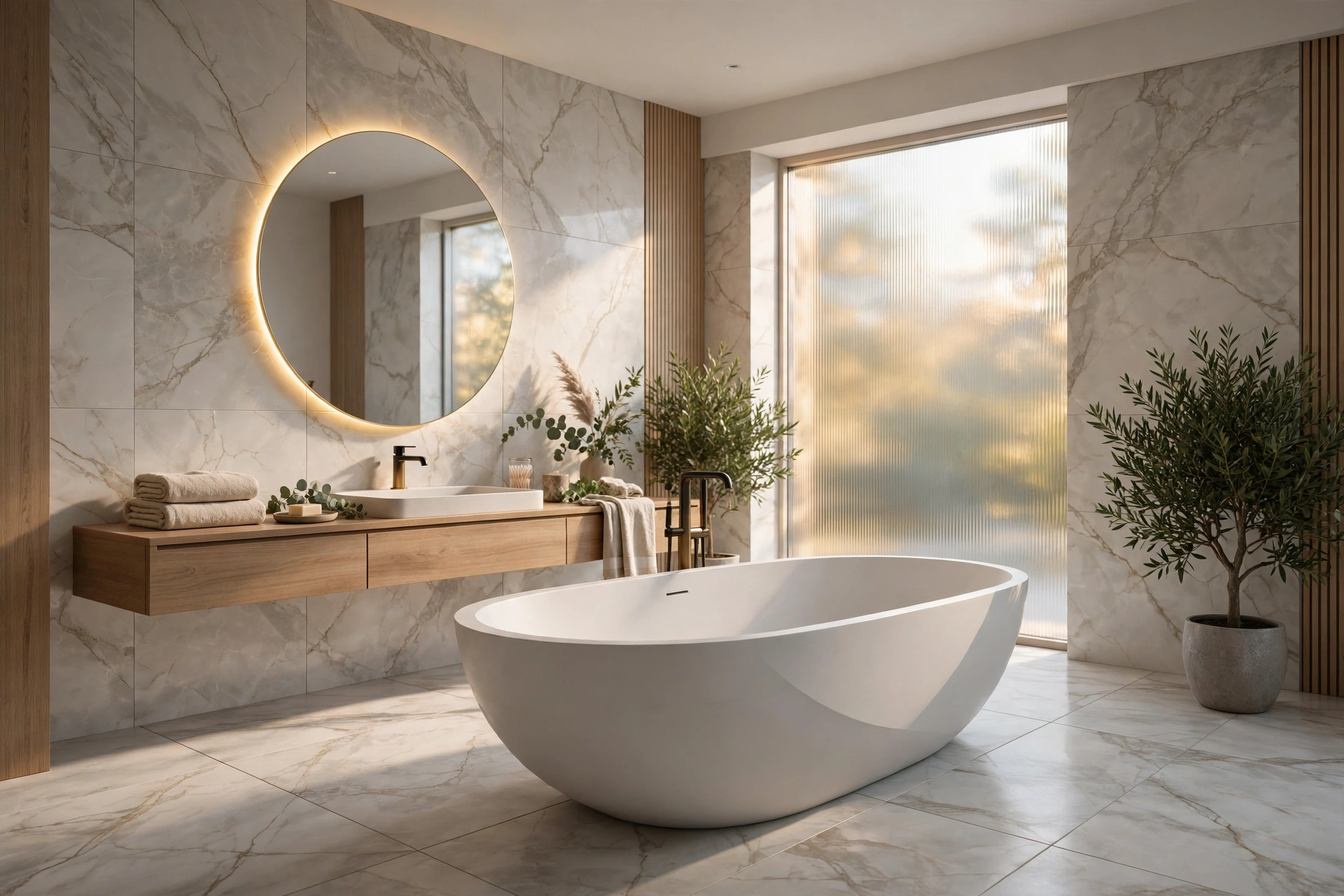
Bathroom Rendering Guide: Costs, Design and 2026 Tips
A bathroom is the smallest room in most homes, yet it is the room where a bad design decision costs the most. A vanity two inches too wide, a shower door that clips the toilet, tiles that clash once the light hits them: these mistakes are cheap to fix in a render and expensive to fix after the tiles are laid. That is why bathroom rendering has become a standard step for designers, developers, and homeowners planning a remodel. A photorealistic render lets everyone see the finished room before a single fixture is ordered, and it answers the question a floor plan never can: what will it feel like to stand in this room?
In 2026, a single photorealistic bathroom view from a professional studio typically costs between $300 and $650. The price reflects the room's density: more fixtures, materials, and reflections per square foot than any other space in the house. This guide explains what drives that price, which views to order, and how to brief a studio.
What a Bathroom Render Costs in 2026
Studios price bathroom stills per image, and the work per square foot is the highest in the house. The ranges below reflect typical 2026 quotes, covering modeling from your plans, materials and lighting, test previews, revisions, and final delivery.
- Budget tier ($250 to $350 per image): one clean camera view, standard fixtures from the studio library, one lighting setup, and one or two revision rounds. Fine for early design exploration.
- Mid tier ($350 to $500 per image): exact tile layouts, named fixtures modeled to scale, styled decor, and day plus evening lighting options. The sweet spot for most remodel presentations and listings.
- Premium tier ($500 to $650+ per image): spa-level detailing, freestanding tubs, custom joinery, feature walls, and water effects. Used for luxury listings and hotel bathrooms.
Ordering a bathroom together with the kitchen usually saves money, because the two rooms share stone, metal, and tile finishes, and the studio builds one material library for both. Our full interior rendering cost guide shows how bathroom pricing compares with every other room, and our per-image price breakdown covers mixed packages.
Why Bathrooms Cost More Than Their Size Suggests
A bathroom can be one tenth the floor area of a living room and still take nearly as long to render, because every surface is a hard, reflective, or wet material, and the camera is always close to the subject.
Tile is the biggest cost driver. A convincing layout needs correct grout lines, real-world tile dimensions, and a pattern that wraps corners the way a tiler would lay it. Glass is next: shower screens, mirrors, and shelves all reflect and refract, and they need accurate thickness to read as real. Fixtures follow: a tap, a toilet, or a rain shower head each has a shape clients recognize instantly, so studios model them precisely rather than dropping in generic library pieces. Lighting adds another layer, because most bathrooms mix daylight from a small or frosted window with warm light from mirrors and downlights, and the two color temperatures have to balance.
The 5 Views Every Bathroom Project Needs
One hero view is rarely enough, because each angle answers a different question:
- The wide hero view: shot from the doorway at eye level, showing the full room in one frame. This is the image for listings, presentations, and the client sign-off, and it must show the vanity, the shower or tub, and the toilet in a single believable composition.
- The vanity close-up: a tighter shot of the mirror, basin, taps, and lighting. This is where clients judge the fixtures they will touch every day, and where backlit mirrors earn their keep.
- The shower or tub view: the wet zone deserves its own image, showing tile work, glass, niches, and shower fittings. For spa-style bathrooms, this view often becomes the hero.
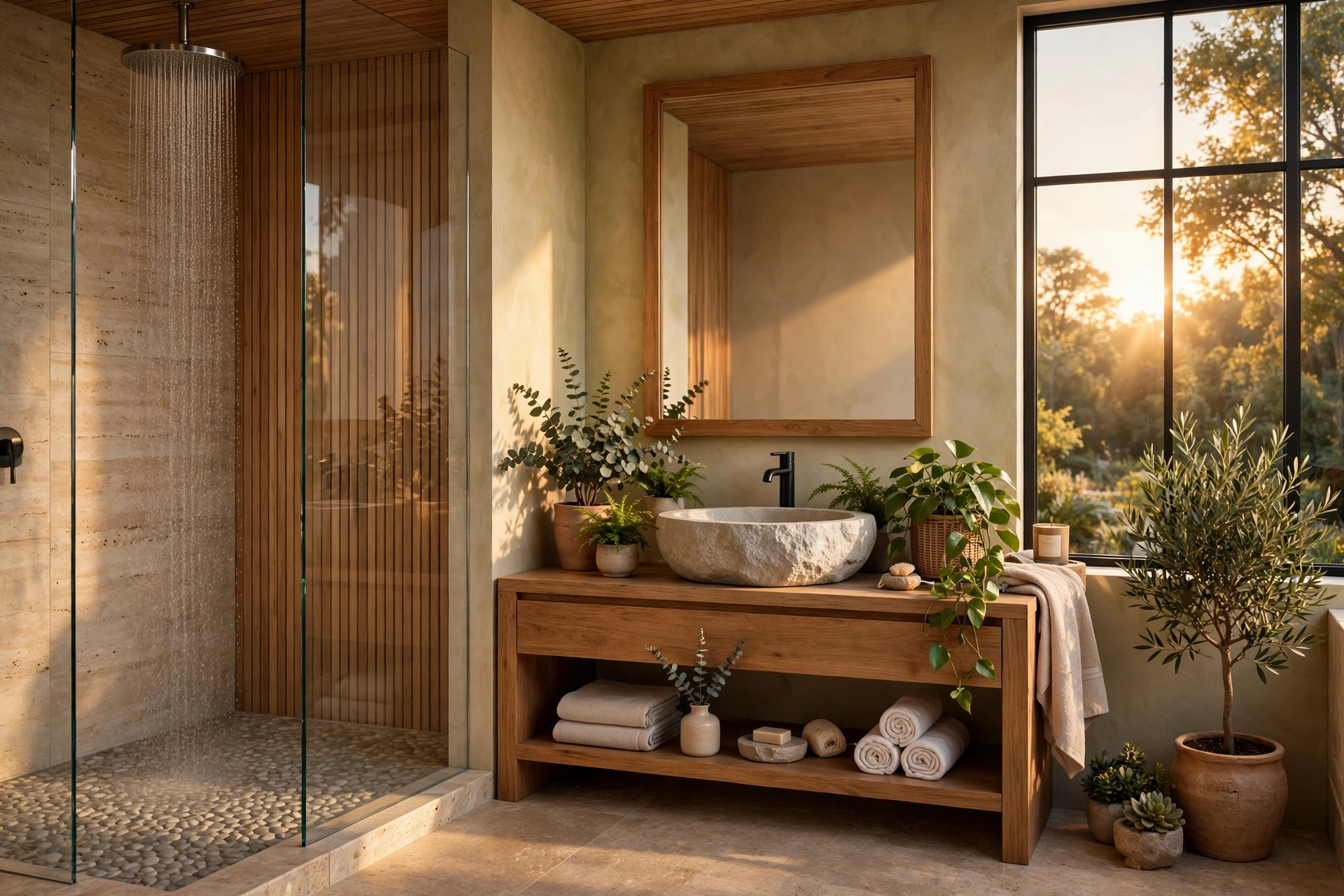
- The detail shot: a close view of the feature element, whether a patterned tile wall, a stone basin, or a brass fixture set. Detail shots sell craftsmanship and justify premium pricing.
- The evening mood view: the same hero angle lit for night, with warm lamps and glowing mirrors. It costs 30 to 50 percent of a new image because the scene is already built.
If your budget only stretches to two views, order the wide hero view and the vanity close-up. They answer the two questions every client asks: does the room work as a whole, and do the fixtures look right up close?
Small Bathrooms: The Views That Make Them Feel Bigger
Small bathrooms are where rendering earns its fee most directly, because the design decisions are the hardest and the margin for error is the smallest. A render lets you test ideas that would be risky to guess at: a wall-hung toilet, large-format tiles, a full-width mirror, or a glass shower screen instead of a curtain.
Camera choice matters more in a small bathroom than anywhere else. A slightly elevated camera at 1.4 to 1.5 meters, with a 28mm to 35mm lens, shows the floor and ceiling without the wide-angle distortion that stretches fixtures and makes clients distrust the image. Studios rely on honest composition instead: a clear sightline from door to window, a mirror placed to bounce light, and minimal styling so the room reads as calm rather than cluttered.
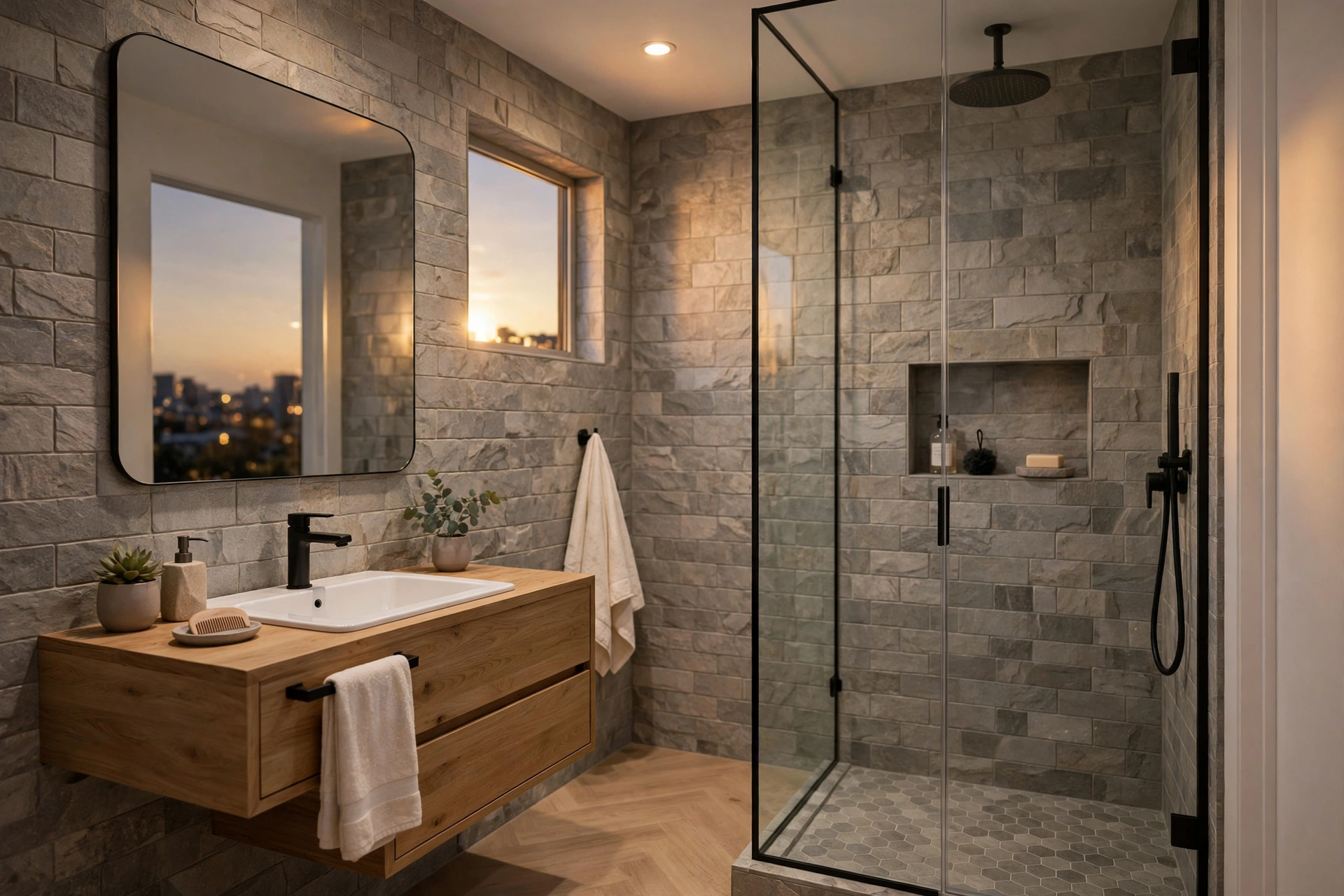
Material choices also change at small scale. Light, large tiles with matching grout make walls recede, and a floating vanity shows more floor and makes the room feel larger. Our guide on making renders look realistic explains the camera and material rules that keep small rooms believable, and our interior lighting guide covers the light balance that small bathrooms depend on.
Materials and Fixtures That Make or Break Realism
Bathroom realism lives or dies on materials, because every surface is within arm's reach of the camera.
First, use real-world scale for every texture: marble veining, wood grain, and tile patterns must match the physical size of the product. A marble slab stretched across a whole wall looks fake the moment a client compares it with a sample. Second, roughness values must be honest: polished stone reflects, honed stone does not, and brushed metal sits between the two. Third, grout is a material, not a line drawn on a texture, with its own color, roughness, and slight depth.
Fixtures need the same discipline. Model them to the manufacturer's dimensions and place them with real clearances: 60 centimeters in front of a toilet, enough swing for a shower door, a mirror at a usable height. A render that respects real clearances also protects the project, because it catches the conflicts a floor plan hides, like a towel rail behind a door swing. Finally, style with restraint: a folded towel, a small plant, and a soap dispenser are enough. Bathrooms are working rooms, and over-styling them makes the image feel staged rather than lived in.
How to Brief a Studio for a Bathroom Render
A good brief is the cheapest way to get a great bathroom render. Send these items before production starts:
- Floor plan and elevations with dimensions: even a rough sketch with measurements is enough. Mark the door swing, window size, and ceiling height.
- The fixture schedule: the exact models of toilet, basin, taps, shower, and bath, with links to the manufacturer pages.
- Tile and finish samples: product names, tile sizes, and grout colors. Photos of physical samples beat screenshots, because screens shift color.
- Reference images: three to five photos of bathrooms whose mood and material palette you like. This step prevents more revisions than any other.
- The view list: name each view and its purpose, whether a hero shot for a listing, a vanity close-up, or an evening mood for a presentation.
- Deadline and deliverables: the final resolution, the file format, and the date you need the images. Standard delivery is 3 to 5 working days per view.
If you are planning the kitchen at the same time, send both briefs together. Our kitchen rendering guide explains why ordering them together usually costs less per view.
Frequently Asked Questions
How much does a bathroom rendering cost in 2026?
A single photorealistic bathroom view typically costs $300 to $650 in 2026. Budget views start near $250, mid-tier views with exact tile layouts land between $350 and $500, and premium spa-style views reach $650 or more.
Why do bathrooms cost more to render than bedrooms?
Bathrooms pack more fixtures, reflective materials, and precise tile work into a small space, with the camera always close to the subject. Bedrooms rely more on furniture arrangement, which is faster to build, while bathrooms need exact modeling of tiles, glass, and sanitaryware.
How many views should I order for a bathroom?
Five views cover a project properly: a wide hero view, a vanity close-up, a shower or tub view, a detail shot, and an evening mood view. If your budget only stretches to two, order the hero and the vanity close-up.
How long does a bathroom rendering take?
Standard delivery is 3 to 5 working days per view, with the first test preview usually arriving within 48 hours. Rush delivery under 48 hours carries a 25 to 50 percent surcharge.
What should I send the studio to get an accurate quote?
Floor plans with dimensions, the fixture schedule with exact model names, tile and finish samples, three to five reference images, and the list of views you want. A 3D model, if you have one, can reduce the price by 20 to 40 percent.
Can a render show my exact tiles and fixtures?
Yes, if you supply the product names and samples. Studios model named fixtures to scale and build tile layouts with real dimensions and grout colors, so the render matches the finished room.
Bringing It Together
A bathroom render is a small investment that prevents the most expensive mistakes in a remodel. Budget $300 to $500 per view for most projects, order the hero view and the vanity close-up first, and brief the studio with real fixture names and tile samples. When you are ready, contact our studio with your plans and a few reference images, and we will return a fixed, itemized quote within one working day.
Written by
Architecture Designing Team
3D Visualization Studio