Apartment and Multifamily Rendering: Complete 2026 Guide
Quick answer
Apartment and multifamily renders lease units before the building opens. Views, 2026 costs, amenity visuals and briefing tips for developers and leasing teams.
A new apartment building is usually sold or leased before it is finished, and the renders are the product buyers actually see. Nobody signs a lease for a flat they cannot picture, and no investor commits to a scheme they cannot visualise. For developers and property managers, photorealistic apartment and multifamily renders are the most effective leasing tool in 2026: they turn plans into homes, let prospects choose a unit, and let a leasing team start taking reservations months before the first tenant moves in. This guide explains which views a multifamily project needs, what they cost, and how to brief a studio so the images lease units instead of just looking pretty.
Why Apartment Renders Sell Units Before the Building Opens
Off-plan leasing is the whole business case for multifamily rendering. A developer who waits for the building to be finished before marketing loses six to twelve months of rent, and a leasing team with only floor plans cannot compete with a project that shows a finished home. Renders close that gap. A good exterior hero image becomes the face of the project on listing portals and the brochure, while unit interiors let a prospect compare a one-bedroom with a two-bedroom and pick the one that fits their life. Investors read the same images as proof that the scheme is real and the developer is serious. Our rendering guide for real estate developers covers how pre-sales visuals work across the whole sector.
The Views Every Multifamily Project Needs
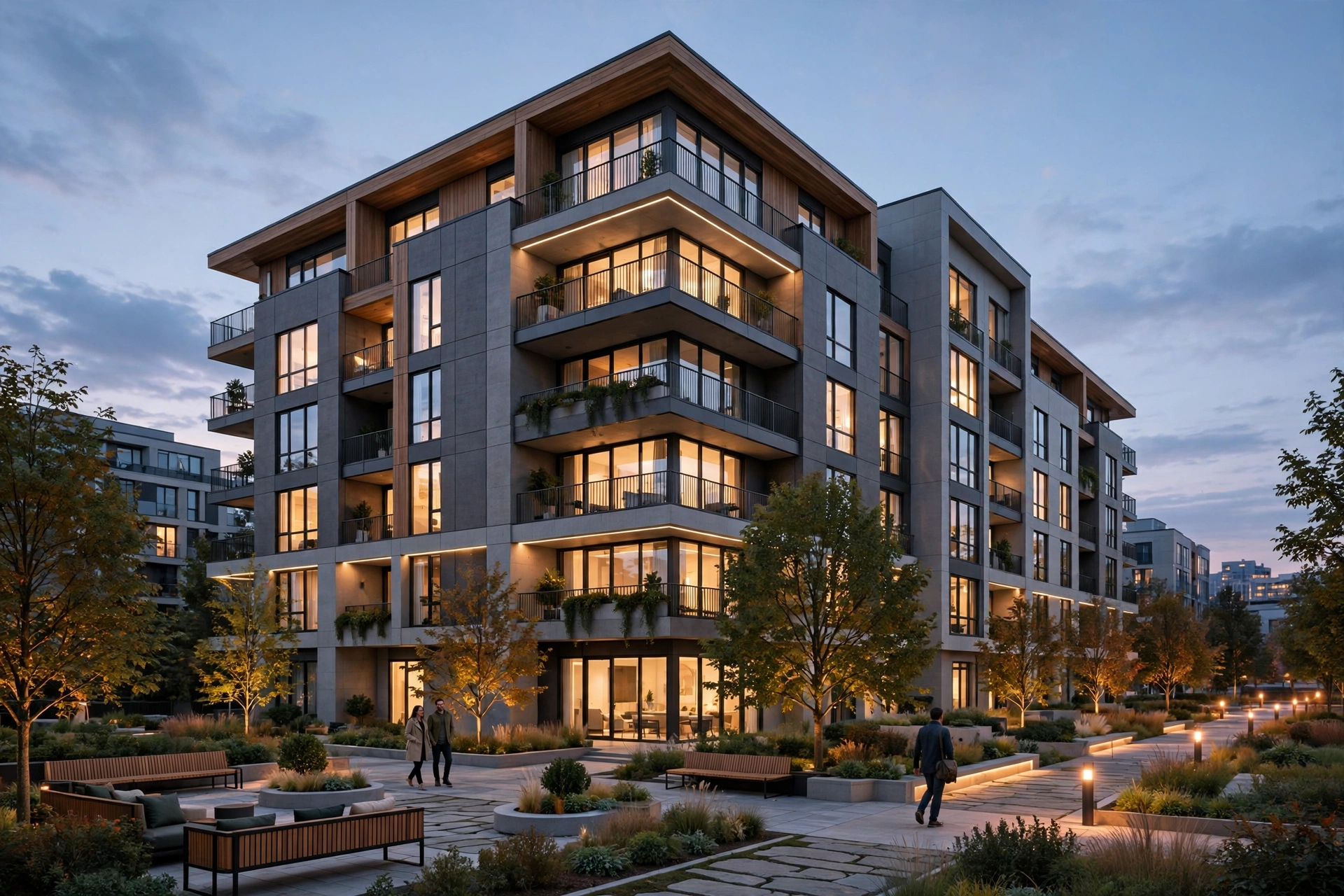
A multifamily package is not one image, it is a set of views that answers every question a prospect asks. The exterior hero shot shows the building from the street at dusk, with warm windows, landscaping and people, because that is the image that stops a scroll. A daylight aerial view shows the building in its neighbourhood, the parking, the gardens and the approach road. Each unit type needs at least one interior: a living room and kitchen for the one-bedroom, and a master bedroom for the larger units. Amenity views, the lobby, gym, residents lounge and courtyard, sell the lifestyle that justifies the rent. Finally, a unit mix graphic helps investors see the whole scheme at a glance. A typical launch package is 8 to 12 images: 2 exteriors, 4 to 6 interiors, 2 amenities and 1 aerial.
What Apartment Rendering Costs in 2026
Multifamily rendering is priced per view, and the price depends on the size of the scene and the level of detail. In 2026, a single photorealistic exterior of an apartment building costs roughly 250 to 500 dollars, a unit interior costs roughly 150 to 350 dollars, and an aerial or site view costs roughly 300 to 600 dollars, because it needs the surrounding streets and trees modelled too. A full launch package of 10 images usually costs 2,000 to 4,000 dollars, and studios often discount the per-image price when you order the whole set at once. A walkthrough animation of 60 to 90 seconds costs roughly 1,500 to 4,000 dollars depending on length and detail. A 360 virtual tour of the show unit costs roughly 400 to 900 dollars. The cheapest way to keep the budget down is to reuse: one furnished unit interior can be re-coloured into two or three variants, and one exterior model can produce the dusk hero, the daylight view and the aerial with extra camera angles. Our cost per image guide breaks down the same pricing by render type.
Unit Interiors That Lease Faster
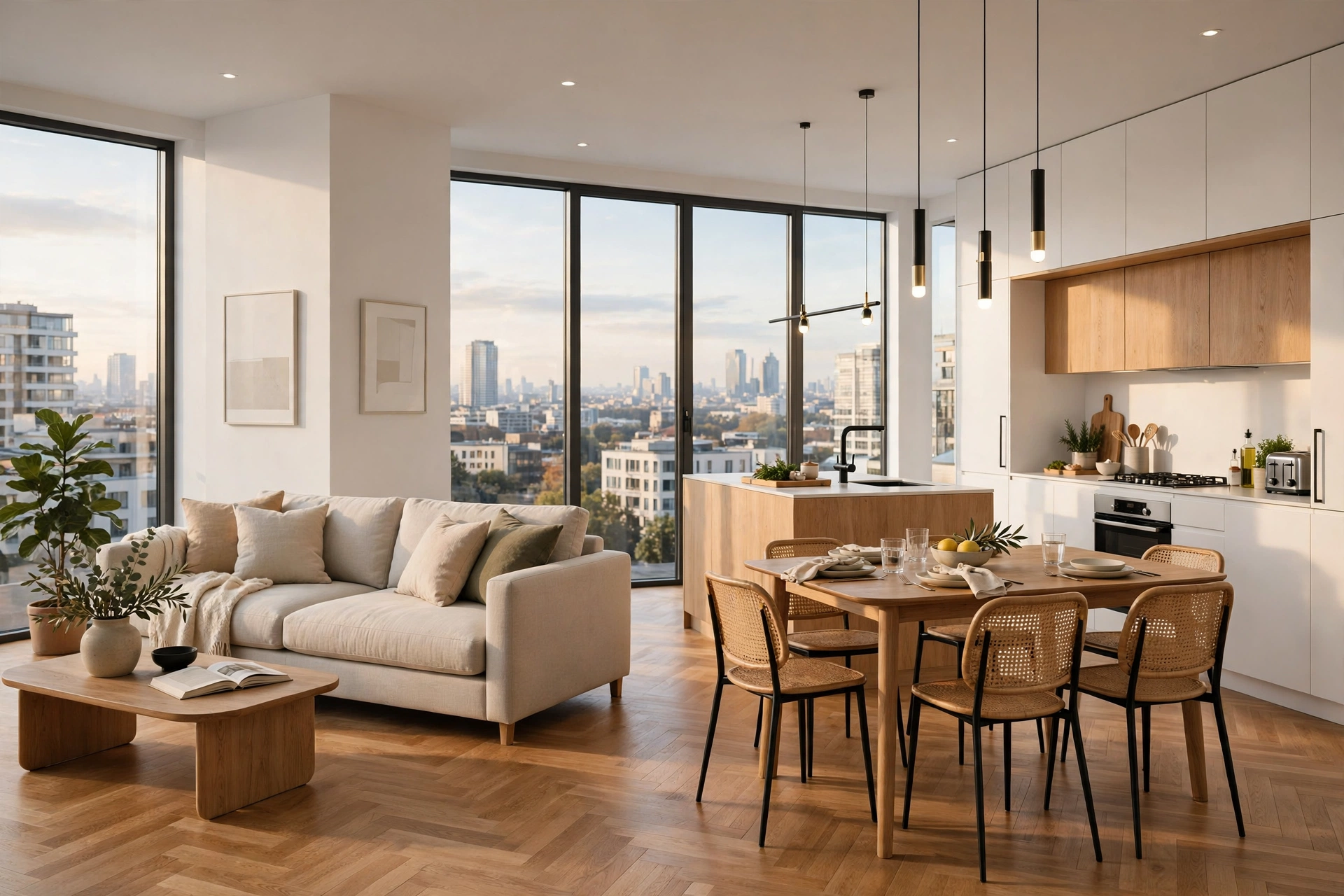
The unit interior is where a prospect decides, so it has to feel like a home, not a furniture catalogue. The camera should stand in a corner at eye level, about 1.6 metres high, looking across the living space so the viewer sees the kitchen, the sofa and the window in one frame. Furniture must be to scale: a real sofa is about 2 metres long, a dining table seats four, and a bed needs a clear path around it. Styling should match the target tenant. A young professional scheme gets a clean desk and a coffee machine. A family scheme gets a dining table set for four and a rug. Avoid the two classic mistakes: an empty room, which looks cold and small, and an over-styled room, which looks like a hotel and hides the space. Light the room for late afternoon, when warm sun comes through the window. One well-styled interior per unit type is enough.
Amenity Spaces: Selling the Lifestyle, Not the Square Metres
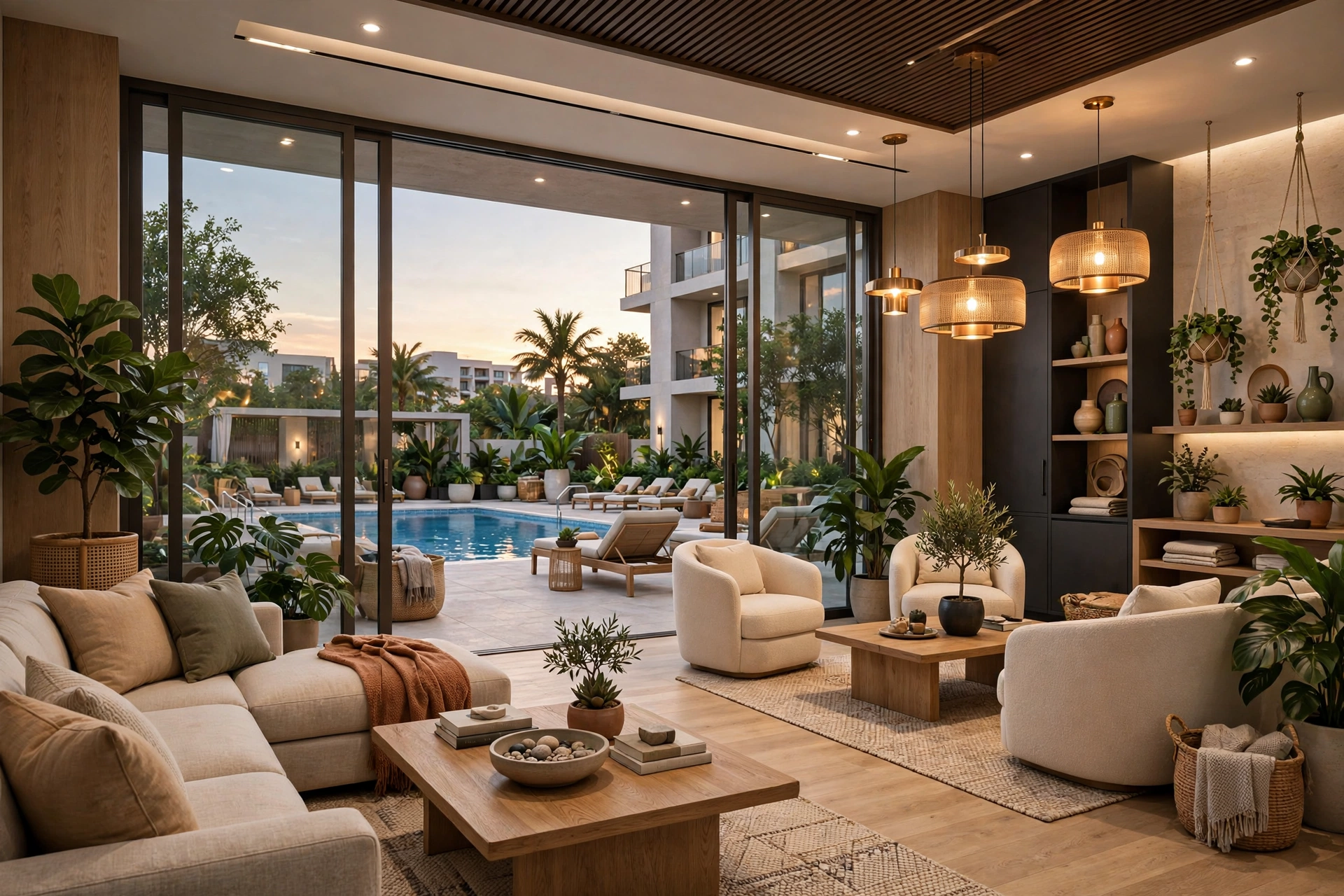
Tenants do not choose a building for its floor area, they choose it for how it feels to live there, and amenity renders carry that feeling. A residents lounge with a fireplace, a gym with morning light, a co-working space with laptops and coffee, and a courtyard with planting and seating all tell a prospect what their evenings and weekends will look like. These views also do the heavy lifting on the rent: a building with a believable gym and lounge can justify a premium of 5 to 10 percent over a bare scheme in the same area. Render amenities with people in them, at real scale, because an empty gym looks like a storage room and an empty lounge looks like a waiting room. Keep the styling honest: show the equipment the building will actually have, because a tenant who tours the finished building and finds a different room feels misled. Two amenity views are usually enough for a launch.
Investor Decks and Pre-Leasing Visuals
The same images that lease units also raise money. Investors and lenders want to see that the scheme is buildable, lettable and worth the asking price, and renders are the fastest way to show that. An investor deck needs the exterior hero, the aerial context view, one unit interior per type, and the amenity spaces, plus a simple site plan view that shows the number of units and the parking. Pre-leasing is where renders pay for themselves directly: a leasing team armed with unit interiors and a 360 tour can take reservations and even deposits before the building is watertight, which de-risks the whole project for the lender. For a large scheme, consider a short walkthrough film as well. It costs more, but it is the one asset that works in a boardroom, on a listing portal and in a sales gallery. Our property marketing renders guide explains how off-plan sales visuals work in detail.
How to Brief a Studio for a Multifamily Project
A good multifamily brief is a short document, not a phone call, and it saves a revision round. Send the floor plans and elevations as CAD or PDF, the unit schedule with the mix of one, two and three bedroom units, and the material schedule with the facade, flooring and kitchen finishes. State the target tenant and the rent level, because a student scheme and a luxury scheme are styled completely differently. List the views you need, in priority order, and name the hero view, the one image that will lead the brochure and the listing. Share reference images of buildings you like, and say what you do not want as well as what you do. Agree the revision rounds in writing: most studios include two or three rounds per view. Our briefing checklist covers the full document a studio needs, and our guide for home builders covers the same workflow for spec homes.
Mistakes That Cost Leases
Multifamily renders fail in predictable ways, and each one costs enquiries. The most common is showing the wrong unit: a render of the penthouse when most of the building is one-bedroom flats misleads prospects and wastes the leasing team's time. The second is scale errors, a sofa that is too small or a bed that is too big, which make the room look larger than it is and disappoint every viewer on the tour. The third is empty amenities, which read as unfinished. The fourth is a dusk exterior with every window lit, which looks like a hotel rather than a home, so light about two thirds of the windows and leave the rest dark. The fifth is inconsistent styling across views, so the same unit looks like two different flats.
Frequently Asked Questions
How much does apartment rendering cost in 2026?
A single exterior costs roughly 250 to 500 dollars and a unit interior roughly 150 to 350 dollars. A full launch package of 10 images usually costs 2,000 to 4,000 dollars, with a discount when the whole set is ordered together.
How many renders does a multifamily project need?
Most launches need 8 to 12 images: 2 exteriors, 4 to 6 unit interiors, 2 amenity views and 1 aerial. Large schemes may need 15 to 20.
Can renders help lease apartments before construction finishes?
Yes, that is their main job. With unit interiors and a 360 tour, a leasing team can take reservations and deposits months before completion, which also helps the developer secure finance.
What should an apartment render package include?
An exterior hero, a daylight aerial, one interior per unit type, the key amenity spaces, and a unit mix graphic for investors.
How long does a multifamily render package take?
A single image takes 2 to 4 working days, and a full package of 10 images usually takes 2 to 3 weeks including revisions.
Do I need a walkthrough animation for an apartment building?
Not always. A walkthrough helps large schemes and investor presentations, but for a small building still images and a 360 tour usually lease the units just as well.
Apartment renders are not decoration, they are the leasing office for a building that does not exist yet. Order the views that answer a prospect's real questions, style them for the tenant you actually want, and check every image against the plans before it goes live.
If you would like professional renders of your apartment or multifamily project, talk to our team. Send us your floor plans and unit schedule, and we will return client-ready exteriors, unit interiors, amenity views and walkthroughs in a few working days, at a clear fixed price.