Case Study: $45M Penthouse Sold Before Construction
The Brief
When Reed Development Group approached us with their Manhattan penthouse project, the brief was ambitious: sell a $45 million residence that existed only as architectural drawings. No model unit. No show apartment. Just our renders and the buyer's imagination.
The challenge was immense. At this price point, buyers aren't just purchasing square footage, they're buying a lifestyle, a feeling, a promise. Our visualizations needed to convey not just the penthouse's dimensions, but its soul: the way morning light would cascade through double-height windows, the texture of hand-laid Italian marble underfoot, the impossible views stretching from the Hudson to Long Island Sound.
Pre-Production: Planning the Persuasion
Before a single polygon was modeled, we mapped the buyer journey. Which images would anchor the brochure? What would the sales team show first on an iPad? What needed to work as a double-page magazine spread? Every render on our shot list had a job to do, and we planned the campaign backward from those jobs.
We also studied the competition: other ultra-prime listings in Manhattan. Most relied on wide, flat, brightly lit shots that showed everything and moved no one. Our differentiator would be atmosphere, renders that felt like film stills rather than floor plans with furniture.
Material Truth: The Forensics Phase
We began with an exhaustive material study. Our team sourced physical samples of every specified material, the Calacatta Viola marble, the white oak flooring, the bronze hardware, and scanned them at microscopic resolution. Each material was assigned physically accurate properties: reflectivity, subsurface scattering, micro-surface variation.
This obsession matters most at the luxury tier, where buyers have seen real Calacatta Viola in person and will subconsciously reject a render that gets it wrong. Truth in materials is what separates a $45M-feeling image from a $4.5M-feeling one.
Lighting as the Hero
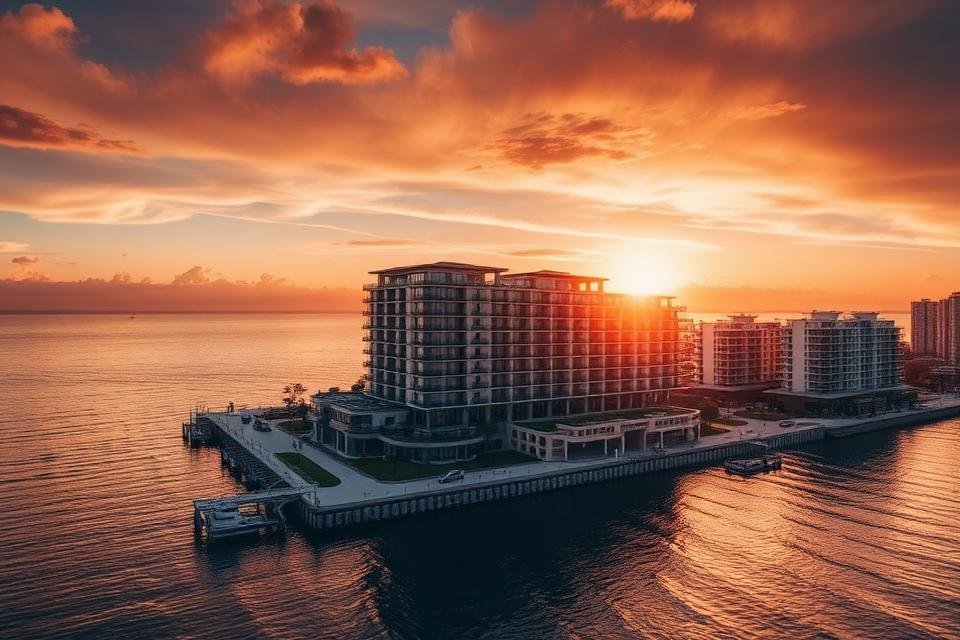
Lighting was the true hero. We modeled the penthouse's exact GPS coordinates and orientation, then simulated accurate sun positions throughout the day and year. The golden-hour renders, showing warm sunlight painting the living room walls, became the signature images of the campaign.
Our lighting strategy used three anchor moments:
- Morning: cool, crisp daylight streaming through east glass, emphasizing the double-height volume.
- Golden hour: warm low sun raking across marble and oak, the emotional centerpiece of the brochure.
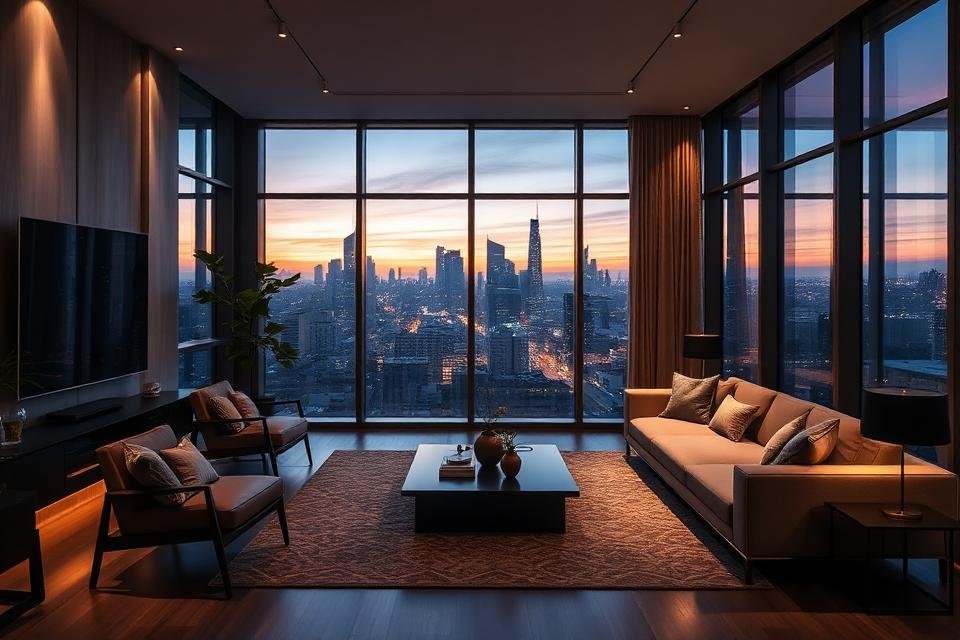
- Night: the Manhattan skyline glittering beyond floor-to-ceiling glass, selling the view as the ultimate amenity.
Camera Work and Composition
We shot the penthouse like a cinematographer, not a surveyor. Low angles to emphasize ceiling height. Careful foreground framing with furniture to create depth. Negative space in key images so the marketing team had room for typography. And restraint: twelve extraordinary images beat forty ordinary ones, so we killed our darlings in the edit.
Post-Production: The Invisible Finish
Every final image passed through color grading calibrated against real photography of similar spaces. We added the subtlest film grain to defeat the sterile CGI look, refined reflections by hand where the renderer guessed wrong, and balanced every image so the full set felt like one coherent shoot, not twelve separate renders.
The Results
The results exceeded expectations. Three units were placed within 48 hours of the marketing launch. The lead buyer later told the developer that the renders were "more compelling than any finished apartment I've visited." The visualization didn't just represent the space, it elevated it.
The developer's math was simple: the visualization budget was a fraction of one percent of the sale price, and it compressed a sales cycle that might have taken a year into a weekend.
Lessons for Every Project
- Plan images around the sales narrative, not around the floor plan.
- Invest disproportionately in materials and light; everything else is supporting cast.
- Shoot fewer, better images. Edit ruthlessly.
- Calibrate against photography, not against other renders.
This project reinforced our core belief: at the highest level, architectural visualization is not documentation. It's persuasion. It's storytelling. And when done right, it's the most powerful sales tool in real estate.
Further Reading
If you found this article helpful, you may also enjoy:
Frequently Asked Questions
How long did the visualization take?
Eight weeks from brief to final delivery, including two rounds of client revisions. Luxury projects reward patience; rushing the material study would have undermined the entire campaign.
Can this approach work at lower price points?
Absolutely, and the ROI math is often even better. The principles, narrative-first planning, material truth, cinematic lighting, scale to any budget.
Do buyers ever feel misled by renders?
Only when renders overpromise. We render exactly what is specified, down to the grout lines. Trust compounds; one misleading image can poison a developer's reputation for years.
The Revision Process
Even a smooth project has revisions, and luxury clients revise with conviction. We structured feedback into two formal rounds with a clear change log: round one for big moves (camera angles, lighting mood), round two for refinements (material tweaks, styling details). Anything beyond that was scoped and billed separately, which kept the project on schedule and taught the client to consolidate feedback.
The discipline that saved us: never present a single option for a subjective decision. Two lighting moods side by side let the client choose rather than critique, and choices converge faster than open-ended commentary.
The Deliverables Package
The final delivery included twelve hero stills at print resolution, a sixty-second cinematic film, a set of detail crops for social media, and an interactive 360-degree tour of the main living space. Packaging matters: deliverables arrived in a branded presentation with usage guidance, so the marketing team could deploy everything on day one without asking us a single question.
Written by
Richard Harmon
Founder & Principal Architect