Virtual Reality: The Future of Real Estate Marketing
The Model Apartment Is Dying
The model apartment is dying. For decades, it was the gold standard of real estate marketing: a physically built unit, lavishly furnished, designed to make buyers fall in love. But at $500 to $1,000 per square foot to build, with a 3-month lead time and zero flexibility, the model unit's economics are increasingly hard to justify.
Worse, a model unit shows exactly one configuration of one unit type. Every other unit in the development, the ones buyers will actually purchase, remains invisible. Developers have been spending fortunes to showcase inventory they are not selling.
What VR Offers Instead
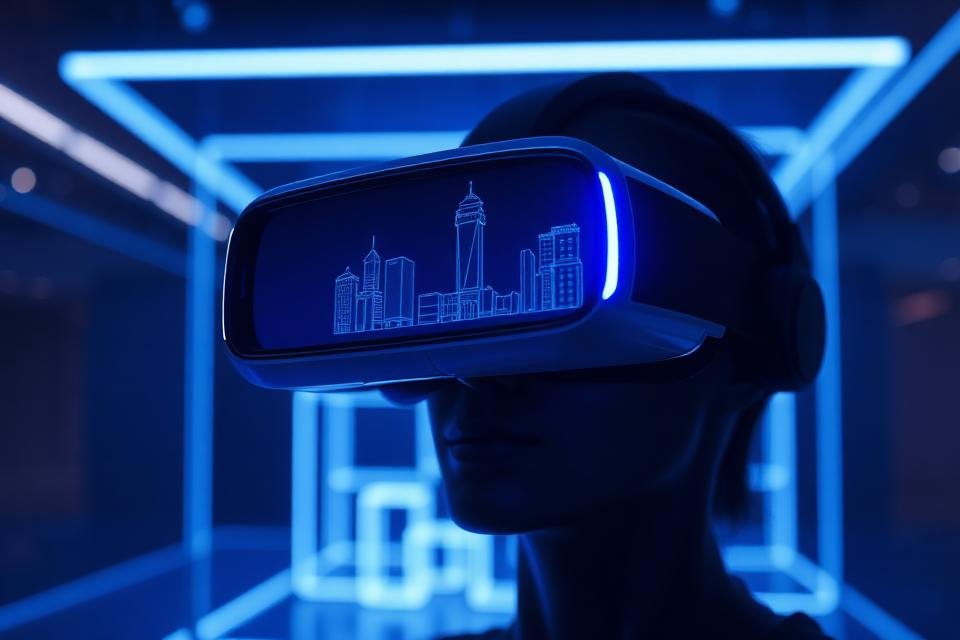
Enter virtual reality. Our VR experiences allow buyers to walk through a photorealistic representation of any unit in a development, not just the model, customized with their preferred finishes, furniture, and even time-of-day lighting. The cost is a fraction of a physical unit, the turnaround is weeks instead of months, and the experience can be updated instantly as designs evolve.
The Numbers Behind the Shift
The data backs the investment. Developers using our VR tours report 40% higher engagement at sales events, 25% faster decision-making from buyers, and a 60% reduction in post-purchase change orders (because buyers already know exactly what they're getting). One client saw their pre-sales conversion rate double after introducing VR walkthroughs.
The change-order statistic deserves emphasis. Every post-purchase change costs the developer money and delays completion. Buyers who have truly experienced their unit make fewer changes because there are fewer surprises. VR pays for itself in avoided rework alone.
The Technology Has Matured
The technology has matured dramatically. Our Unreal Engine 5 pipeline delivers photorealistic quality at 90fps, essential for comfortable VR. Ray-traced reflections, global illumination, and physically accurate materials create environments that are genuinely difficult to distinguish from reality. And with web-based 360-degree tours, buyers don't even need a headset to explore.
Delivery options now cover every scenario:
- Headset VR (Quest, Vive): maximum immersion for sales galleries and launch events.
- Web-based 360 tours: zero-install exploration from any phone or laptop, perfect for remote buyers.
- Touchscreen kiosks: guided walkthroughs in sales offices without headset hygiene concerns.
- Mobile AR: overlaying the future building onto the physical site through a phone camera.
Interactivity: The Real Superpower
The most powerful feature is interactivity. Buyers can swap kitchen countertops, change wall colors, open blinds, and toggle between day and night, all in real time. This transforms the sales experience from passive viewing to active exploration, creating emotional investment that static renders simply can't match.
Psychologically, this is the endowment effect in action: buyers who have configured "their" kitchen already feel ownership. That emotional investment is the most reliable predictor of a signed contract our clients have found.
Implementing VR: A Developer's Roadmap
- Start with the BIM or CAD model. Clean source geometry dramatically reduces conversion cost.
- Define the experience scope: which units, which finish options, which interactions.
- Build the real-time scene with performance budgets locked from day one.
- Pilot at one sales event and measure engagement against your baseline.
- Roll out across channels: sales gallery, website, broker toolkits, and remote selling.
Costs vs the Model Unit
A full VR experience for a development typically costs less than a single model apartment's construction, and it covers every unit type instead of one. Updates that would require rebuilding physical space, a design revision, a new finish palette, are software changes deployed in days. The comparison is not close.
Further Reading
If you found this article helpful, you may also enjoy:
Frequently Asked Questions
Do buyers actually use the headsets?
Yes, with guidance. A two-minute onboarding by sales staff eliminates the learning curve, and even headset-shy buyers engage deeply with web-based 360 tours.
How long does production take?
Four to eight weeks for a typical development, depending on unit variety and interactivity depth. Starting from clean BIM data shortens this considerably.
Will VR replace static renders?
No. Renders remain essential for print, advertising, and quick sharing. VR extends the toolkit; it does not replace the brochure hero shot.
VR isn't replacing traditional visualization, it's extending it into a new dimension. And for forward-thinking developers, it's rapidly becoming not a luxury, but a necessity.
Measuring VR ROI Properly
Track VR like any marketing investment. Baseline metrics before launch: event engagement time, lead-to-appointment rates, pre-sale conversion, and post-purchase change orders. Then measure the same metrics with VR in the mix. Our clients typically see payback within one sales quarter, driven by faster decisions and fewer change orders rather than by raw foot traffic.
Attribute honestly: VR amplifies good product and marketing but cannot rescue a poorly priced development. Measure its marginal contribution, not the entire campaign's success.
Common Pitfalls to Avoid
- Overbuilding interactivity. Every toggle and option costs production time. Prioritize the three decisions buyers actually agonize over, usually kitchen, flooring, and facade or view.
- Neglecting performance. A beautiful scene at 30fps in VR causes nausea and kills the sale. Lock 90fps before adding visual richness.
- Skipping staff training. The best VR experience fails if sales staff cannot onboard a nervous first-time user in two minutes.
- Forgetting remote buyers. Pair every headset experience with a web-based 360 tour so out-of-town investors get the same story.
The Hybrid Sales Gallery
The most effective deployments we have seen are hybrid: a physical sales gallery where VR headsets sit alongside material sample walls and a large touchscreen running the same 3D model. Buyers touch the real marble, then see it in their virtual kitchen seconds later. This pairing of tactile and virtual convinces in a way neither achieves alone. Staff the gallery with people trained to read buyer comfort, some visitors want the full headset journey, others prefer to watch on the big screen while a salesperson drives. Design for both, and no buyer feels excluded by the technology.
Written by
Mei Lin Wong
VR / Interactive Lead