Behind the Scenes: A Day in Our Visualization Studio
8:30 AM: The Quiet Hours
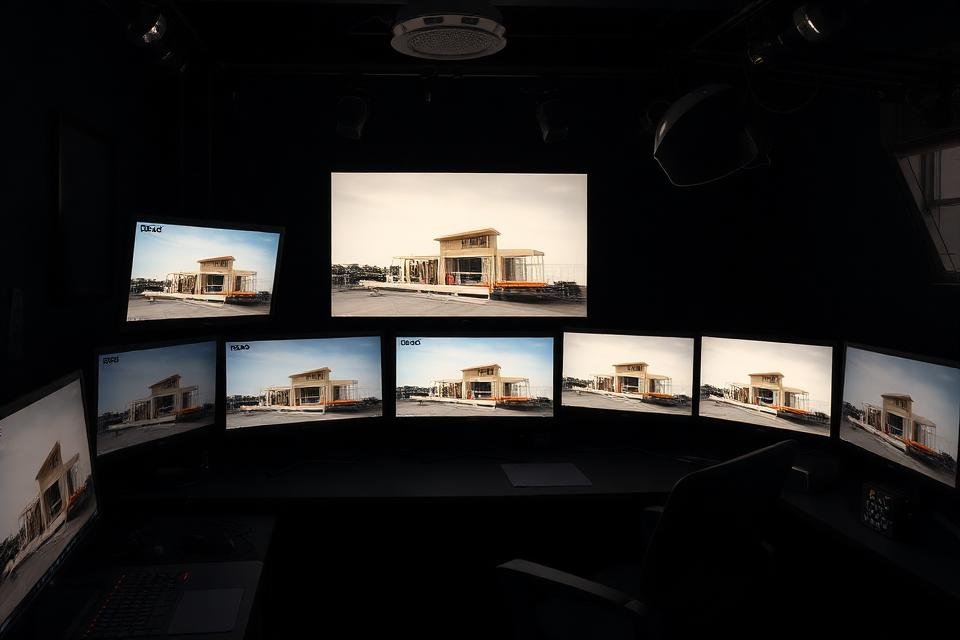
Our London studio comes alive at 8:30 AM. The first team in is always the modelers, they work best in the quiet hours before the creative chaos begins. By 9 AM, six workstations are humming with 3ds Max, Rhino, and Blender, each screen showing a different project at a different stage of completion.
The morning standup is fifteen minutes, no more. Each artist states three things: what finished yesterday, what is on deck today, and anything blocking them. Blockers get owners immediately; nothing is allowed to fester until afternoon.
The Forensics Phase: Every Project Starts Here
A typical project begins with what we call the "architectural forensics" phase. We dissect every drawing, section, and detail the architect provides. We ask questions they've never been asked before: What's the grout width between tiles? How does the curtain fabric drape? Which direction do the wood grain patterns run? These details are invisible individually but collectively they create the uncanny realism that defines our work.
This phase also catches problems early. Missing dimensions, contradictory sections, materials specified but not sourced: we compile everything into a single query list for the client before modeling begins. Fixing a drawing error in week one costs minutes; discovering it in week six costs days.
Late Morning: Modeling and Texturing
By late morning, the texturing team takes over. Using a combination of photogrammetry, procedural generation, and our proprietary material library of 10,000+ textures, they dress the geometry with photorealistic surfaces. A single marble material might take two hours to perfect, adjusting vein patterns, color variation, and surface imperfections until it's indistinguishable from a photograph.
Our material library is a genuine competitive asset, built over a decade. Every texture is calibrated: real-world scale, consistent color management, and clean tiling. Junior artists learn quickly that reaching for the library beats reinventing a brick wall for the hundredth time.
After Lunch: The Lighting Workshop
Lighting workshops happen after lunch. The entire team gathers around a calibrated 6K display, and the lighting artist walks through camera angles and illumination setups. It's collaborative and often passionate, debates about shadow softness or ambient occlusion intensity can last 30 minutes. But this is where good renders become great ones.
We review against reference photography, never against other renders. The question is always "does this look like a photograph of a real place?" and the team has permission to be brutally honest. Egos stay at the door; the image is the only client in the room.
Afternoon: Cameras and Composition
Camera work gets its own dedicated pass. We think like cinematographers: establishing wides, intimate details, and the two or three hero angles that will carry the marketing campaign. Every camera is motivated by the story the image needs to tell, never placed by habit.
Overnight: The Render Farm
Final renders are submitted to our render farm overnight, 128 GPUs working in parallel, each frame taking 4-8 hours at 8K resolution. By morning, the post-production team color-grades, composites, and finalizes the images. The result: images that clients often mistake for photographs.
Farm management is its own discipline. Jobs are prioritized by deadline, test renders are capped in resolution to keep the queue moving, and a monitoring dashboard alerts us to failed frames before morning.
Quality Control: Nothing Ships Unreviewed
Every image passes a formal QC checklist before delivery: resolution and format correct, no fireflies or noise, materials reading truthfully, no floating geometry or texture seams, color grade consistent across the set. A second artist, never the one who made the image, performs the check. Fresh eyes catch what tired eyes forgive.
Why Process Matters
It's meticulous, sometimes exhausting work. But when a client sees their unbuilt project come to life, when they gasp at a render they thought was a photo, every hour of obsessive detail pays off. Process is what lets a studio deliver that gasp on schedule, every time, instead of by luck.
Further Reading
If you found this article helpful, you may also enjoy:
Frequently Asked Questions
How long does a typical project take?
Three to six weeks for a standard residential or commercial set, depending on revision rounds. Complex developments and animations run longer.
How many people work on one project?
Usually three to five: a modeler, a texture/material artist, a lighting artist, and post-production, with an art director overseeing.
What software does the studio use?
3ds Max, Rhino, and Blender for modeling; V-Ray and Corona for rendering; Unreal Engine for real-time and VR; and a standard post-production stack for finishing.
The Client Communication Rhythm
Great work dies in bad communication, so we run client contact on a fixed rhythm: a kickoff call to align on goals and references, a mid-project work-in-progress review with watermarked drafts, and a structured feedback window with consolidated comments. Between those beats, a shared project board shows status at a glance. Clients never wonder what is happening, and artists never drown in ad-hoc requests.
The golden rule: clients react to images, not descriptions. Never ask "do you want warmer lighting?" in an email. Render two small options and let them point. Visual decisions deserve visual choices.
Hiring and Training
We hire for taste and train for tools. Software can be taught in months; an eye for composition takes years. Junior artists start on real project components under senior review, with a formal critique culture that treats every review as teaching. Our internal wiki documents everything from naming conventions to the exact export settings for each deliverable type, so knowledge survives staff changes.
The result is a team where anyone can pick up anyone else's file and keep working. That interchangeability is invisible to clients and invaluable to deadlines.
Written by
Mei Lin Wong
VR / Interactive Lead