How to Choose a Rendering Studio: 2026 Guide
A great render can win a client, sell a home before it is built, or get a planning committee to say yes. A bad one makes a good design look cheap. The difference between the two usually comes down to the studio you hire, not the software they use. Choosing a rendering studio is therefore a decision worth taking seriously, whether you are an architect presenting a concept, a developer launching off-plan sales, or a homeowner trying to see a renovation before committing to it.
This guide explains how to choose a rendering studio in 2026: portfolio checks, fair pricing, the questions that separate professionals from hobbyists, and the red flags to avoid.
What a Rendering Studio Actually Does
A rendering studio turns your drawings, 3D models, or even a rough sketch into photorealistic images, animations, or interactive walkthroughs. The core deliverable is usually a set of still images: exterior views, interior views, and sometimes aerial or twilight shots. Many studios also produce 3D floor plans, 360-degree virtual tours, animations, and real-time walkthroughs.
What you are really buying is not software time. You are buying judgement: the eye that chooses the right camera angle, the lighting that flatters the materials, and the styling that makes a room feel lived in. Two studios can use the same renderer, V-Ray, Corona, Lumion, or D5 Render, and produce work of completely different quality. The software is a tool; the artist is the difference.
Start with the Portfolio, Not the Price
The portfolio is the single most reliable predictor of what you will receive. Do the interiors feel like real rooms, with believable light falling across real materials? Do the exteriors sit naturally in their setting? Or do the images look flat and slightly like a video game?
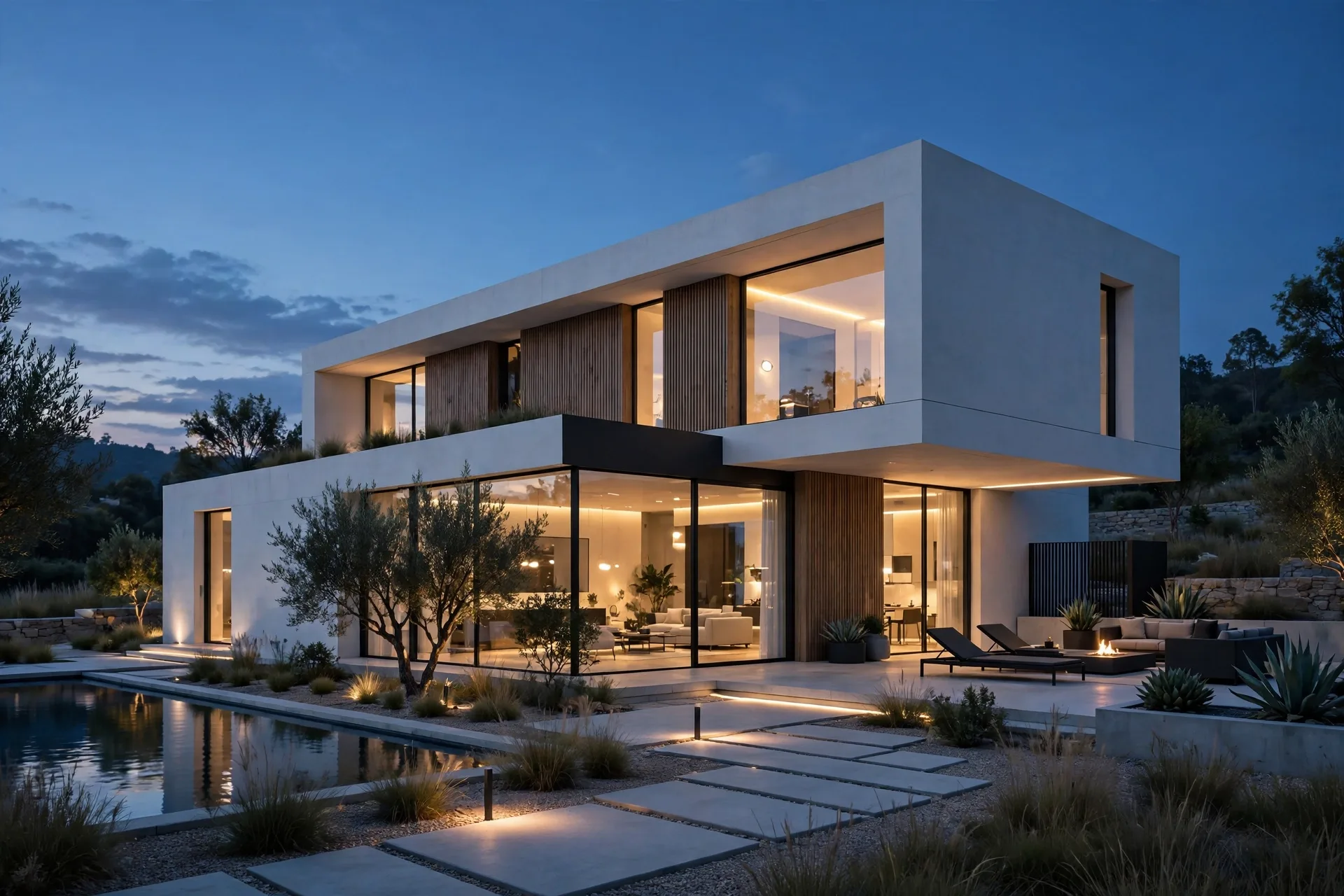
Look for work similar to your project. A studio that excels at luxury villas may not be the best choice for a small apartment renovation. Ask to see a full project, not just the best three images on the homepage. A complete set shows whether the studio is consistent across every view or only strong on its favourite angle. If you want a twilight exterior, look for dusk shots specifically. Our guide to twilight renders explains what separates a convincing dusk shot from a dark, muddy one.
Check the details that reveal craft: glass that reflects without looking like a mirror, wood grain running in the right direction, people scaled correctly and lit from the same direction as the room. Our render quality checklist lists the exact checks professionals run before delivery, and you can use it to judge any portfolio in ten minutes.
What a Good Studio Charges in 2026
For a single photorealistic still image, most professional studios charge between $150 and $600 per view in 2026, depending on complexity. A simple interior view sits at the lower end. A detailed exterior with landscaping, context buildings, and people sits at the higher end. A full set of five to eight views for one project typically costs $800 to $3,000.
Animations cost more because every second is dozens of frames. A 30 to 60 second architectural animation usually runs $1,500 to $6,000, and a longer cinematic film can exceed $10,000. A 360-degree virtual tour generally costs $300 to $1,200 per viewpoint set, while a real-time interactive walkthrough starts around $2,000. Rush delivery adds 25 to 50 percent, so plan ahead when you can.
Be suspicious of prices far below these ranges. A $30 render is almost always an automated AI output or an unedited raw render, and it will look like one. A fair quote should list the number of views, the resolution, the revision rounds, the file formats, and the delivery date in writing. Our full breakdown of 3D rendering cost per image gives the 2026 price tables by render type so you can compare quotes like-for-like. Be cautious of any studio that demands 100 percent before starting, and read our guide to what to check in a rendering contract before you sign anything.
Check the Process Before You Commit
A professional studio runs a clear, repeatable process, and it should be able to describe it in one short email. The usual flow has five stages. First, the brief: you send drawings, models, material references, and the purpose of the images. Second, modelling and cameras: the studio builds or cleans the 3D model and sends draft camera angles for approval. Third, a grey preview render confirms geometry and composition. Fourth, the first colour draft adds materials and lighting. Fifth, revisions and final delivery.
If a studio cannot describe its process, or promises finished images without a camera approval or preview stage, expect surprises: wrong angles, wrong materials, and revision rounds spent fixing basics that should have been agreed early. Also watch how the studio communicates in the first exchange. Do they ask useful questions about the project, the audience, and the deadline? A studio that asks sharp questions before quoting usually delivers without drama.

Revisions, Timelines and Deliverables
Three items cause most disputes between clients and studios: revisions, timelines, and deliverables. Most studios include two to three revision rounds per view in the base price. A revision round means a set of changes on the draft, such as adjusting a material or swapping furniture. A complete redesign of a room, or a new view added late, is usually a new charge, and that is fair as long as it is stated upfront.
On timelines, a single interior view typically takes three to five working days, a set of exterior views takes five to ten days, and an animation takes two to four weeks. On deliverables, confirm the resolution and formats in writing: 3000 to 4000 pixels on the long edge is enough for web and social media, while large print needs 6000 pixels or more. Confirm you will receive high-resolution JPG or PNG files, and check the image licence covers your intended use, whether that is marketing, a planning submission, or a competition entry.
Red Flags That Should Make You Walk Away
Some warning signs are easy to spot once you know them. A portfolio that is entirely AI-generated images with no real project work is one. A studio that cannot show a full project, only single hero shots, is another. A quote with no itemised breakdown, revision terms, or delivery date is a third. So is a studio that never asks for your drawings before quoting.
Watch for communication red flags too. Slow, vague, or evasive replies before you have paid usually get worse after you have paid. A studio that cannot name the renderer it uses is often outsourcing your project. The biggest red flag is pressure: a studio that demands an immediate decision, a full upfront payment, or a signature on a contract you have not had time to read is not one to trust with your project. They will hold a slot for a day or two while you decide.
Questions to Ask Before You Hire
A short call with a studio tells you more than ten emails. Ask which renderer and workflow they will use for your project, and why. Ask to see a complete project similar to yours, including the draft stages. Ask how many revision rounds are included and what counts as an extra charge. Ask for the realistic delivery date, and what happens if it slips. Ask who will actually work on the project. The answers matter less than the tone: a studio that answers clearly will communicate clearly during the project too.
How to Compare Two Studios Fairly
When you have two or three shortlisted studios, compare them on the same basis. Ask each one for a quote on the identical brief: the same views, the same resolution, the same revision rounds, and the same deadline. Then compare the portfolios side by side at full size, not as thumbnails, looking at the same kind of view from each studio. Weight the decision towards quality and communication, not the lowest price. If the quotes are close, choose the studio that asked the best questions and explained its process most clearly.
Frequently Asked Questions
How much does it cost to hire a rendering studio in 2026?
A single photorealistic still image costs $150 to $600 in 2026, and a full set of five to eight views usually costs $800 to $3,000. Animations start around $1,500 for a short film.
How long does a rendering project take?
A single view takes three to five working days, a set of exterior views takes five to ten days, and an animation takes two to four weeks. Rush delivery costs 25 to 50 percent extra.
What should I send a rendering studio to get a quote?
Send floor plans and elevations with dimensions, a 3D model if you have one, material and furniture references, the views you need, and your deadline. See our full briefing checklist for the details.
How many revisions are included?
Most studios include two to three revision rounds per view. Small changes like a material swap or a camera tweak are normally covered. A redesign or a new view added late is usually charged extra, so confirm the terms in writing before work starts.
Do I own the images after delivery?
Usually yes for the agreed use, but check the licence. The studio often keeps copyright while granting you a licence for marketing, submissions, or publication, so confirm it covers your intended use.
Can a studio work from hand sketches or photos?
Yes. A studio can build a 3D model from sketches, plans, or photos, though modelling from incomplete drawings takes longer and costs more.
Choosing a rendering studio is a choice about trust. Judge the portfolio honestly, compare quotes on the same brief, ask direct questions, and walk away from red flags without hesitation.
If you have a project that needs photorealistic visuals, talk to our studio. Send us your drawings or model, tell us the views and the deadline, and we will give you an honest quote, a clear timeline, and a preview stage before any finishing work begins, so you can see the quality for yourself before committing.
Written by
Architecture Designing Team
3D Visualization Studio