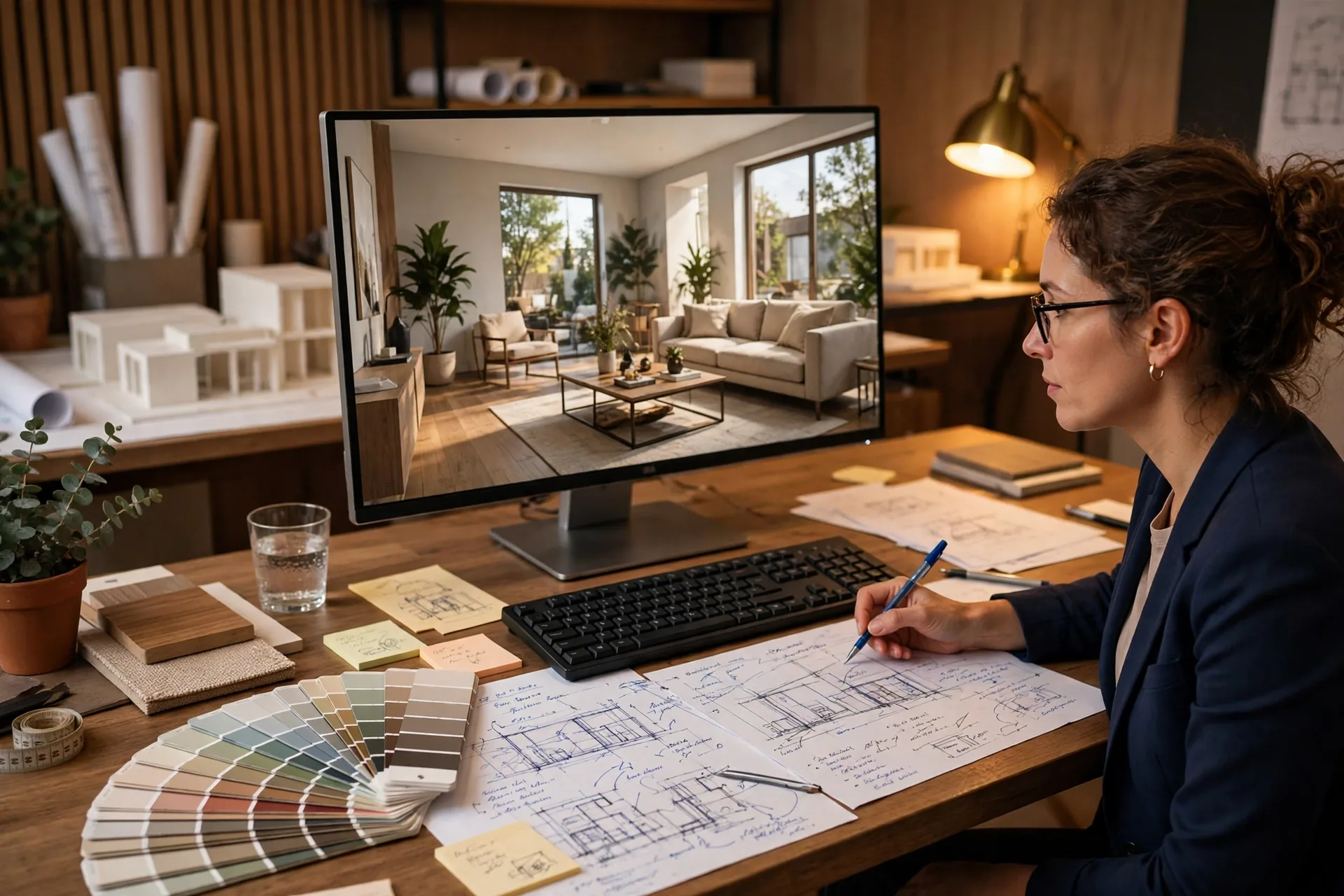
How Many Revisions Do 3D Renders Include? Full Guide
Every client who orders a 3D render asks the same question sooner or later: how many revisions do I get? The answer matters more than most people expect, because revisions are where projects slip. A render that needs five rounds takes twice as long and can cost far more than the quoted price, while a project with a clear revision policy usually finishes on the first or second draft. This guide explains the 2026 standard, what counts as a revision and what counts as rework, what extra rounds cost, and how to use your rounds well.
The Short Answer: Two to Three Rounds Is Standard
Most professional rendering studios include two to three revision rounds per view in their fixed quote in 2026. That is the industry norm across North America, the UK, and Europe. One round means the studio sends a draft, you send back a consolidated list of changes, and the studio applies them and sends an updated draft. After the included rounds are used, further changes are billed per round or per hour.
Some budget providers include only one round, and some high-end studios include three or four, but the number alone does not tell you much. What matters is what each round covers. A studio that includes three rounds but treats every small tweak as a new round is less generous than one that includes two rounds and applies a long list of small changes within each one. Before you commission, ask the studio to define a round in writing: how many change requests it covers, how long you have to respond, and what happens when you need one more.
What Counts as a Revision
A revision is a change to an image that is already built, using the same model, the same camera, and the same design. These are the adjustments studios expect inside the included rounds, and they are usually quick to apply because the heavy work of modelling is already done.
- Material and colour swaps: changing a wall paint colour, a timber tone, a worktop material, or a fabric.
- Lighting and mood tweaks: brightening a room, warming the light, or shifting from midday to late afternoon.
- Camera adjustments: a small shift in angle, a slightly wider or tighter framing, or a change in height.
- Furniture and styling changes: swapping a sofa, moving a dining table, or changing artwork.
- Entourage changes: adding or removing people, or changing their position and scale.
- Background and context fixes: adjusting a neighbouring building, a tree, or the sky to match the real site.
None of these changes require rebuilding geometry. The 3D model stays the same, so the studio can turn them around fast, often within one working day. Group your notes by category and mark must-fix items first. A studio can apply twenty small tweaks in one round if they are listed clearly, but the same tweaks spread across five separate emails become five rounds.
What Counts as Rework, and Costs Extra
Rework is different from revision. It means the design itself changed after the model was built, so part of the scene must be remodelled. Studios almost always charge for this, either as a fixed fee per change or at an hourly rate, because it repeats the most expensive part of the job. Knowing the boundary protects your budget and your timeline.
- Layout changes: moving walls, changing room sizes, or adding or removing a window.
- Facade redesign: changing cladding, window rhythm, roof form, or the massing of the building.
- New views: an additional camera angle not in the original scope. A new angle needs its own lighting, styling, and post-production, so it is priced as a new view, not a revision.
- Design direction change: switching from a modern interior to a traditional one, or from daylight to dusk, after the first draft is done.
- Late design information: supplying the final material schedule or the correct facade detail only after the draft was built from an earlier version.
Agree the rework rule before production starts. A good quote states which changes are included and how rework is priced, for example a fixed fee per task or an hourly rate of 50 to 150 dollars. If a design change is likely, tell the studio early. A wall moved on a plan before modelling starts costs nothing; the same wall moved after the first draft costs a fee and a day of delay.
How Revision Rounds Work in Practice
A typical project follows a simple rhythm. The studio sends a first draft, often at reduced quality, so you can check composition, camera, and materials before the final high-resolution render. You return one consolidated list of changes, the studio applies them and sends a second draft, and you request the remaining small fixes before the final image. Most projects finish in two rounds, and three are usually enough even for demanding clients.
Three habits make this fast. First, name one approver on your side. When several people send separate comments, the studio receives conflicting instructions and burns a round reconciling them. Our briefing guide explains why a single consolidated comment list saves more time than any other habit. Second, respond within the window the studio gives you, usually two to three working days per round. A draft left unreviewed for two weeks often needs a fresh look, because the design team has moved on. Third, mark each change must-fix or nice-to-have, so nice-to-have items can be batched into the final round instead of triggering an extra one.
Review drafts on a calibrated screen at full size. Colours judged on a phone in sunlight look different on a monitor, and comments based on a phone preview often waste a round. Ask for the draft at delivery resolution and view it in the conditions your audience will use.
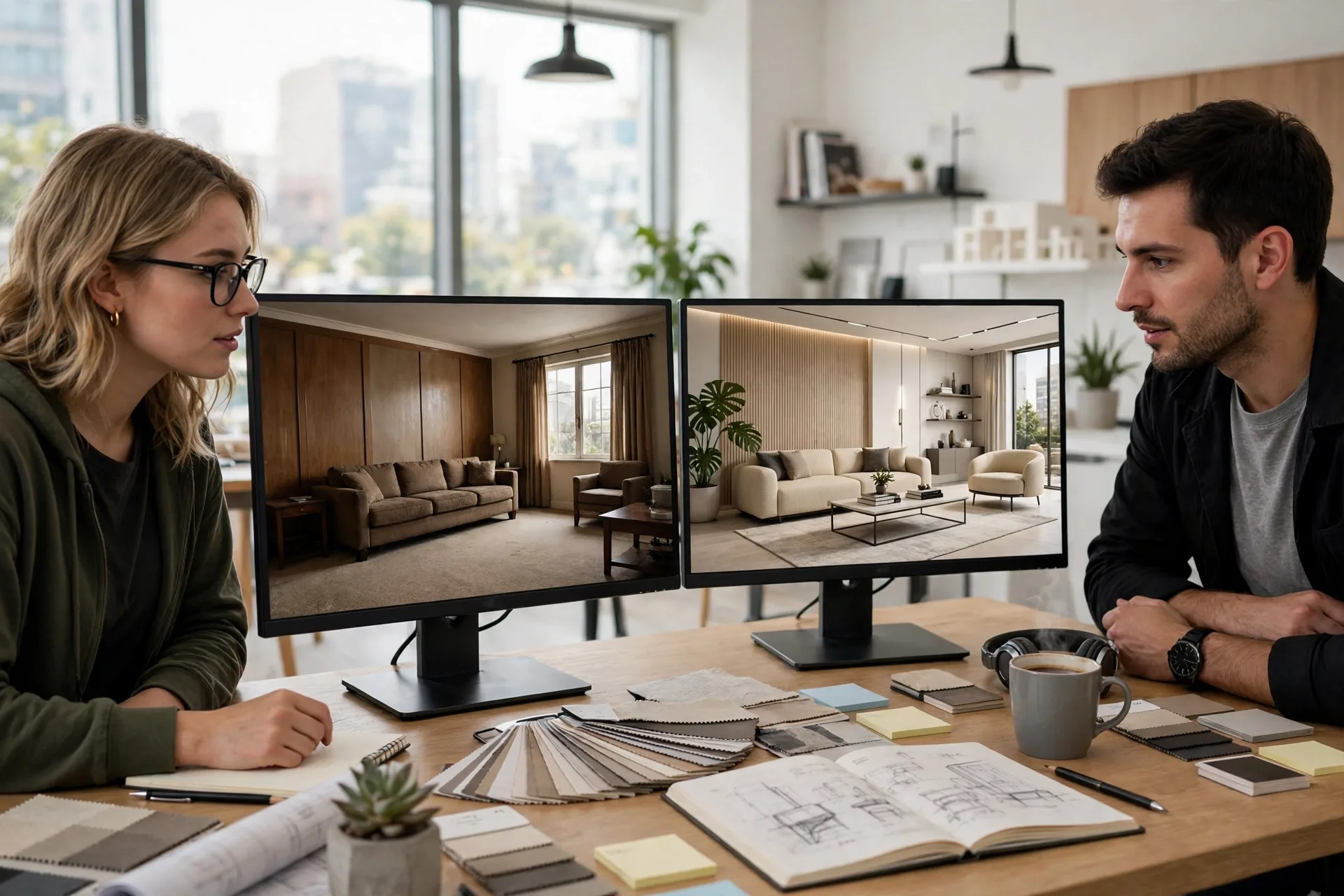
2026 Revision Costs: What Extra Rounds Cost
When included rounds run out, studios charge in one of three ways. The most common is a flat fee per extra round, typically 10 to 25 percent of the original per-view price, so a 500 dollar interior view costs 50 to 125 dollars extra per round. The second is hourly billing: freelancers charge 25 to 75 dollars per hour, established studios 75 to 150. The third is a fixed rework quote for a specific change, such as remodelling a facade, priced after the studio sees the request.
Budget one extra round per project in your contingency, even if you expect to finish in two. It costs little to hold in reserve and removes the awkward moment when a needed fix arrives after the included rounds are spent. Our rendering turnaround guide shows each round typically adds one to three working days, depending on the change list and the studio's queue. For the full picture of what a fixed quote covers, see our rendering services guide.
How to Use Your Rounds Well
The clients who finish fastest treat the first draft as a check of the big decisions and the last round as a polish. On the first draft, judge the camera, the composition, the lighting direction, and whether the materials are broadly right. Do not spend the first round on small details such as a cushion colour, because those are easy to fix later. On the second draft, judge materials, styling, and realism closely, and list every remaining fix. Keep the final round for tiny polish items only.
Write revision notes as clear instructions, not as feelings. Say move the camera 30 centimetres to the left and lower it to 1.6 metres, not the angle feels off. Say change the sofa fabric to the grey bouclé in the attached photo, not the sofa looks wrong. Attach reference images for every material or colour you mention. Clear notes let the artist apply the change correctly the first time. Vague notes invite a second guess, and a second guess costs another round.
Frequently Asked Questions
How many revision rounds do most studios include?
Most studios include two to three revision rounds per view in a fixed quote in 2026. Budget providers may include one, and high-end studios may include three or four. Ask the studio to define a round in writing before you commission, because the definition matters more than the number.
What is the difference between a revision and rework?
A revision changes an existing image without rebuilding geometry, such as a colour swap, a lighting tweak, or a camera shift. Rework changes the design itself, such as moving walls or redesigning a facade, and requires remodelling. Revisions are usually included; rework is usually charged separately.
How much does an extra revision round cost?
An extra round typically costs 10 to 25 percent of the original per-view price, or 50 to 150 dollars per hour if billed by time. For a 500 dollar interior view, expect 50 to 125 dollars per extra round. Agree the rate in writing before production starts.
Can I save revision rounds by writing a better brief?
Yes. A complete brief with exact materials, camera notes, and styling direction commonly saves one full revision round. Send drawings, material references, and a purpose statement for each view before production starts.
What if I need a completely new camera angle after the draft?
A new angle is a new view, not a revision, because it needs its own lighting, styling, and post-production. Studios price it as an additional view, usually at the standard per-view rate.
How long does each revision round take?
Small change lists usually take one working day. Larger lists take one to three working days. Your own review time matters too, so agree a review window of two to three days per round to keep the project on schedule.
Revisions are the normal path from a first draft to a finished image. Choose a studio that includes two to three rounds, defines them clearly in the quote, and distinguishes revisions from rework in writing. Then use your rounds well: one approver, one consolidated list per round, clear instructions with references, and big decisions first. If you are planning a project and want a quote with a clear revision policy, contact our studio with your drawings and view list.
Written by
Architecture Designing Team
3D Visualization Studio